
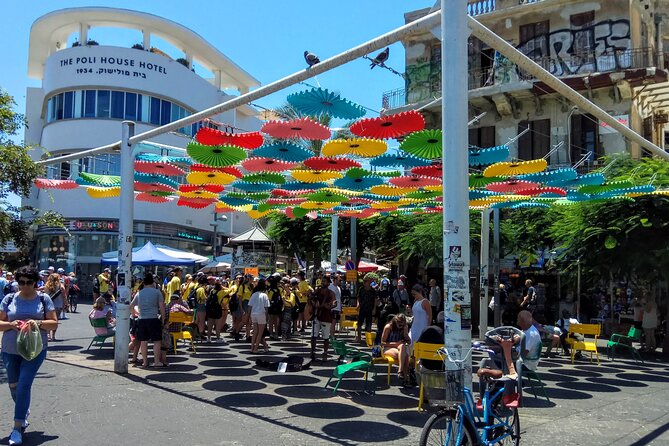
Reviewed · TEL AVIV TOURS
Urban Walking & Food Tour in Tel Aviv
Tel Aviv reveals itself best on foot, and this tour follows a smart route from grand Rothschild Boulevard to the narrow lanes around Carmel Market. Along the way, you get Bauhaus buildings, the city’s founding story, immigrant neighborhoods, modern urban planning, and a long food stop with guide Menno.
I like the small private format, which lets your group pause for shade, benches, bathrooms, and questions. I also like the way the tour links architecture with people: Yemenite immigrants, Mizrahi Jewish families, early Zionist planners, and the founders of Israel. The main drawback is price. At $500 for up to six people, it is good value for a full group, but food costs about $40 per person extra and the walk can feel demanding in Tel Aviv heat.
Key points at a glance
- Starts with Tel Aviv’s founding story: Habimah Square and Rothschild Boulevard set up the city’s modern identity.
- Bauhaus is part of the walk, not a separate lecture: You see the White City in its everyday urban setting.
- Menno adds personal context: His explanations connect city history, immigration, food, and present-day Tel Aviv.
- Neve Tzedek brings a sharp change of mood: Old low-rise homes sit beside design shops, cafés, and restaurants.
- Carmel Market gets nearly two hours: This is the main eating portion, with food and drinks costing about $40 per person extra.
- The route is best for curious walkers: Expect roughly five hours on foot, with plenty of stops but no major sightseeing admission.
Starting at Habimah Square and Rothschild Boulevard
Meet at 10:00 am outside Habima Theatre, at Tarsat Avenue 2. Habimah Square is a useful starting point because several major streets meet here, including Rothschild Boulevard, Hen Boulevard, Dizengoff Street, and Ben-Zion Boulevard.
The square is home to Israel’s national theatre, one of the country’s first Hebrew-language theatres. That detail gives you an immediate sense of Tel Aviv as a city built around modern Hebrew culture, not just a seaside resort with restaurants and nightlife.
From here, the route turns onto Rothschild Boulevard, Tel Aviv’s first boulevard and one of its best-known streets. The wide central promenade, mature trees, and early buildings make it an easy place to begin a walking day. You will make short side trips, then return to the boulevard as the tour moves toward Ahuzat Bayit, the first neighborhood of Tel Aviv.
This section is especially useful if you are new to the city. Instead of seeing isolated monuments, you learn how a collection of homes grew into a major urban center. The route also introduces the city’s famous Bauhaus and International-style buildings, the main reason Tel Aviv earned the name White City.
More Walking Tours in Tel Aviv
- Walking Tour of Akko (Half-day)
★ 5.0 · 84 reviews - Tel Aviv: Jaffa Half-Day Walking Tour
★ 4.5 · 70 reviews - Tel Aviv: Florentin Saturday Walking Tour
★ 3.5 · 65 reviews
Reading the White City one building at a time
The architecture here is not presented as a museum display. It is part of the streetscape, mixed with offices, apartments, cafés, traffic, and ordinary city life. That makes the explanation practical. You can look at the curved balconies, clean lines, and pale facades, then understand why the buildings were designed for Tel Aviv’s climate and growing population.
At Nachmani Street, King Albert Square brings two very different buildings into view: the Norman Hotel and the Pagoda House. One is a polished boutique hotel, the other an eclectic landmark. The contrast shows how Tel Aviv’s architecture refuses to fit into one neat box.
Short stops follow at Beit Levin, also known as the Castle and the KGB House, and on Yehuda Ha-Levi Street, where you will see the location of one station of the new Tel Aviv light rail. These pauses are brief, only about five minutes each, but they help connect older buildings with the city’s current growth.
The Great Synagogue is another quick stop with an amusing practical lesson. It is large, but easy to miss if nobody points it out. The building was planned by Tel Aviv’s founders but built years after their first neighborhood took shape. This is the kind of detail that makes a guided walk worthwhile: you learn to notice what you would likely pass without a second glance.
Founders, mayors, and the making of Tel Aviv
The Founders Monument and Fountain on Rothschild Boulevard commemorates the Jewish families who pooled money to create a new modern neighborhood. The story adds a human scale to Tel Aviv’s origins. The city did not appear fully formed. Families paid into a shared project and built their future piece by piece.
The statue of Meir Dizengoff, Tel Aviv’s first mayor, brings the story forward. He is shown on horseback in front of his former home. That house also has a major place in Israeli history: in 1948, David Ben-Gurion declared the new Jewish state there.
The route then reaches Migdal Shalom Tower, the first skyscraper in the Middle East, built on the site of the first Hebrew high school, HaGymnasia. It is a strong visual marker of change. In a few blocks, you move from early low-rise neighborhoods to the vertical city that Tel Aviv would become.
At Herzl Street 2, the house of Akiva Weiss recalls the man who initiated the building of Tel Aviv. Nearby, a statue of Alfred Dreyfus opens a wider discussion about antisemitism, injustice, Theodor Herzl, and the political ideas that helped shape modern Jewish history.
This portion is history-heavy. If you want only food, beaches, and shopping, the explanations may slow you down. I think they are worth your time, especially at the start of a visit, because they give meaning to the streets you will keep walking through later.
Neve Tzedek: old homes and new style
Neve Tzedek was the first small Jewish neighborhood outside the walls of Jaffa in the 19th century. Other small neighborhoods followed, often formed by different Jewish social or ethnic groups. Today, the name Neve Tzedek is used for the wider area, where century-old houses share space with design stores, fashion boutiques, craft shops, restaurants, and cafés.
You will pass low-rise buildings, old homes, and synagogues. The neighborhood has been restored and upgraded, so it is attractive but not untouched. I like this part because it shows how Tel Aviv handles its past: old structures remain, while new businesses bring a polished, fashionable feel.
The Aharon Chelouche House adds an important perspective. Chelouche arrived in the Holy Land in a Mizrahi Jewish immigration wave decades before later immigration movements were given formal numbering. He paid for the land called Neve Tzedek and built the first house there with a private synagogue.
That story keeps the tour from becoming a simple account of European Jewish settlement. Tel Aviv’s early growth included different Jewish communities, with distinct backgrounds and places in the city. Menno’s approach, based on the tour’s structure and guest comments, puts that human side beside architecture and national politics.
The restored Suzanne Dellal Centre is another highlight. It occupies the former site of the Alliance School for Boys and the Yechiely Girls School, both dating to 1908. Today it is a center for modern dance and home to the Batsheva Dance Company and Inbal Dance Theater. Its picturesque piazza makes a pleasant pause before the food portion begins.
more Tel Aviv days to consider
- Carmel Market Tasting Tour – LocaLocal
★ 5.0 · 140 reviews - Tel Aviv Food Tour of the Carmel Market
★ 4.0 · 29 reviews - Carmel Market Tasting Tour
★ 5.0 · 25 reviews - Levinsky Market Tasting Tour
★ 5.0 · 8 reviews
The old railway and a changing city
Park HaMesila follows the route of the old Ottoman railway and now forms an urban park linking the beach with central Tel Aviv. The red line of the Tel Aviv light rail will run beneath the park.
This is a short stop, but it adds useful context. Tel Aviv is not only preserving old buildings. It is also reshaping former transport corridors into public spaces and building new rail connections below them. You see the city as a work in progress, with old infrastructure still influencing new plans.
The route’s focus remains urban rather than scenic. You will not spend the day at a major museum or landmark interior. Most admissions are free, and the value comes from seeing how the pieces fit together while a guide explains what you are looking at.
Carmel Market and Kerem HaTeimanim
The tour allows about one hour and 45 minutes at Carmel Market, also called Shuk HaCarmel. This is the main food and local-life section, and it gives the walking route a satisfying change of pace.
Carmel Market sells clothing, spices, vegetables, electronics, prepared food, coffee, and more. Alongside traditional stalls, you will find bars, restaurants, cafés, and chef-run food stands. The market is not a quiet tasting room. It is crowded, noisy, and practical, so keep your attention on the group and expect the setting to feel less orderly than a standard restaurant meal.
The food is not covered by the $500 tour price. Plan on about $40 per person for food and drinks. That is an important cost difference from the description of the experience as including lunch. In practice, the market stop is a generous series of tastings or meal-style food experiences, but you should budget separately.
The food selection is described as diverse, and the tour can leave you full for the rest of the day. Complimentary tea or coffee is included, while the larger food bill is extra. If you have allergies, dietary restrictions, or strong preferences, ask about them when booking rather than assuming every stall will suit you.
The final ten-minute walk through Kerem HaTeimanim explains where the market’s food culture began. This early 19th-century neighborhood was formed by Jewish immigrants from Yemen. Its original tin shacks and wooden homes are gone, but the narrow streets and ground-level houses remain, along with small restaurants.
That connection is one of the tour’s best ideas. Carmel Market is not just a place to eat. Its character grew from the people who lived nearby and helped create its trading culture. The walk gives you a clearer sense of how immigration shaped Tel Aviv’s daily life.
The tour ends at Coffee at the Market, HaCarmel Street 33. Ending here makes sense. You finish near the food stalls, cafés, and market lanes, so you can continue exploring on your own after the guide leaves.
What five hours on foot feels like
The full experience lasts about five hours and begins at 10:00 am. The itinerary includes many short stops, most lasting five to 20 minutes, followed by the long market visit. You are not walking nonstop at one pace, but you should still wear comfortable shoes.
Heat is the main practical concern. Tel Aviv can be hot, and one guest specifically appreciated that Menno looked for shade, bathrooms, and benches. A private group helps here because the guide can respond to the needs of your party instead of following a large crowd on a fixed schedule.
Most people can participate, and the tour is near public transportation. Service animals are allowed. The experience is listed as weather-dependent, so poor weather can lead to a new date or a full refund.
The group arrangement needs a close look. The price is $500 per group for up to six people, and the activity is private, meaning only your group takes part. The tour information also says groups are capped at 10 participants. For a booking of six or fewer, the private format is the key point and gives you the most personal experience.
Is $500 a fair price?
For one person, $500 would be expensive. For six people, it works out to about $83 per person before food, which is more reasonable for a five-hour private tour with a dedicated guide. A couple would pay far more per person, so this experience makes the most financial sense for a family or group of friends.
You are paying for interpretation rather than entrance tickets. Every listed stop is free, including the boulevards, monuments, neighborhoods, market, and public spaces. That is not a weakness, but it means the tour’s worth depends heavily on the quality of the guide.
Menno is the named guide associated with the experience. His style appears to combine history, architecture, urban development, food, and personal stories about Israel. The best reason to book is not simply to see Rothschild Boulevard or Carmel Market. You can visit those places alone. You book this walk to understand what connects them.
Who should book this walk?
I would choose it as a first or second day in Tel Aviv. It gives you a working map of central neighborhoods and points out places you may want to revisit, from Neve Tzedek restaurants to Carmel Market stalls and Rothschild Boulevard buildings.
It suits adults, families, and small groups who like asking questions and walking through ordinary city streets. It is also useful for first-time visitors who want historical context without spending the whole day indoors.
I would hesitate if you dislike long city walks, have difficulty walking in heat, or want a focused food tour with little history. The culinary portion is substantial, but the first half is an urban history and architecture tour. You will eat well, but you will also spend hours looking at buildings, monuments, streets, schools, synagogues, and transport projects.
Should you book it?
Book this tour if you want Tel Aviv explained as a living city rather than presented as a checklist of attractions. The route gives you the White City, early Jewish neighborhoods, Mizrahi and Yemenite immigration stories, modern transit, and Carmel Market in one connected morning and afternoon.
The strongest case is a full private group of up to six, when the $500 price becomes easier to justify. Add the roughly $40 per person food cost, bring water and comfortable shoes, and be ready for heat. If that sounds like your kind of day, this is a smart way to get your bearings and understand Tel Aviv before exploring it on your own.
FAQ
Where does the tour start?
The tour starts at Habima Theatre, Tarsat Avenue 2, Tel Aviv-Yafo.
What time does the tour begin?
The stated start time is 10:00 am.
Where does the tour end?
The tour ends at Coffee at the Market, HaCarmel Street 33, near Carmel Market.
How long does the experience last?
The walking tour lasts approximately five hours.
How much does the tour cost?
The price is $500 per group for up to six people.
Is lunch included in the price?
Food and drinks are not included in the $500 price. You should expect to pay about $40 per person for food and drinks at the market. Tea or coffee is complimentary.
Is this a private tour?
Yes. Only your group participates. The tour information also gives a maximum group size of 10 participants.
Is the tour suitable for most people?
Most people can participate, and the tour is near public transportation. Service animals are allowed.
What happens if bad weather cancels the tour?
If poor weather causes cancellation, you will be offered another date or a full refund. You can also cancel for a full refund if you do so at least 24 hours before the start time.
More Food Tours in Tel Aviv
- Tel Aviv: Carmel Market Food Tasting Tour “Shuk Hacarmel”
★ 4.0 · 8 reviews - Tel Aviv: Carmel Market Food Tasting Tour “Shuk Hacarmel”
★ 5.0 · 5 reviews - Food & Drink Private Guided Tour in Tel Aviv
★ 5.0 · 3 reviews - Mahane Yehuda Market food tour jerusalem
★ 5.0 · 11 reviews
Recently added around Tel Aviv
- Jaffa Flea Market Tasting Tour★ 5.0 · 3 reviews
- Early Christianity in Galilee Private Tour★ 4.5 · 3 reviews
- Privet walking tour in Tel Aviv-Yafo★ 5.0 · 3 reviews
- Bar Crawl tour with local in Tel-Aviv★ 5.0 · 3 reviews
- Package VIP Skip Line Services in BGN Airport with Transfer to Tel aviv Hotels★ 5.0 · 3 reviews
- Food & Drink Private Guided Tour in Tel Aviv★ 5.0 · 3 reviews
- Tel Aviv: Carmel Market & Neighborhood Guided Walking Tour★ 4.7 · 3 reviews
- Tel Aviv Like a Local: Customized Guided Tour by Lokafy★ 5.0 · 3 reviews
Tel Aviv Tours, compared.
From Tel Aviv: Masada & Dead Sea Full Day Tour with Pick Up
Read our review →
From Tel Aviv: Jerusalem and Bethlehem Guided Day Trip
Read our review →
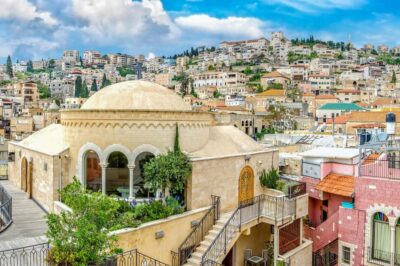
From Tel Aviv: Guided Day Trip to Nazareth & Sea of Galilee
Read our review →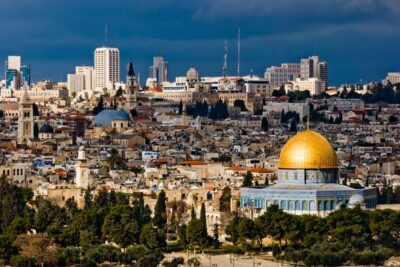
From Tel Aviv: Jerusalem Old & New City Bus Tour
Read our review →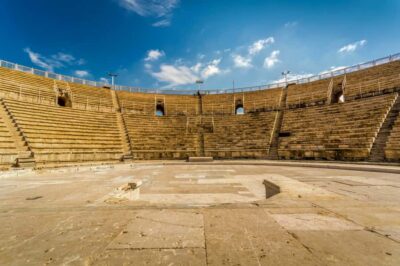
From Tel Aviv: Caesarea, Haifa and Akko Day Trip
Read our review →
From Tel Aviv: Masada, Ein Gedi & Dead Sea Tour
Read our review →
Caesarea, Rosh Hanikra and Acre Day Trip from Tel Aviv
Read our review →Browse the lists this tour appears in