
Reviewed · CARMEL MARKET TOURS
Tel Aviv: Carmel Market Food Tasting Tour “Shuk Hacarmel”
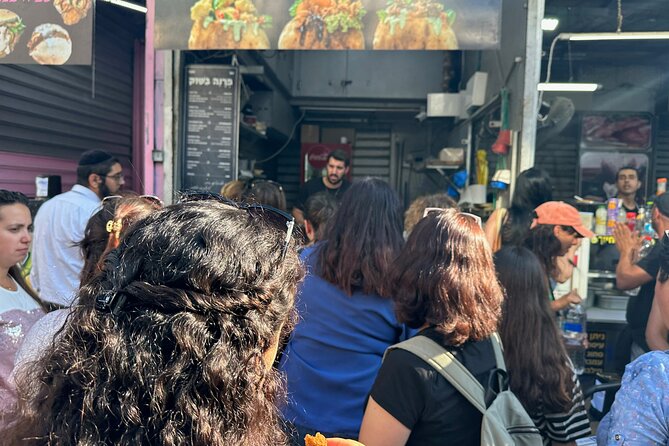
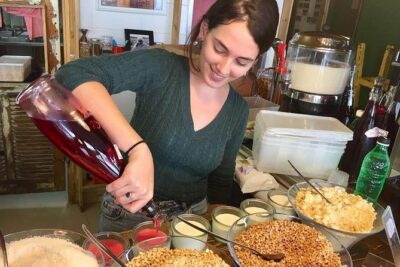
Carmel Market is less a tidy food hall than a noisy, fragrant slice of Tel Aviv life. You’ll walk through stalls selling spices, bread, olives, sweets and everyday goods, then stop for a Yemenite-style malawach sandwich, falafel, pita fillings and Middle Eastern desserts. The food tells Israel’s story, shaped by Jewish communities from North Africa, the Middle East and Europe.
I like the family-run stalls and the chance to meet vendors whose businesses have lasted for generations. I also like that the tastings add up to a proper lunch, not a few token bites. The main caution is timing: the tour is described as 90 minutes in one place and 2.5 hours in another, while some past outings finished in about an hour. Ask for the expected length when you meet.
Key points at a glance
- Yemenite flavors: Try malawach, a flaky fried bread often served as a sandwich, alongside familiar market staples.
- Lunch-sized tastings: Food stops include hummus, falafel, sabich, shredded beef in pita, fresh bread, olives, halva and baklava.
- A market with two faces: You’ll pass ordinary bargain stalls before reaching the food-centered heart of Carmel Market.
- Personal local context: Your English-speaking guide explains how Jewish communities and Mediterranean ingredients shaped Israeli food.
- Short walking route: The group covers about ¾ mile, or 1.2 kilometers, through crowded market lanes.
- Practical limits: The tour is not suited to wheelchair users or people with mobility impairments, and it runs rain or shine.
Starting at Poli House beside Carmel Market
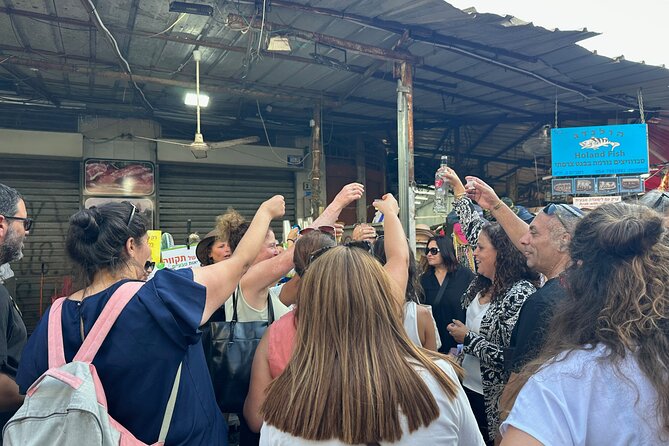
The meeting point is on the corner outside the Poli House hotel, where Allenby Street meets Carmel Market. This is a useful place to begin because you are immediately at the market’s edge, with no long transfer or complicated orientation.
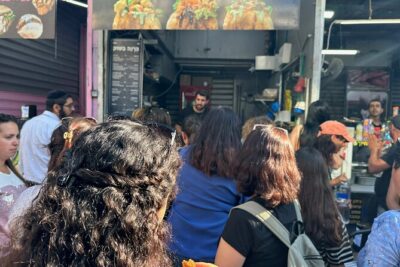
From here, expect a walking tour through narrow lanes rather than a sit-down meal. The market can feel rough around the edges, which is part of its appeal. You are seeing a working place where people shop for food and household goods, not a staged attraction built only for sightseeing.
Your guide leads the group between food counters, bakeries, produce displays, spice stands and small shops. The route covers about 1.2 kilometers, but the packed lanes and frequent stops make the outing feel more active than that distance suggests. Wear shoes with good soles, especially if the ground is wet.
The group can include up to 15 people. That is small enough for a guide to manage at most stops, though a larger group may make it harder to hear in the noisiest passages. A private group is available if you want more control over the pace and conversation.
More Market Tours in Tel Aviv
- Carmel Market Tasting Tour – LocaLocal
★ 5.0 · 140 reviews - Tel Aviv: Jaffa & Carmel Market Walking Tour
★ 4.7 · 60 reviews - Tel Aviv: Carmel Market & Tel Aviv Tour with Tastings
★ 3.8 · 36 reviews
The market’s everyday side comes first
One of the more interesting parts of the experience is the change in mood as you move through Carmel Market. The opening section includes stalls with an assortment of ordinary goods and inexpensive items. It is not all about eating right away.
That beginning helps you understand the market as a place used by locals. You get a look at the practical side of Tel Aviv shopping before reaching the more food-focused center, where music, conversation, eating and social life become more noticeable.
The contrast matters. If you arrive expecting a polished row of restaurants, Carmel Market may surprise you. Its appeal comes from the mix: food beside clothing, spices beside household items, and old family businesses beside newer stalls.
An English-speaking local guide provides the thread that connects these scenes. You hear how the market helped Tel Aviv grow into a city shaped by many Jewish communities, including people from North Africa, the Middle East and Europe. Mediterranean produce and cooking methods add another layer.
The historical talk is useful when it stays connected to what you are tasting. If you already know a lot about Jewish history or Israeli food, some of the background may feel basic. The strongest parts are the moments when a dish, vendor or ingredient gives the history a clear local shape.
Malawach brings a Yemenite twist
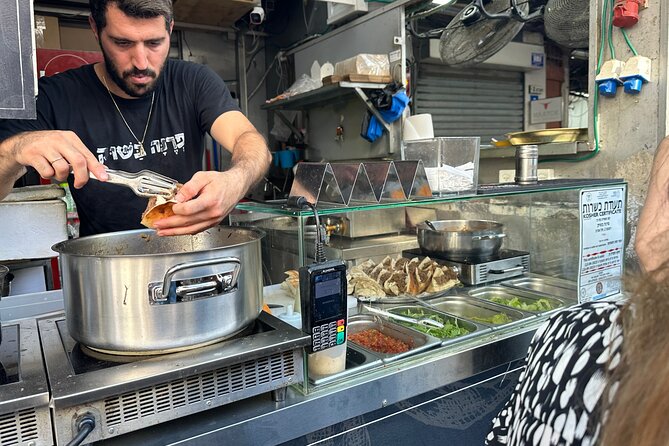
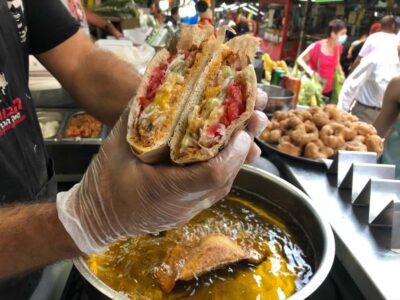
The signature flavor of the tour is the Yemenite influence, especially through malawach. This is a substantial, flaky bread with a fried texture, and it gives the tasting a different character from a standard hummus-and-falafel walk.
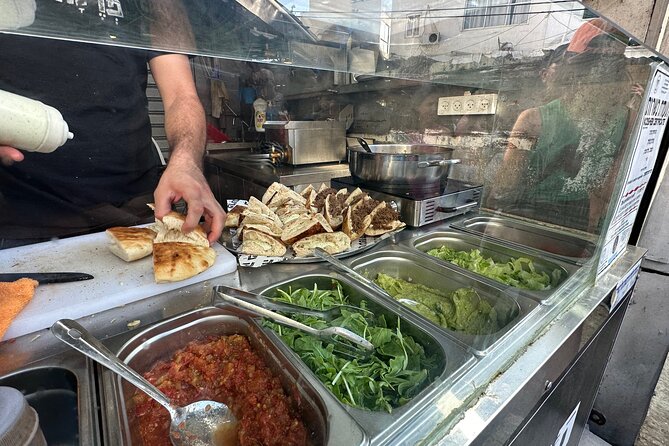
You may receive it as part of a sandwich, with fillings that turn the bread into a full meal rather than a small sample. The combination shows how immigrant cooking became part of everyday Israeli food. It is hearty, rich and filling, so pace yourself early.
That advice matters because the tastings are intended to equal a substantial lunch. You are not simply collecting tiny mouthfuls at each stop. By the later food stations, you may already feel well fed.
A malawach stop is also a good example of why a guide can add value in a market. On your own, you might walk past an unfamiliar bread without knowing how it is eaten or why it matters. A short explanation can turn an ordinary-looking item into one of the most memorable tastes of the outing.
Hummus, falafel and sabich form the familiar core
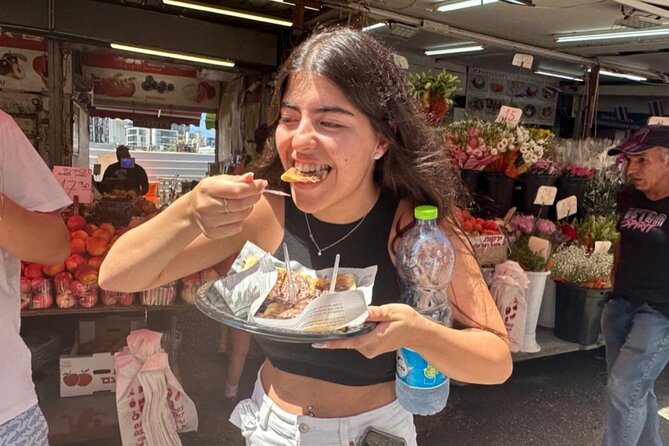
The tour also covers foods that many people already associate with Israel and the wider Middle East. Hummus offers a creamy, savory base, while fresh falafel brings a crisp outside and a seasoned interior.
Sabich adds another useful point of comparison. It is a popular Israeli sandwich built around fried eggplant and other fillings, and tasting it beside falafel or hummus helps you notice how much local food depends on bread, vegetables, pulses and sauces.
Do not expect every stop to offer a completely different format. One weakness reported by the available feedback is that all four tastings on one outing were bread-based, with no drink or fruit included. That is worth keeping in mind if you prefer a food tour with a wide range of textures and ingredients.
Still, the bread-heavy menu makes sense for a market lunch. Pita and other breads are practical, portable and central to the food culture being presented. The issue is not quality so much as variety. If you are hoping for several fresh produce samples or a beverage pairing, this tour may feel limited.
more market mornings in Tel Aviv
- Tel Aviv Food Tour of the Carmel Market
★ 4.0 · 29 reviews - Carmel Market Tasting Tour
★ 5.0 · 25 reviews - Tel Aviv: 2-Hour Carmel Market Tour in English with Lunch
★ 4.8 · 23 reviews - Tel Aviv: Carmel Market Food Tasting Tour “Shuk Hacarmel”
★ 5.0 · 5 reviews
Shredded beef in pita adds a savory stop
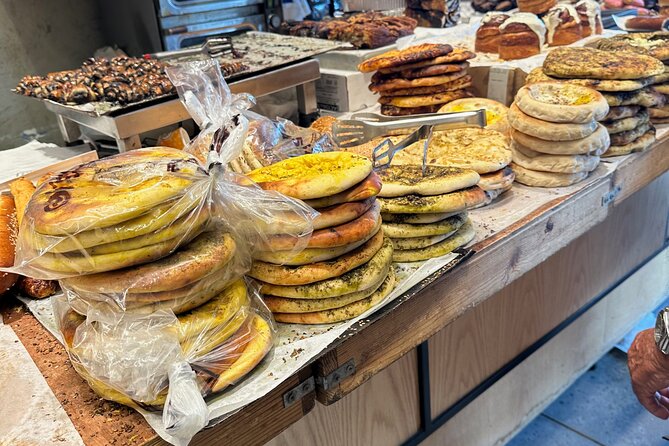
A tasting of shredded beef in pita gives the route a more substantial meat option. It is the sort of food that makes the lunch claim believable, especially when combined with malawach and falafel.
The pita format also fits the market setting. You can eat while standing or walking a short distance, rather than stopping for a formal restaurant course. That keeps the tour moving through the lanes and allows you to see more vendors.
Food tours in crowded markets work best when you accept a little disorder. You may wait for a portion to be prepared, stand close to other shoppers or eat in a busy passage. In return, you get food at the point where it is being sold and prepared, not a lecture separated from daily life.
The guide also helps with the human side of the market. You are introduced to vendors and family businesses that have operated for generations. The interaction may be brief, but it gives the stalls a sense of continuity and makes the market feel like a neighborhood institution rather than a collection of anonymous counters.
Bread, olives and spice stalls fill in the picture
The food stops are not limited to prepared sandwiches. Expect encounters with freshly baked bread, fragrant spices and Syrian olives. These ingredients show the market’s range and help connect individual dishes to the products sold around them.
The olive tasting, in particular, adds a welcome change from fried or bread-based foods. Spices provide another sensory layer, with their color and smell often making as strong an impression as the flavor itself. You may find that these short stops are as useful as the larger tastings because they show how people shop and cook at home.
The market’s mix reflects several culinary traditions at once. North African seasoning, Middle Eastern dishes, European Jewish influences and Mediterranean ingredients all appear in the broader food culture. Your guide’s job is to make those connections clear without turning the walk into a classroom.
The best approach is to listen for practical details. What is eaten for breakfast? Which foods are portable? How did a dish move from a family kitchen into a market stall? Those questions make the history easier to remember.
Halva and baklava finish the meal
Sweet dishes provide the natural final course. Halva brings a dense, sesame-based sweetness, while baklava offers layers of pastry, nuts and syrup. Both are familiar across the Middle East, but market versions can differ in texture, sweetness and presentation.
Because the earlier tastings are filling, these desserts may work better as shared samples than as large portions. If you have a strong sweet tooth, you can also buy extra pieces, though additional purchases are not included in the tour price.
The dessert stop is a good time to ask your guide which items are best for taking home. The tour is designed to introduce you to the market, and you are free to continue shopping after it ends if something catches your eye.
Keep in mind that the listed tastings do not include a drink or fruit as a standard part of the experience. Bring water, particularly in the warmer months. A sun hat and sunscreen are also sensible because the market route is outdoors.
The guide makes the difference
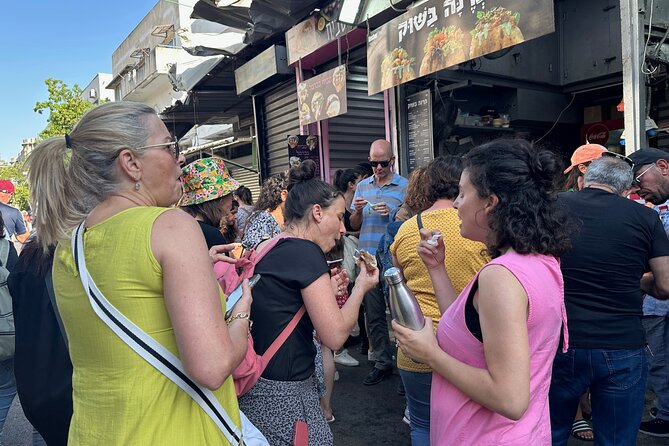
The food is the main draw, but the guide determines how much you get from it. You are booking a live, English-language walk with a licensed local guide, not a self-guided tasting card.
Alina is one guide associated with this experience. On her best outings, the tour combines food, cultural explanation and a warm connection with the market. If she is leading your group, expect her to point out lesser-known foods and explain dishes that you might otherwise overlook.
Guide quality can vary by day. One past outing had a late start and communication in English was difficult, while other outings were praised for strong cultural explanations and for introducing new foods even to people who had already visited Israel. That makes the guide’s role a real factor in the value of the tour.
I would treat the historical material as an introduction rather than a specialist lecture. Some background about religion and Jewish communities may be familiar if you have studied the subject before. The tour works best when you want food-based context, local stories and a first orientation to Carmel Market.
Is $63 a fair price?
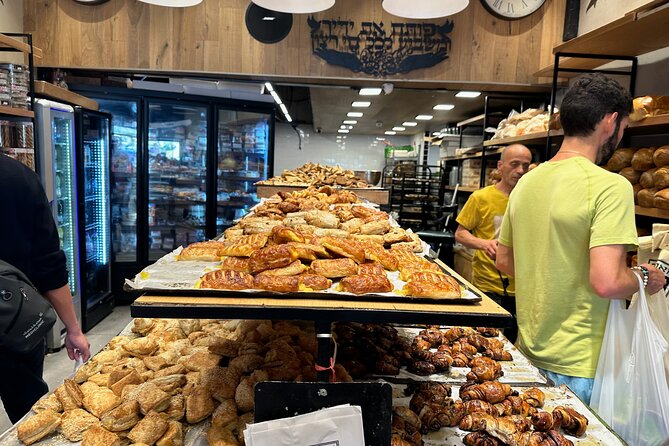
At $63 per person, the tour is not the cheapest way to eat in Carmel Market. You could buy individual snacks for less, and you would have complete freedom to choose your own portions.
The fee pays for more than food. It includes a licensed guide, introductions to family-run vendors, explanations of Israeli food traditions and a route that removes some of the guesswork from a crowded market. For a first visit to Tel Aviv, that can be worthwhile.
The value drops if the tour ends after only an hour or if the tastings feel too similar. The stated information gives both a 90-minute duration and a 2.5-hour walking tour with food stops. Several past outings were shorter than expected, so I would confirm the planned schedule before booking or at the meeting point.
The food itself is intended to replace lunch, which improves the calculation. If you arrive hungry and enjoy the dishes provided, $63 becomes easier to justify. If you are mainly looking for a long historical walk or a broad tasting menu with drinks, fruit and sit-down courses, look elsewhere.
Who should book this Carmel Market walk?
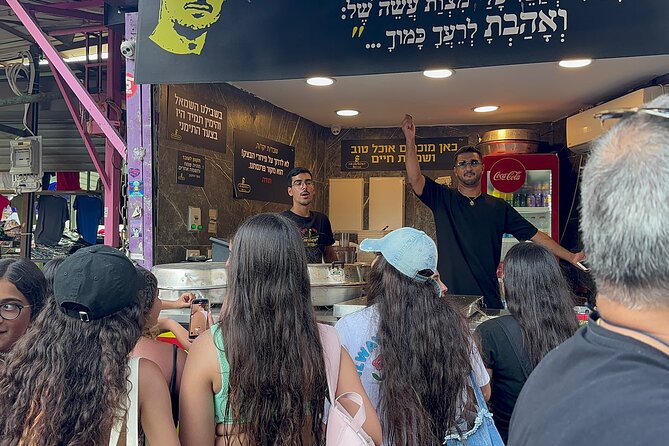
I would recommend it most strongly for first-time visitors to Tel Aviv who want a quick introduction to local food without planning every stop themselves. It also suits people who enjoy eating while walking and prefer a market’s noise and rough edges to a formal restaurant.
It is a good fit if you want to try malawach, sabich, falafel and Middle Eastern sweets but are unsure how to order them. The guide can give each dish context and help you see how different culinary traditions meet in one market.
Families can join, but children and infants must be accompanied by at least one paying adult. Infants from 0 to 1 year old are free but do not receive food samples.
The experience is not recommended for wheelchair users or people with mobility impairments. The narrow market lanes, standing tastings and uneven, crowded conditions make that a serious consideration rather than a minor footnote.
The tour runs rain or shine. You should bring comfortable shoes, water, a hat and sunscreen. If the forecast is poor, the market may feel more difficult to navigate, but the activity does not automatically stop.
Should you book it?
Book this tour if you want a substantial market lunch with local context, especially if Yemenite food and family-run stalls appeal to you. The strongest moments come from the combination of malawach, falafel, pita dishes, olives and sweets with stories about the communities that shaped Israeli cooking.
I would be more cautious if precise timing matters to you. The advertised duration is inconsistent, and a shorter-than-planned outing can make $63 feel high. Confirm the expected length and ask what tastings are planned on your date.
For a first look at Carmel Market, this is a practical, flavorful choice. For repeat visitors who already know the market, or for anyone seeking drinks, fruit and many non-bread-based samples, the value is less certain.
FAQ
Where does the tour meet?
Meet outside the Poli House hotel at the junction of Carmel Market and Allenby Street.
How long does the tour last?
The activity information gives a duration of 90 minutes, while the included details also describe a 2.5-hour walking tour with food stops. Confirm the expected timing when booking.
What food is included?
Food stops can include malawach, hummus, falafel, sabich, shredded beef in pita, Syrian olives, freshly baked bread, halva and baklava.
Is the food enough for lunch?
The tastings are described as equivalent to a substantial lunch portion, so you should arrive ready to eat.
Is the tour conducted in English?
Yes. The tour has a live English-speaking guide.
How far do I have to walk?
The route covers about ¾ mile, or 1.2 kilometers, through Carmel Market.
Is the tour wheelchair accessible?
No. It is not recommended for wheelchair users or people with mobility impairments.
Are infants and children allowed?
Children and infants may attend when accompanied by at least one paying adult. Infants from 0 to 1 year old are free but do not receive food samples.
What should I bring?
Bring comfortable shoes, water, a sun hat and sunscreen. The tour operates rain or shine.
More Food Tours in Tel Aviv
- Food & Drink Private Guided Tour in Tel Aviv
★ 5.0 · 3 reviews - Mahane Yehuda Market food tour jerusalem
★ 5.0 · 11 reviews
More Food & Drink in Tel Aviv
- Levinsky Market Tasting Tour
★ 5.0 · 8 reviews - GoKEDEM Golan Heights ATV Action & Wine-Tasting Tour From Tel Aviv
★ 5.0 · 8 reviews - Urban Walking & Food Tour in Tel Aviv
★ 5.0 · 7 reviews - Jaffa Flea Market Tasting Tour
★ 5.0 · 3 reviews
Recently added around Tel Aviv
- Jaffa Flea Market Tasting Tour★ 5.0 · 3 reviews
- Early Christianity in Galilee Private Tour★ 4.5 · 3 reviews
- Privet walking tour in Tel Aviv-Yafo★ 5.0 · 3 reviews
- Bar Crawl tour with local in Tel-Aviv★ 5.0 · 3 reviews
- Package VIP Skip Line Services in BGN Airport with Transfer to Tel aviv Hotels★ 5.0 · 3 reviews
- Food & Drink Private Guided Tour in Tel Aviv★ 5.0 · 3 reviews
- Tel Aviv: Carmel Market & Neighborhood Guided Walking Tour★ 4.7 · 3 reviews
- Tel Aviv Like a Local: Customized Guided Tour by Lokafy★ 5.0 · 3 reviews
Carmel Market Tours, compared.
Tel Aviv: Carmel Market & Tel Aviv Tour with Tastings
Read our review →
Tel Aviv: 2-Hour Carmel Market Tour in English with Lunch
Read our review →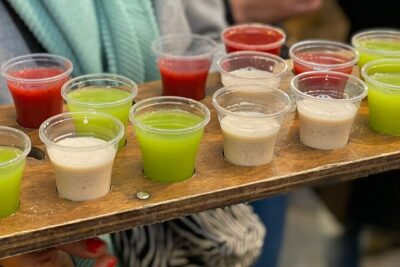
Tel Aviv: Carmel Market Food Tasting Tour “Shuk Hacarmel”
Read our review →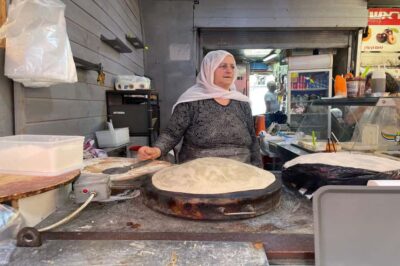
Tel Aviv: Carmel Market & Neighborhood Guided Walking Tour
Read our review →Browse the lists this tour appears in