
Reviewed · JERUSALEM TOURS
Jerusalem Yad Vashem Holocaust History Museum Tour
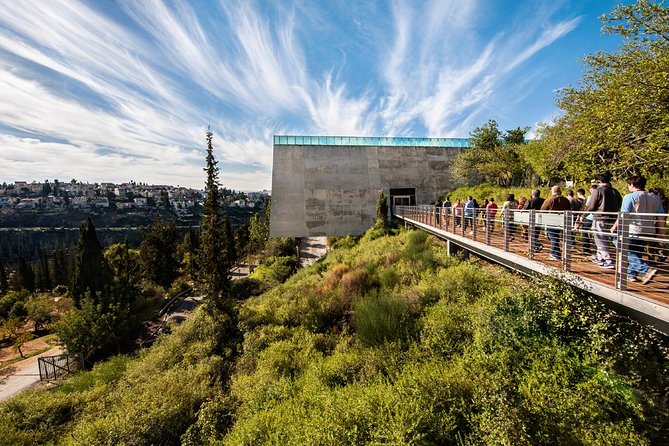
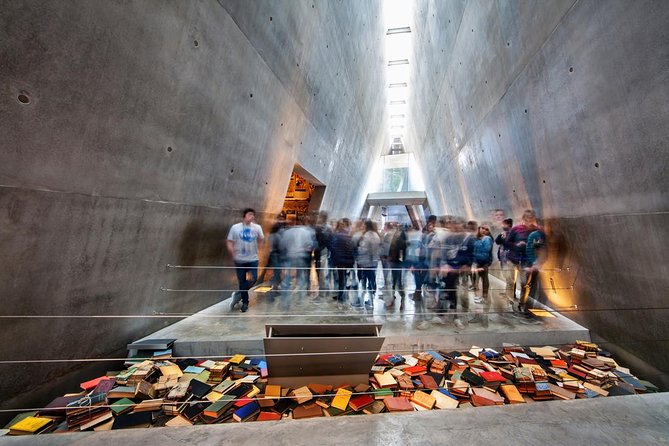
Yad Vashem is not a quick photo stop. Its nine galleries trace the Holocaust from the rise of Nazi propaganda to the murder of European Jews and its aftermath, using documents, objects, film, and personal testimony. The building itself, designed by Moshe Safdie, cuts through the mountain like a great concrete prism.
I like the official Yad Vashem guide, who gives shape to a large and emotionally demanding museum. I also like the supplied headset, since it lets you hear the guide without crowding around him or her. The main drawback is time: two hours gives you a strong introduction, but the museum can easily hold your attention for several more.
Key points to know before you go
- Nine galleries follow a clear chronology, making the museum easier to understand than a collection of isolated displays.
- The Auschwitz Album and a copy of Schindler’s List connect broad events to specific documents and lives.
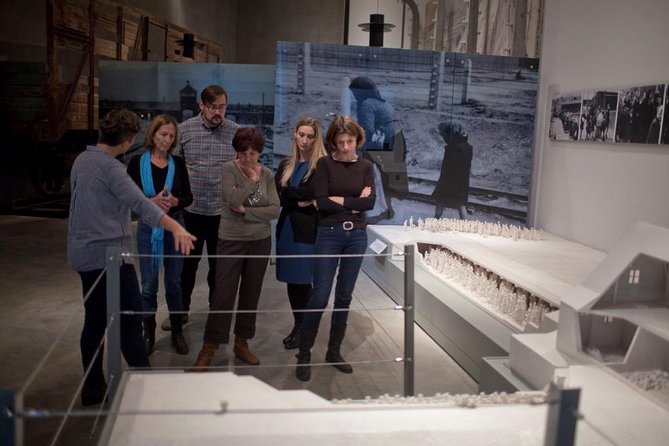
- The reconstructed Leszno Street helps you picture daily life inside the Warsaw Ghetto.
- Survivor testimonies and filmed material make this an intense visit, not a light museum outing.
- The Hall of Names offers a quiet memorial focus after the chronological galleries.
- The $12 price includes an official guide, headset, taxes, and gratuities, but not parking, food, or drinks.
Entering the Moshe Safdie museum
Your visit begins at Yad Vashem, the World Holocaust Remembrance Center in Jerusalem. The Holocaust History Museum is designed by architect Moshe Safdie, and its shape prepares you for the serious tone inside. A triangular, prism-like structure cuts through the mountain, with both ends projecting dramatically into the open air.
The architecture is spare and forceful. It does not try to soften the subject. Instead, the narrow form leads you forward, while the galleries open out from the central route. You are not simply walking through a row of display cases. The building controls your pace and keeps the story moving.
That design matters because the museum covers a huge amount of material. Without a clear order, the displays could feel like a pile of horrors. The guided route gives you a framework for understanding how events developed, step by step.
The tour starts at 10:30 a.m. and lasts about two hours. You receive a headset, which is useful in a shared group. You can keep your attention on the exhibits rather than trying to stand beside the guide at every stop.
more Jerusalem days to consider
- Israel Museum Must See High-Lights
★ 5.0 · 17 reviews
The first galleries: propaganda before mass murder
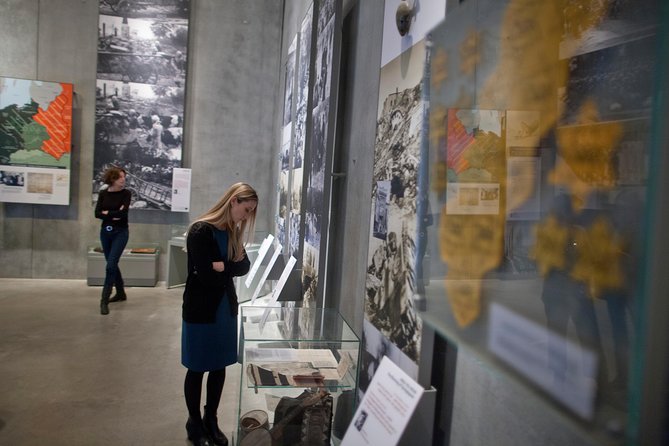
The opening sections provide context for the developments in Nazi Germany during the 1930s. You see authentic posters, propaganda, and antisemitic board games. These objects show how prejudice was pushed into public life and how political ideas were presented to ordinary people.
This part is especially important if you know the Holocaust mainly through the concentration camps. Yad Vashem shows that the catastrophe did not begin with camps and killing centers. It developed through propaganda, exclusion, legal discrimination, and the steady removal of rights.
The antisemitic board games are among the most unsettling objects because they reveal how hateful ideas could be packaged as entertainment. Posters and other printed material show how images and slogans helped make discrimination seem normal.
I find this early section valuable because it asks you to watch the process, not only the final crime. The guide can help connect the objects to the wider chronology, which is one reason this tour is worth considering even if you have visited another Holocaust museum.
Following nine chapters through the Holocaust
The museum’s nine galleries each cover a different chapter in the history of the Holocaust. Together, they trace the experience of European Jews from the years before the war through persecution, deportation, ghetto life, mass murder, and liberation.
The chronological structure is one of the museum’s greatest strengths. You are less likely to lose track of when events happened or how one policy led to another. At the same time, the displays include personal material, so the story does not become only a timeline of dates and governments.
Expect a large amount of information. The museum uses authentic artifacts, photographs, documents, propaganda, and video. Survivor testimonies add individual voices to the historical record and help show the human cost behind the statistics.
The material can be graphic and emotionally heavy. You should not plan this as a casual stop between lunch and shopping. Even people who have already visited Dachau, Auschwitz, or Holocaust museums in the United States may find Yad Vashem upsetting.
That intensity is not a flaw, but it is a planning issue. Give yourself space afterward. A more cheerful part of Jerusalem, such as the Old City or the Israel Museum, may be a better next stop than another solemn memorial.
Leszno Street and the Warsaw Ghetto
One memorable section is Leszno Street, where you walk on cobblestones from a reconstructed street in the Warsaw Ghetto. This is a change from reading labels beside display cases. The setting gives you a physical sense of a place where people tried to maintain daily life under confinement and terror.
The street is not a complete recreation of the ghetto, and you should not expect an entertainment-style historical set. Its value comes from the shift in scale. The larger story of Nazi occupation and persecution becomes tied to a particular urban space.
The museum uses such details to show how ordinary surroundings became part of a system of control. Streets, homes, schools, shops, and public spaces were all affected. A guide can point out how the personal and political stories fit together.
This section may also slow you down. Two hours is not enough for close reading of every panel or video. If you want to study the Warsaw Ghetto material carefully, plan to remain after the guided portion.
A different kind of day out of Jerusalem:
- From Jerusalem: Masada & Dead Sea Full Day Tour with Pick Up
★ 4.5 · 815 reviews - Masada and the Dead Sea Day Trip from Jerusalem
★ 4.5 · 757 reviews - From Jerusalem: Nazareth and Sea of Galilee Tour
★ 4.5 · 588 reviews - From Jerusalem: Half-Day Bethlehem Guided Tour
★ 4.7 · 568 reviews
The Auschwitz Album and Schindler’s List
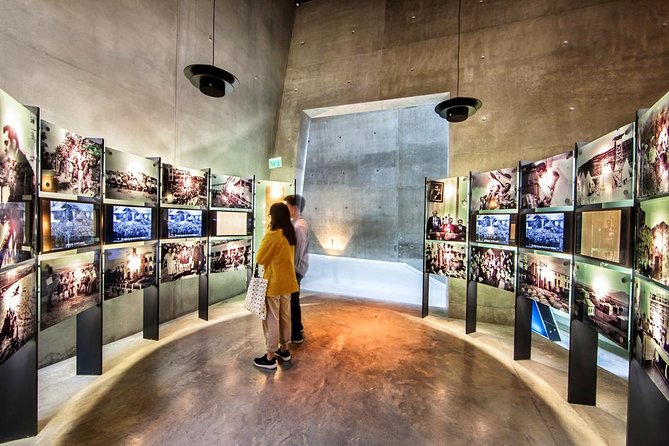
The Auschwitz Album is one of the key objects shown on the tour. It contains photographs connected with the arrival and selection of Jews at Auschwitz. Seeing this kind of evidence in the museum’s wider chronology helps connect a familiar place name to specific people and documented events.
You also see a copy of Schindler’s List. The document is a useful reminder that names on paper could determine who was protected from deportation and murder. It also links popular memory of the Holocaust with a historical record.
These objects carry weight because they are not general symbols. They are documents tied to real decisions and real lives. The guide’s explanation helps prevent them from becoming famous items viewed without context.
If you already know the story of Oskar Schindler or have seen a film about him, the list will not feel like a completely new subject. Its value here is the way it sits among the other evidence, showing how individual actions existed within a much larger machinery of persecution.
Film, photographs, and survivor testimonies
Yad Vashem uses moving images and survivor testimonies throughout the museum. The filmed material can be difficult to watch, but it also prevents the subject from becoming distant or abstract.
You will encounter personal accounts alongside photographs, documents, and objects. This combination is effective because no single type of evidence can express the full scale of the Holocaust. Documents explain policy. Photographs show places and people. Testimonies convey memory and loss.
The result requires concentration. You may want to read every label, watch every testimony, and stop at each artifact. You cannot do that within a two-hour guided visit. I would treat the tour as a well-structured first pass, then continue independently if the museum’s hours and your schedule allow.
The supplied headset helps here. You can hear the official guide clearly while looking at the displays, and you are not forced to choose between listening and seeing. In a shared tour, that small practical detail makes a real difference.
The Hall of Names and the memorial focus
The Hall of Names provides a different kind of experience from the chronological galleries. The museum uses it as a memorial to the victims, shifting attention from events and evidence to individual people.
After the density of the galleries, this space can feel quieter and more reflective. It reminds you that the Holocaust was not only a historical process or a collection of statistics. Each name represented a life, a family, and a lost future.
You should not rush this part. The guided schedule may move you onward, but you can return to areas that matter most once the formal tour ends. The chance to continue exploring is one of the best features of this experience.
The center also includes other memorial spaces, including the Children’s Memorial mentioned by visitors as especially painful. The information provided for this tour does not promise a specific stop there, so treat it as a possible part of further exploration rather than a guaranteed element of the two-hour route.
How much can you really see in two hours?
The advertised duration is approximately two hours. That is enough for a guided overview of the main chronology and important objects, but it is not enough to see every display in detail.
I would arrive ready to listen rather than trying to race through the museum. The official guide can point out key material and explain why certain objects matter. After the tour, you can continue exploring on your own, which gives you a chance to return to galleries that moved or puzzled you.
Some people spend three or four hours and still feel they have not seen everything. That is easy to understand. The museum contains extensive written material, filmed testimony, artifacts, and large displays. If you are researching family history or have a strong interest in Holocaust studies, you may want much longer.
The best approach is to avoid an overpacked day. Two hours with a guide, followed by additional time if you have the energy, works better than trying to squeeze Yad Vashem between several unrelated Jerusalem attractions.
Is the $12 tour a good value?
At $12 per person, this is a modestly priced guided museum experience. The fee includes a professional Yad Vashem guide, headset, gratuities, taxes, and handling charges. Parking costs extra if you use it, and food and drinks are not included.
The value comes from the structure and explanation. You can tour a museum independently, but the scale and emotional weight make a guide useful. A good guide helps you identify the central objects, follow the chronology, and understand how propaganda and discrimination led to mass murder.
This is not the right purchase if you want a short, light introduction with no difficult material. You are paying for access to a serious historical institution and a guided route through disturbing evidence. The subject itself demands time and attention.
The tour is also a sensible choice if you have already visited another Holocaust museum and want a different presentation. It should not be treated as redundant. Yad Vashem’s building, galleries, artifacts, and memorial spaces create their own experience.
Who should book this experience?
I recommend this tour for adults and older visitors who want a structured introduction to the Holocaust in Jerusalem. It suits people who value historical context, original documents, survivor testimony, and a guide who can explain what they are seeing.
It is particularly helpful if you are visiting Yad Vashem for the first time. The museum is easy to navigate, but its size can make independent viewing feel overwhelming. A guided opening gives you a map for the rest of your visit.
You should think carefully about bringing children. The material is deeply upsetting and can include graphic images and testimony. The supplied information says most participants can take part and that service animals are allowed, but it does not provide a detailed child suitability policy.
This tour may also suit people tracing Jewish family history. Yad Vashem has a research center, and research assistants may be available to help with family questions, although that research service is not described as part of the guided tour itself.
Practical planning for a difficult visit
Book ahead if your schedule is fixed. The experience is booked on average 28 days in advance, which suggests that a last-minute place may not always be available.
The start time is 10:30 a.m. Build in more time than the formal two hours if you want to explore after the guide leaves. You may also need time afterward to sit quietly and process what you have seen.
Wear comfortable shoes. The museum route includes reconstructed cobblestones at Leszno Street, and the center is large enough that you will spend much of the visit walking and standing.
Public transportation is nearby, and the center is accessible to most participants. Service animals are allowed. If you drive, remember that parking is not part of the tour price and is paid on site.
Free cancellation is available if you cancel at least 24 hours before the local start time. Changes or cancellations made later are not accepted for a refund.
Should you book the Yad Vashem guided tour?
Book it if you want help making sense of a large and emotionally demanding museum. The official guide, headset, clear chronology, major artifacts, and opportunity to continue independently make the $12 price fair.
Do not book it as a quick attraction you can finish between other plans. Two hours is only an introduction, and the material may stay with you long after you leave. Plan a quieter or brighter activity afterward.
For a first visit to Yad Vashem, I would choose the guided option. It gives you the essential structure, leaves room for personal exploration, and helps ensure that you do not miss the museum’s most important evidence and memorial spaces.
FAQ
Where does the tour take place?
The tour takes place at Yad Vashem, the World Holocaust Remembrance Center in Jerusalem, specifically in the Holocaust History Museum.
What time does the tour start?
The tour starts at 10:30 a.m.
How long does the experience last?
The guided experience lasts approximately two hours. You also have an opportunity to continue exploring the museum after the tour.
Is the tour guided?
Yes. A professional official Yad Vashem guide leads the shared tour.
Are headsets provided?
Yes. Headsets are provided so you can hear the guide clearly.
What exhibits are included?
The tour includes nine galleries covering different chapters of the Holocaust, the Auschwitz Album, a copy of Schindler’s List, survivor testimonies, and the Hall of Names. It also includes Leszno Street, a reconstructed street from the Warsaw Ghetto.
What is included in the price?
The price includes the professional Yad Vashem guide, headsets, gratuities, and all taxes, fees, and handling charges. Parking, food, and drinks are not included.
Can I cancel for a full refund?
Yes, if you cancel at least 24 hours before the experience’s start time. Cancellations made less than 24 hours before the start time are not refunded, and late changes are not accepted.
Recently added around Jerusalem
- Holy Jerusalem Full Day Tour from Jerusalem★ 5.0 · 3 reviews
- Half day tour bethlehem prices per Van up to 6 pax★ 5.0 · 3 reviews
- jerusalem classic tour★ 5.0 · 3 reviews
- Private Walking Tour in Jerusalem’s Old City★ 5.0 · 3 reviews
- Private Tour to the Culinary World of Jerusalem Market★ 5.0 · 3 reviews
- From Jerusalem: Masada Sunrise, Ein Gedi & Dead Sea★ 5.0 · 3 reviews
- Private Tour Bethlehem and the Dead Sea★ 5.0 · 3 reviews
- Jerusalem Like a Local: Customized Private Tour★ 5.0 · 3 reviews
Jerusalem Tours, compared.

From Jerusalem: Masada & Dead Sea Full Day Tour with Pick Up
Read our review →
From Jerusalem: Nazareth and Sea of Galilee Tour
Read our review →

From Jerusalem/Tel Aviv: Bethlehem and Dead Sea Day Tour
Read our review →
Masada, Ein Gedi and The Dead Sea from Jerusalem
Read our review →Browse the lists this tour appears in