
Reviewed · JERUSALEM TOURS
Israel Museum Must See High-Lights
Jerusalem’s Israel Museum is big enough to swallow half a day before you find the exhibits you came to see. This private visit fixes that problem, taking you straight to the Second Temple Jerusalem Model, the Dead Sea Scrolls, biblical archaeology, and Jewish life displays. I like the clear historical thread and the chance to ask Uri Goldflam questions as you go. The main catch is that the tour can run from two to four hours, and one museum admission is listed separately, so confirm the ticket details before booking.
I also like the small private format, especially for families or a group with mixed interests. Uri’s style appears to suit people who want history, biblical context, and present-day Israel discussed together, without a large group moving at someone else’s pace. Pickup is offered from Jerusalem locations, but the stated meeting point is at the museum, so clarify the transport plan when you reserve.
Key points at a glance
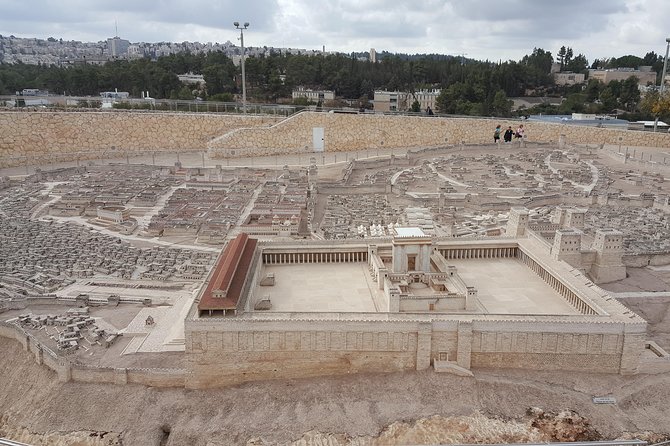
- The Second Temple model gives you a fast, useful view of Jerusalem as it looked in the time of Jesus.
- The Shrine of the Book presents the Dead Sea Scrolls and a facsimile of the complete Book of Isaiah.
- Uri Goldflam leads the visit, bringing together archaeology, geography, Jewish history, Christianity, and biblical references.
- The private group limit is six people, making it easier to pause, ask questions, and adjust the pace.
- The tour links four subjects: ancient Jerusalem, biblical archaeology, the Dead Sea Scrolls, and Jewish customs.
- The price is $512.83 per group, which makes the most sense when shared by several people.
Why this museum visit needs a plan
The Israel Museum is not a single-room attraction. It spreads across major collections, and a first visit can leave you spending too much time finding your way and too little time making sense of what you see.
This tour gives you a firm route. The order is sensible: first, you get a physical picture of ancient Jerusalem; next, you see the Dead Sea Scrolls; then you move into archaeology and Jewish culture. Each stop adds a new layer instead of presenting four unrelated museum rooms.
I especially like this approach if you are visiting Jerusalem for a short stay. You will not see everything in the museum, and that is the point. You get a focused introduction to some of its most important material, with a guide explaining why each piece matters.
The private setup also changes the feel of the visit. With only your own group, you can ask about a biblical passage, a date, a place name, or a Jewish custom without worrying about holding up a busload of people. Uri Goldflam is repeatedly praised for making complex subjects understandable and engaging. The strongest comments also point to his broad command of Israeli geography, religion, politics, and history, plus a respectful approach to Christianity and Jewish tradition.
more Jerusalem days to consider
- Jerusalem Yad Vashem Holocaust History Museum Tour
★ 5.0 · 98 reviews
Stop one: seeing Jerusalem through the Second Temple model
The Second Temple Jerusalem Model is a 1:50 scale model of the city. It shows Jerusalem during the Second Temple period, the era connected with the time of Jesus.
At first, a model may sound less dramatic than an original object in a glass case. In practice, it can be one of the most useful stops. Jerusalem’s hills, valleys, walls, Temple complex, and surrounding geography are difficult to picture from written descriptions alone. Here, you can grasp the city’s shape with one quick walk around the display.
That physical view helps put scripture into place. Passages that refer to going up to Jerusalem, the Temple, the city walls, or nearby locations become easier to understand once you can see the distances and slopes. The model also helps explain how the city developed over time.
The scheduled visit is about 45 minutes, which should give Uri enough room to orient you without turning the stop into a long lecture. Ask him to connect the model to the archaeological material you will see later. That link is one of the main reasons to take the tour rather than simply walk through the museum on your own.
The possible drawback is that this stop is visual and interpretive. If you already have a firm grasp of Second Temple Jerusalem, you may want less time here and more time in the archaeological wing. A private guide can adjust the emphasis more easily than a fixed group tour, but you should still say what interests you most at the start.
Stop two: the Dead Sea Scrolls at the Shrine of the Book
The Shrine of the Book is the museum’s home for the Dead Sea Scrolls. The building itself has a distinctive design, created to house and present these ancient texts in a fitting setting.
The scrolls are the heart of the stop. You will see copies of biblical scripture dating from roughly 2,000 to 2,200 years ago, along with material connected to their discovery and excavation. A facsimile of the complete Book of Isaiah is also part of the display.
This is where the guide’s historical framing matters. The scrolls are not simply old manuscripts. They help you think about how biblical texts were copied, preserved, and transmitted before the modern era. You can also see how an archaeological discovery becomes part of a larger story about Jewish history and the Bible.
The planned time here is another 45 minutes. That is enough for a careful explanation and a close look, though you should not expect to read every text or absorb every detail in the building. If manuscript history is your main interest, you may want to ask in advance how much of the stop can be devoted to the scrolls themselves.
The Shrine of the Book is also a good point for visitors with different religious backgrounds. The material has clear importance for Jewish history, but it also speaks directly to anyone interested in biblical transmission and the world in which early Jewish texts circulated. Uri’s ability to discuss Jewish heritage while showing respect for Christian perspectives is particularly useful here.
Stop three: biblical archaeology in the Israel Museum
The archaeological wing is the longest part of the visit, at about 90 minutes. It is also where the tour takes its boldest approach, following the biblical narrative through archaeological findings.
That does not mean every object will prove or disprove a biblical story. A good museum visit is more useful than that simple question. Archaeology gives you buildings, inscriptions, tools, pottery, and other physical evidence from ancient societies. A guide can then explain what those objects tell us, what they suggest, and where interpretation remains open.
This is likely to be the most demanding section of the tour. You will move across long stretches of time, and the material may include names and places that are familiar from scripture but less familiar in archaeological terms. Uri’s role is to connect the objects to geography and historical sequence so the collection does not feel like a pile of disconnected artifacts.
I like the way this section follows the earlier model. You first see Jerusalem as a city, then encounter ancient biblical texts, and finally examine the material culture of the period. The result is a more grounded picture of the biblical world.
The 90-minute slot is helpful, but it also means the tour cannot cover the entire archaeological collection. If you want a specialized focus, such as a particular period or religious tradition, tell Uri early. The phrase highlights visit means selection is necessary.
One practical point deserves attention: admission for this Israel Museum stop is marked as not included, while admission is listed as included at the other stops. That wording is not fully clear. Ask exactly what museum entry is covered, what you must pay separately, and whether the ticket includes the archaeological and Jewish culture sections. This is the one detail I would settle before committing to the $512.83 group price.
A different kind of day out of Jerusalem:
- From Jerusalem: Masada & Dead Sea Full Day Tour with Pick Up
★ 4.5 · 815 reviews - Masada and the Dead Sea Day Trip from Jerusalem
★ 4.5 · 757 reviews - From Jerusalem: Nazareth and Sea of Galilee Tour
★ 4.5 · 588 reviews - From Jerusalem: Half-Day Bethlehem Guided Tour
★ 4.7 · 568 reviews
Stop four: Jewish culture and the shape of daily life
The final stop focuses on Jewish Culture and Life-Cycle displays. After the ancient texts and archaeological objects, this section brings the subject into the realm of customs, celebrations, and ordinary community life.
The emphasis is on what Jewish communities share across different continents and across many generations. You will look at weekly, seasonal, and annual events, along with life-cycle traditions. The collection helps explain how identity can be carried through practice, not only through written history.
This 45-minute section should work well for visitors who want more than biblical archaeology. It gives you a chance to see how Jewish tradition is expressed in objects and ceremonies, and how customs can connect people living far apart.
For families, this may be the most accessible part of the tour. Teenagers and younger adults often connect more readily with celebrations, family milestones, and recurring holidays than with a long chronology of ancient artifacts. If your group includes people with different religious backgrounds, this section also offers a respectful way to discuss Jewish life without assuming prior knowledge.
The tradeoff is time. A 45-minute visit provides an introduction, not a full study of Jewish culture. You may leave with several questions, which is a good reason to ask Uri to point out the displays most relevant to your interests.
Uri Goldflam’s role in the experience
A museum guide can either make a collection readable or simply add more facts to an already crowded room. The comments about Uri Goldflam consistently point to warmth, clarity, and an unusual range of subject knowledge.
The useful part for you is not only his command of dates. He is described as someone who links geography, biblical references, Israeli history, Jewish heritage, Christianity, public policy, and current regional issues. That combination can make the museum feel connected to the places you are seeing elsewhere in Jerusalem.
Several comments also describe Uri as engaging rather than dry. That matters in a museum, where an hour of names and timelines can wear you down. His strength seems to be turning the objects into a story while keeping the tone personal and approachable.
His experience with families and larger educational groups is another plus. The private booking is limited to six people, so you can ask for explanations suited to your group. A family marking a bar or bat mitzvah, a church group studying the Bible, and a history-focused couple would not need the same emphasis.
Keep your expectations sensible. A guide can explain, compare, and interpret, but the museum still has a lot to see. If you want long periods of quiet looking, tell Uri. If you want a fast-moving lesson with many connections, say that too.
What $512.83 means for a group of six
The price is $512.83 for up to six people, not per person. At the full group size, that works out to about $85.47 each. For two people, the effective cost is about $256.42 per person, so the value changes sharply with group size.
For six people who want a private guide, the price can be reasonable. You are paying for a focused route, a guide’s time, and the convenience of keeping the discussion within your own group. Pickup and drop-off from a Jerusalem location are offered on request, which may add useful value if you do not want to arrange your own way to the museum.
For a couple, the price is harder to justify unless personal guiding is a major priority. You could spend less by visiting the museum independently, though you would give up the historical connections and the chance to ask questions as you move through the displays.
Admission needs special attention. Since one stop is marked as not including admission, ask for a full cost breakdown before booking. You should know if the quoted price covers all museum sections, only selected entries, or a combination of admission arrangements.
Timing, pickup, and the practical details
The experience is advertised as lasting about two to four hours. The four scheduled sections add up to approximately three hours and 45 minutes, so the longer version is the clearest guide to your day. Allow extra time for meeting, moving between areas, and any ticket arrangements.
Pickup and drop-off are offered from any location in Jerusalem on request. At the same time, the listed start point is at the museum, at the museum shops area, with the ticket redemption point at Israel Museum/Ruppin. Do not assume the vehicle will automatically come to your hotel. Confirm the exact pickup place and time.
An air-conditioned vehicle is included. The activity also states that it is near public transportation, service animals are allowed, and most people can participate. No special mobility details are provided, so ask the provider directly if your group has specific access needs.
The listed opening hours show Tuesday from 4:00 PM to 9:00 PM for the displayed date range. Because museum hours can affect the route and the available start time, confirm the operating schedule for your date. Booking confirmation is sent within 48 hours, subject to availability.
Free cancellation is available if you cancel at least 24 hours before the start time. A cancellation inside that window is not refundable, and changes made within 24 hours are not accepted.
Who will get the most from this visit
I would choose this tour if you want the Israel Museum to support a larger visit to Jerusalem. It is especially suitable for:
- A private group of up to six people
- Visitors interested in biblical archaeology and Jewish history
- Families who want a guide to keep younger members involved
- Christian visitors seeking historical context for scripture
- First-time museum visitors who do not want to plan their own route
- People who value a guide with a broad view of Israeli history and culture
I would think twice if you want a slow, self-guided museum day or if modern art is your main reason for visiting. The listed route concentrates on the Second Temple period, Dead Sea Scrolls, archaeology, and Jewish life. It does not promise a full tour of every collection.
You should also compare the price with your group size. Six people can share the cost comfortably. Two people pay much more for the same private format, though they may value the individual attention.
Should you book the Israel Museum highlights tour?
Book it if you want a focused, historically connected visit and prefer a private guide to wandering through a huge museum alone. The strongest feature is the sequence: ancient Jerusalem first, then the Dead Sea Scrolls, then archaeology, then Jewish customs. That order gives the displays a clear shape.
Uri Goldflam appears to be the right kind of guide for visitors who want more than labels on a wall. His particular strength is connecting objects to biblical references, geography, Jewish tradition, Christianity, and modern Israel.
Before booking, confirm three things: the final tour length, the exact pickup arrangement, and which admissions are included. If you have four to six people and those details work for you, this is a practical way to make the Israel Museum feel manageable without flattening its history into a quick checklist.
FAQ
How much does the private Israel Museum tour cost?
The price is $512.83 per group, with up to six people allowed in the group.
How long does the experience last?
The stated duration is approximately two to four hours. The scheduled stops total about three hours and 45 minutes.
Is hotel pickup available in Jerusalem?
Pickup and drop-off are offered from any location in Jerusalem on request. The listed meeting point is also at the Israel Museum, so confirm the exact arrangement when booking.
What are the main stops?
The visit includes the Second Temple Jerusalem Model, the Shrine of the Book, the Israel Museum archaeological wing, and the Jewish Culture and Life-Cycle displays.
Are museum admission tickets included?
Admission is listed as included for the Second Temple model, the Shrine of the Book, and the Jewish Culture and Life-Cycle stop. Admission for the Israel Museum archaeological stop is listed as not included, so confirm the full ticket arrangement before booking.
Who leads the tour?
The experience provider is Uri Goldflam of Travel Trailer Israel.
How many people can join?
This is a private activity for your group, with a maximum of six people.
Is an air-conditioned vehicle included?
Yes. An air-conditioned vehicle is included.
What is the cancellation policy?
You can cancel for a full refund if you cancel at least 24 hours before the experience start time. Cancellations or changes made less than 24 hours before the start time are not accepted for a refund.
Recently added around Jerusalem
- Holy Jerusalem Full Day Tour from Jerusalem★ 5.0 · 3 reviews
- Half day tour bethlehem prices per Van up to 6 pax★ 5.0 · 3 reviews
- jerusalem classic tour★ 5.0 · 3 reviews
- Private Walking Tour in Jerusalem’s Old City★ 5.0 · 3 reviews
- Private Tour to the Culinary World of Jerusalem Market★ 5.0 · 3 reviews
- From Jerusalem: Masada Sunrise, Ein Gedi & Dead Sea★ 5.0 · 3 reviews
- Private Tour Bethlehem and the Dead Sea★ 5.0 · 3 reviews
- Jerusalem Like a Local: Customized Private Tour★ 5.0 · 3 reviews
Jerusalem Tours, compared.

From Jerusalem: Masada & Dead Sea Full Day Tour with Pick Up
Read our review →
From Jerusalem: Nazareth and Sea of Galilee Tour
Read our review →

From Jerusalem/Tel Aviv: Bethlehem and Dead Sea Day Tour
Read our review →
Masada, Ein Gedi and The Dead Sea from Jerusalem
Read our review →Browse the lists this tour appears in