
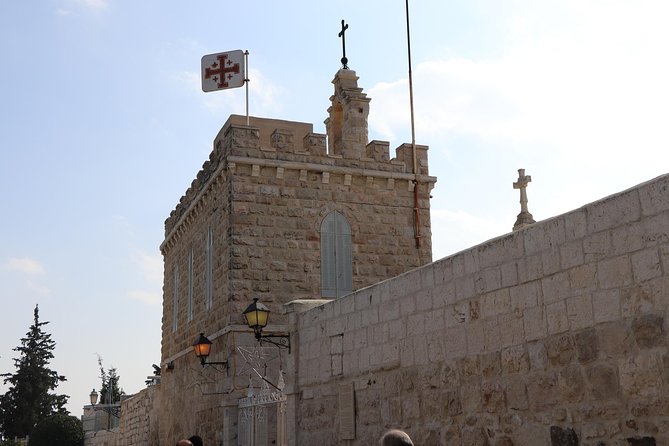
Reviewed · BETHLEHEM TOURS
Tour From Jerusalem & Tel Aviv: Half Day Travel to Bethlehem
The heart of this half-day trip is the grotto beneath the Church of the Nativity, the place traditionally identified as where Jesus was born. You also visit Shepherds’ Fields and the Milk Grotto, then see Bethlehem through its shops, streets, churches, and Palestinian art.
I like the smart route from Tel Aviv to Jerusalem, since you do not need to return to your starting point. I also like the local touch: guides explain the sites, introduce olive wood work, and may add small cultural details such as Bethlehem bread, hot drinks, or a prayer in Aramaic.
The main caution is time. Five hours is enough for the major sights, but the line to the birth grotto can take 30 to 90 minutes. Sunday visits and Christian holidays are poor choices because Mass may close the grotto.
Key points to know before booking
- The birth grotto is the main reason to go: The tour guarantees a visit down to the grotto, though waiting can take up to 90 minutes.
- The route ends in Jerusalem: This is useful if you are staying there after beginning your day in Tel Aviv.
- George may add a memorable local perspective: One guide speaks Aramaic and has said the Lord’s Prayer over the group in that language.
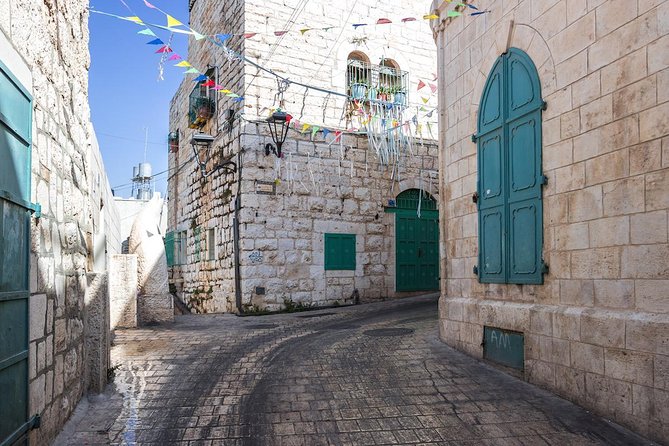
- You see both sacred sites and daily culture: The schedule includes Shepherds’ Fields, churches, Star Street, art spaces, and an olive wood workshop.
- The pace is brisk: Stops range from 10 to 35 minutes, with about five hours for the full outing.
- The price is $75 per person: Transport, guide services, admission fees, and the grotto visit are included, but food and drinks are not.
Why the Bethlehem grotto matters
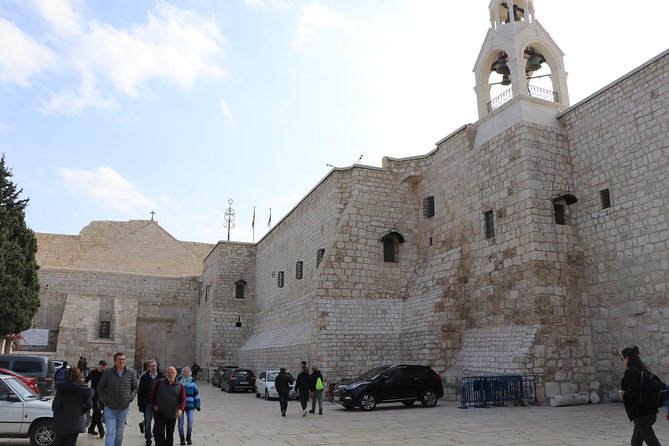
Bethlehem is not simply a quick stop on a religious sightseeing circuit. For many people, the small grotto below the Church of the Nativity is the reason for making the trip at all. The site is tied to the Christian account of Jesus’ birth, and the church above it is one of the oldest working churches in the world.
You enter the church as part of a guided visit, then go down toward the grotto. The included admission and stated guarantee are important here. A do-it-yourself visit might leave you unsure about the entrance, the church’s layout, or the best way to reach the lower chapel. A guide gives the site context and helps you use a short visit well.
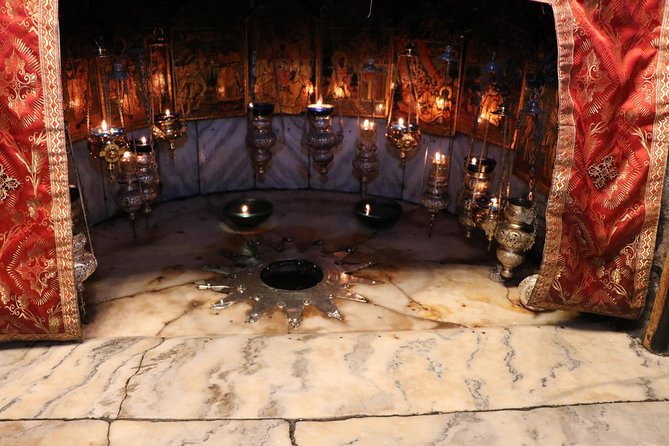
You should also set your expectations correctly. This is not a quiet, private prayer stop. The grotto is a major pilgrimage site, and the line may last from 30 to 90 minutes on a regular day. The actual stop is listed at about 20 minutes, so much of your time may be spent waiting rather than looking around.
That wait is easier to accept if the grotto is personally important to you. If you are mainly interested in architecture, Palestinian culture, or general sightseeing, the long queue may feel like too large a share of a five-hour tour.
more bethlehem day trips
- From Jerusalem: Half-Day Bethlehem Guided Tour
★ 4.7 · 568 reviews - Jerusalem/Tel Aviv: Bethlehem, Jericho and Jordan River Tour
★ 4.6 · 526 reviews - From Jerusalem/Tel Aviv: Bethlehem and Dead Sea Day Tour
★ 4.7 · 484 reviews
Shepherds’ Fields and the first stop of the day
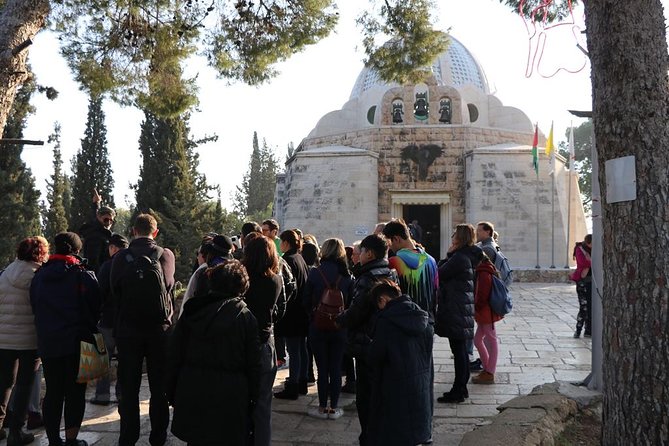
The visit to the Shepherds’ Sanctuary takes about 35 minutes, making it the longest named stop. The chapel is in Beit Sahur, southeast of Bethlehem, in the area traditionally associated with the shepherds who heard the announcement of Christ’s birth.
This stop gives the tour a useful beginning. Instead of going straight to the most famous church, you first visit a smaller religious setting linked to the same story. The chapel offers a calmer place to hear the Biblical account and understand how several sites around Bethlehem connect to it.
The tour description identifies the building as a Catholic chapel. That matters because Bethlehem’s holy places are shared among different Christian communities, each with its own customs and spaces. Your guide can help you follow those distinctions without needing to prepare a long religious history lesson before you arrive.
The 35-minute stop is still short. You will have time to see the chapel and hear an explanation, but not to linger at length. Wear shoes you can walk in comfortably, since the day combines vehicle transfers, church visits, and short walks between sights.
The Milk Grotto and its unusual tradition
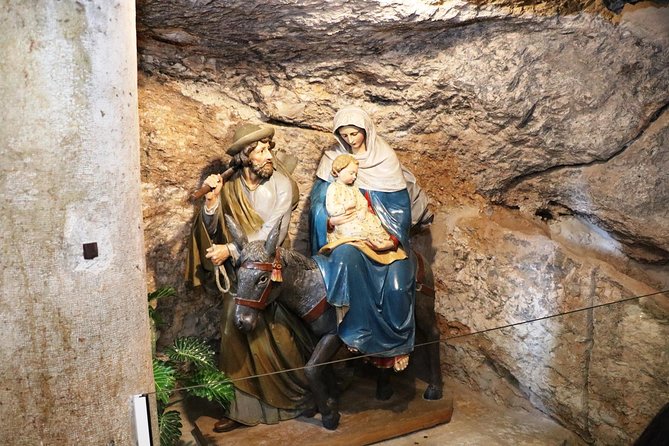
The Milk Grotto Church is a small but memorable stop. It is connected to the story of the Holy Family taking refuge here during the Massacre of the Innocents before fleeing to Egypt. The name comes from a tradition that a drop of Mary’s milk fell onto the cave floor and turned the stone white.
You get about 20 minutes here. That is enough for a focused visit, especially if you are already seeing several churches in the same morning. The site offers a different tone from the Church of the Nativity. The Nativity grotto centers on the birth itself, while the Milk Grotto is tied to escape, refuge, and the early life of the Holy Family.
I like the way these two grotto visits complement each other. You are not seeing one church, taking a photograph, and moving on. You are visiting places connected with different parts of the Christian story, with a guide explaining why each one matters.
Still, the stop is brief. You should not expect a long service, extended personal time, or a detailed architectural study. The value comes from the setting and the explanation rather than the amount of time spent inside.
Inside the Church of the Nativity
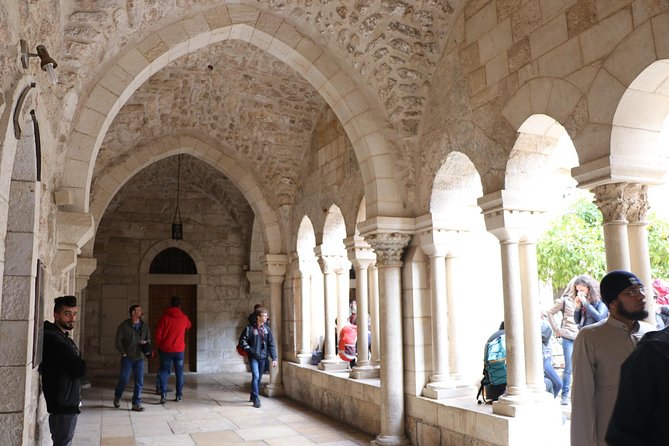
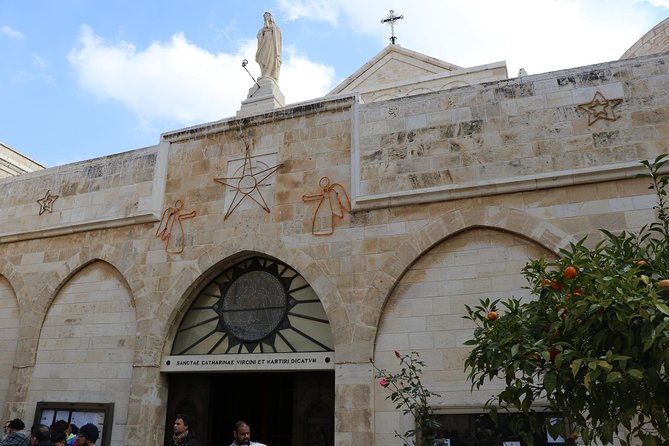
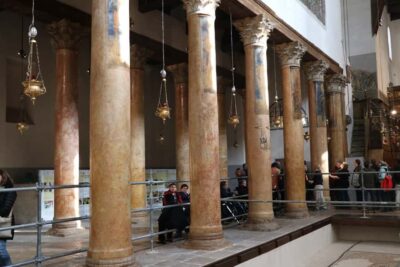
The full guided visit to the Church of the Nativity is one of the strongest parts of the outing. The first church was built by Roman Emperor Constantine in the fourth century over the grotto traditionally identified as the birthplace of Jesus. The present church has been used for worship for centuries.
The church is more than a single famous marker. It is a working place of worship, and its importance means that access and timing can change. Your guide helps you understand what you are seeing and directs you toward the lower grotto.
The schedule assigns about 20 minutes to the church, but the grotto queue can add much more time. That is the key timing issue for the whole trip. The tour promises a visit down to the grotto, yet the wait may compress other stops or make the morning feel hurried.
The Cave of St. Jerome is listed as an additional 10-minute stop when possible. It can close if reserved for a pilgrim group, so treat it as a bonus rather than a guaranteed part of the visit. This is a good example of why a church tour needs some flexibility. Sacred sites do not operate like museum galleries with fixed, empty rooms.
One guide named in the experience is George. He speaks Aramaic and has prayed the Lord’s Prayer in Aramaic over the group. That is a distinctive moment for visitors interested in language and Christian tradition, though you should not assume George will be the guide assigned to every departure.
A different kind of day out of Jerusalem:
- From Jerusalem: Masada & Dead Sea Full Day Tour with Pick Up
★ 4.5 · 815 reviews - Masada and the Dead Sea Day Trip from Jerusalem
★ 4.5 · 757 reviews - From Jerusalem: Nazareth and Sea of Galilee Tour
★ 4.5 · 588 reviews - Nazareth and the Sea of Galilee Day Trip from Jerusalem
★ 4.5 · 446 reviews
Bethlehem beyond the churches
The itinerary adds several short cultural and historic stops. You pass along Star Street, see the area around Rachel’s Tomb, and visit the Bethlehem Museum, which focuses on Palestinian heritage, identity, culture, and art.
These additions keep the trip from becoming only a sequence of Biblical locations. You get a glimpse of Bethlehem as a living Palestinian city, not just as a backdrop to ancient events. The museum is particularly useful for placing the churches and pilgrimage sites within a wider cultural setting.
The exact amount of time at every added stop is not fully clear. Several are listed as pass-bys or short visits, and one entry simply notes 10 minutes. I would think of them as short orientation points rather than full museum visits or lengthy neighborhood walks.
Bab idDeir Art Gallery is another worthwhile cultural touch. It is an independent artistic and cultural space in Bethlehem’s historic old city, in the Deik quarters. The inclusion of a small local art space gives you a different view of the city from the major religious buildings.
You may also pass an olive wood factory or visit an olive wood shop. This is where the trip becomes more hands-on. You can see the kind of carving associated with Bethlehem and speak with local artisans. Shopping is not required, but it gives you a chance to buy something made locally rather than a generic souvenir.
The schedule also mentions Sanctuary Bethlehem and a Carmelite connection. These entries are less clearly described than the main churches, so I would not book the tour expecting a long, formal visit at each one. Their presence suggests extra religious and cultural context, but the core experience remains Shepherds’ Fields, the Milk Grotto, and the Church of the Nativity.
A compact route with a useful final stop
The tour lasts about five hours and begins in Tel Aviv before ending in Jerusalem. That routing is one of its best practical features. If you plan to stay in Jerusalem, you avoid spending time returning to Tel Aviv and can continue your day from your final drop-off point.
You travel between sights in an air-conditioned vehicle. That matters in Bethlehem, where a short tour includes several separate locations. You are not responsible for arranging taxis between churches, checking border transport, or finding the next stop on your own.
The group can reach a maximum of 55 people. That is a large possible group for narrow church spaces and a busy grotto. A large group may also make it harder to hear every explanation or ask many questions. On the other hand, a licensed guide and shared transport keep the cost moderate.
The route is not designed for an unhurried day. Stops of 10, 20, and 35 minutes tell you what kind of experience this is: a focused introduction with several highlights. If you want long time for shopping, museum displays, quiet prayer, or independent wandering, you will likely find the schedule tight.
Guides, food, and the human side of the visit
The strongest part of the guiding is the personal and local connection. The guides explain the sites, answer questions, and bring in details that are hard to get from a guidebook. George’s use of Aramaic is a good example. It adds a living language element to a place often presented only through ancient dates and religious labels.
You may also receive small snacks, Bethlehem breads, hot drinks, or tastings along the way. These extras are not listed as a formal inclusion, so do not count on them as part of the price. Food and drinks are officially excluded.
I would bring water and a simple snack, especially if you are concerned about the grotto wait. The tour is short, but a 30 to 90 minute line can make the morning feel longer than expected. Since the schedule moves between several stops, you may not have time to find food when you want it.
The guides have been praised for being friendly, clear, and helpful, including by visitors who joined the tour in French. The practical benefit is simple: you can ask questions as the day unfolds instead of trying to piece together the religious and political setting afterward.
Is $75 a fair price?
At $75 per person, this is a reasonable price for a five-hour guided outing if you want the major Bethlehem sites without arranging transport yourself. The fee includes the air-conditioned vehicle, a licensed guide, admission fees, taxes, and the promised visit down to the birth grotto.
The value is strongest for someone staying in Tel Aviv who wants to finish in Jerusalem. Paying for separate transport, finding the churches, and arranging a local guide could cost more in both money and time. The one-way route also helps you make better use of your day.
The value is less clear if you are already based in Jerusalem and want a slow, independent visit. You may prefer to choose your own church times, spend longer at the museum, or shop without watching the clock. This tour gives you convenience and structure, not maximum freedom.
Because food and drinks are not included, budget for your own refreshments. Also remember that a larger group of up to 55 people may affect how personal the guiding feels.
Who should book this Bethlehem trip?
I would choose this tour if you want a clear introduction to Bethlehem, care about visiting the Christian sites, and prefer a guide to handle the route. It suits first-time visitors who want to see the central locations in half a day rather than build a full independent itinerary.
It is also a good fit for people who value the religious meaning of the Church of the Nativity and want a stated guarantee of reaching the grotto. Families and older visitors may appreciate the vehicle between stops, though the waiting and church access can still require patience.
I would hesitate if you need a relaxed pace, dislike queues, or plan to spend hours in museums and shops. Avoid Sundays and Christian holidays, when Mass may close the grotto. Booking at least 24 hours ahead gives you free cancellation if plans change, but cancellations or changes made inside that window are not accepted.
Should you book it?
Book this outing if your priority is to see Bethlehem’s essential sacred sites in one organized morning, especially with a Tel Aviv start and Jerusalem finish. The grotto guarantee, local guiding, and visits to Shepherds’ Fields and the Milk Grotto give the trip a clear purpose.
Skip it if you want deep independent exploration or cannot tolerate a possible 90-minute wait. For the right kind of visitor, $75 buys a practical route, essential admissions, and the benefit of local explanation. Just come prepared for a brisk schedule and let the grotto line determine the pace.
FAQ
Where does the Bethlehem tour begin and end?
The tour begins in Tel Aviv and ends in Jerusalem. This route avoids returning to Tel Aviv after visiting Bethlehem.
How long does the experience last?
The tour lasts approximately five hours.
Is the grotto beneath the Church of the Nativity included?
Yes. The tour includes a guarantee to visit down to the grotto where Jesus is traditionally believed to have been born. Waiting in line can take 30 to 90 minutes on regular days.
Can I book this tour on a Sunday or Christian holiday?
It is not recommended. The grotto may be closed for Mass on Sundays and Christian holidays.
Are food and drinks included?
No. Food and drinks are not included in the tour price.
What happens if the Cave of St. Jerome is closed?
The Cave of St. Jerome is not always accessible. It may close when reserved for a pilgrim group, so this stop is not guaranteed.
Recently added around Jerusalem
- Holy Jerusalem Full Day Tour from Jerusalem★ 5.0 · 3 reviews
- Half day tour bethlehem prices per Van up to 6 pax★ 5.0 · 3 reviews
- jerusalem classic tour★ 5.0 · 3 reviews
- Private Walking Tour in Jerusalem’s Old City★ 5.0 · 3 reviews
- Private Tour to the Culinary World of Jerusalem Market★ 5.0 · 3 reviews
- Private Tour Bethlehem and the Dead Sea★ 5.0 · 3 reviews
- From Jerusalem: Masada Sunrise, Ein Gedi & Dead Sea★ 5.0 · 3 reviews
- Jerusalem Like a Local: Customized Private Tour★ 5.0 · 3 reviews
Bethlehem Tours, compared.
From Tel Aviv: Jerusalem and Bethlehem Guided Day Trip
Read our review →
Ashdod Shore Excursion: Jerusalem and Bethlehem – for cruise ship guests only
Read our review →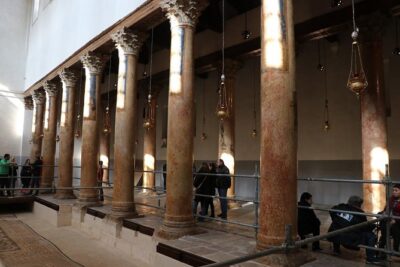
Travel From Jerusalem To Bethlehem and Dead Sea – Daily Group West Bank Tour
Read our review →
Travel To Bethlehem, Jericho & Jordan River – Group Guided Tour from Jerusalem
Read our review →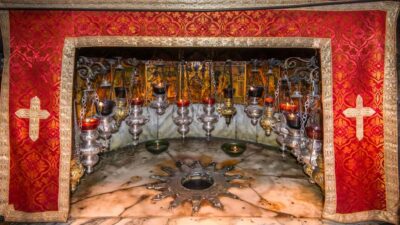
From Ashdod Port: Jerusalem and Bethlehem Day Trip
Read our review →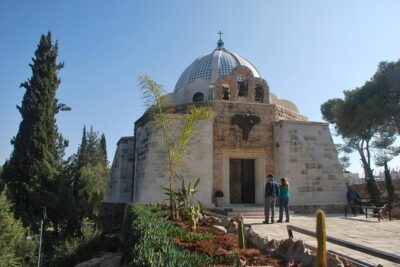
Bethlehem, Jericho, and Qasr El Yahud Day Trip from Jerusalem
Read our review →Browse the lists this tour appears in