

Reviewed · JERUSALEM OLD CITY TOURS
Tel Aviv & Old City of Jaffa – Tiny group from Tel Aviv
Tel Aviv’s story makes the most sense when you walk from its early neighborhoods to ancient Jaffa. This small-group tour links Neve Tzedek, HaTachana, and Old Jaffa in one compact route, showing how a young modern city grew beside one of the world’s oldest ports.
I like the limit of 10 people, which should mean fewer delays and more room for questions. I also like the historical range: Bauhaus buildings, a converted 19th-century railway station, Ottoman remains, and the long story of modern Israel all appear in one morning.
The main drawback is the price, $139 for roughly three hours, with food and drinks extra. You also need moderate fitness and comfortable shoes, since this is a walking tour over old streets and urban pavement.
Key points to know before booking
- Neve Tzedek gives you Tel Aviv’s early character: See the city’s first neighborhood and its distinctive homes before moving toward Jaffa.
- HaTachana adds a surprising railway chapter: The former 19th-century station now contains restored structures and public spaces.
- The tour connects modern and ancient Israel: Tel Aviv’s White City architecture leads into Jaffa’s Ottoman buildings and old port setting.
- A maximum of 10 people keeps the walk personal: The small group can reduce time spent gathering people and make questions easier.
- The walk ends at Jaffa’s Clock Tower: You finish near the Old City, with advice from the guide about places to continue exploring.
- Plan for about three hours at 10 a.m.: Meet at the Dan Panorama Tel Aviv and finish at Yefet Street in Jaffa.
Why this Tel Aviv and Jaffa route works
Many city tours give you a quick look at Tel Aviv and then rush through Jaffa. This route has a clearer idea: follow the city’s growth southward, from a small early neighborhood to the old port city beside it.
You begin at the Dan Panorama Tel Aviv on Kaufmann Street at 10 a.m. From there, the walk heads through the southern side of Tel Aviv and into Neve Tzedek. The tour finishes at the Clock Tower in Jaffa rather than returning you to the starting point.
That one-way design is useful. You do not spend the last part retracing your steps, and you finish in an area where you can continue on your own. Before booking, note that you will need to arrange your own way back from the Clock Tower.
The guide is a professional licensed guide, but no guide name is supplied in the tour details. The strongest praise focuses on the guide’s ability to explain modern Israel in the context of the region’s long past, so the quality of the commentary matters as much as the places themselves.
More City Tours in Tel Aviv
- From Tel Aviv: Jerusalem Old & New City Bus Tour
★ 4.2 · 824 reviews - From Tel Aviv: Jerusalem Old City & Dead Sea Guided Day Tour
★ 4.4 · 389 reviews - From Tel Aviv: Jerusalem Old City Guided Tour
★ 4.6 · 59 reviews
Neve Tzedek: Tel Aviv’s first neighborhood
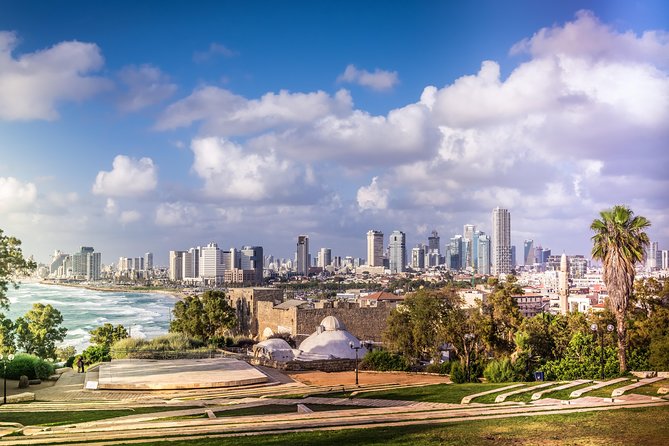
Neve Tzedek is the right opening stop because it does not feel like a standard city-center introduction. Its local houses show an earlier scale and personality, before Tel Aviv became known for wide streets, high-rise buildings, and the White City.
The guide points out the neighborhood’s unusual homes and explains how this part of town fits into Tel Aviv’s beginnings. You are not simply looking at attractive facades. You are getting a visual lesson in how a new urban community took shape near Jaffa.
I would pay close attention here to the small details of the buildings. The value of a walking guide is that you can learn why a plain-looking house matters, how the neighborhood differs from later Tel Aviv, and what has changed over time.
Neve Tzedek is also a useful contrast with the later Bauhaus areas. The neighborhood has a more intimate feel, while the White City is known for modernist apartment blocks and clean architectural lines. Seeing both helps you understand Tel Aviv as a layered city rather than one single architectural style.
The Suzanne Dellal Centre and a cultural turning point
The route continues to the Suzanne Dellal Centre, a cultural center in the old neighborhood. Its presence gives the walk a modern cultural angle and shows how older buildings can receive a new public role.
The stop is worthwhile even if you are not planning to attend a performance. Your guide can place the center within Neve Tzedek’s story and explain why this part of Tel Aviv remains important to the city’s cultural life.
This is also one of the tour’s more useful transitions. You move from private houses and neighborhood streets to a public cultural site, then onward toward HaTachana. The route keeps changing scale without requiring a vehicle or a long transfer.
The tour details do not promise entry to the cultural center, so expect an exterior and area visit rather than a scheduled performance or interior program. That distinction matters if you are hoping for a formal museum visit.
HaTachana and the old railway station
HaTachana is one of the more unusual stops. This former railway station dates from the 19th century and has been converted into a public area with distinctive restored structures.
A railway station may sound less exciting than an ancient ruin, but it tells an important story about movement, trade, and the link between Jaffa and the wider region. The old station helps explain how the port city connected with inland destinations before modern transportation reshaped the area.
The restored buildings also add a change of texture to the walk. After Neve Tzedek’s houses and the cultural center, you see a site built for trains and passengers, now used in a different way. I like tours that show this kind of reuse because it gives you a better sense of how cities preserve old places without freezing them in time.
Again, the focus is sightseeing and explanation. Admission is included in the sense that no separate ticket is listed, but the experience does not promise a private railway museum visit or access to every building. Your guide’s explanation is the main reason for the stop.
more old city quarters to walk
- Jerusalem Half-Day Tour from Tel Aviv: Holy Sepulchre and Western Wall
★ 4.0 · 61 reviews - Jerusalem Old City from Tel Aviv
★ 5.0 · 39 reviews - Jaffa: Old City, Port & Shuk Hapishpishim Walking Tour
★ 4.8 · 33 reviews - Jerusalem Old City – Tiny group tour from Tel Aviv
★ 5.0 · 20 reviews
Tel Aviv’s White City and Bauhaus context
The tour includes the Bauhaus architecture that helped Tel Aviv earn UNESCO World Heritage status. This is one of the most important parts of the experience for anyone who wants more than a quick look at the beach and nightlife.
The White City is not a single building or one enclosed attraction. It is an architectural area, and the guide’s comments help you recognize the features that make the buildings important. You may begin noticing the clean forms, practical design, and repeated style across the city.
The tour also includes Independence Hall and more Tel Aviv landmarks, although the published route gives the clearest detail about Neve Tzedek, Suzanne Dellal, and HaTachana. Treat Independence Hall as part of the broader city explanation rather than assuming a full interior visit.
This is where the tour can be especially useful for first-time visitors. A guide can connect architecture with the city’s founding and later development, instead of leaving you to see a series of white buildings without context.
The UNESCO connection adds value, but you should keep your expectations realistic. In about three hours, you will receive an introduction rather than a complete architectural survey. If Bauhaus design is your main interest, you may want extra time afterward to explore more of the White City independently.
Entering Old Jaffa through the Clock Tower
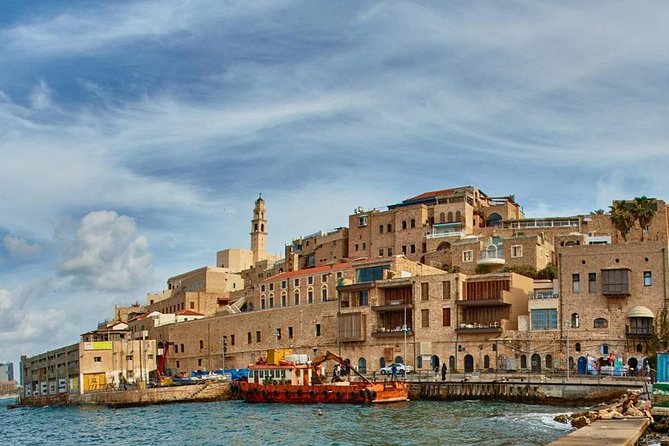
The walk proceeds to Jaffa, an ancient port city now part of the Tel Aviv area. The change is immediate in spirit. Tel Aviv’s modern streets and early neighborhoods give way to the old city, the Clock Tower, historic lanes, and Ottoman-era remains.
The Clock Tower on Yefet Street is the endpoint, and it is also one of the clearest orientation points in Jaffa. Finishing here gives the tour a natural closing scene and leaves you well placed to continue exploring the old city.
Jaffa’s importance comes from its age and position as a port. The guide explains how this older city relates to modern Tel Aviv, helping you see that the two places are not simply neighboring districts with different appearances.
The old city streets can be uneven, so comfortable shoes are more than a routine suggestion. If rain is in the forecast, bring an umbrella and warm clothing during winter. The tour requires moderate physical fitness, and the information provided does not describe it as suitable for people who need a low-effort or fully accessible route.
Ottoman Seraya building and old city remains
The Ottoman Seraya building is another specific stop in Jaffa. It gives the tour a concrete link to the period when the Ottoman Empire governed the region and adds a layer between ancient Jaffa and the modern state.
The strength of this part of the walk depends on the guide’s storytelling. Buildings such as the Seraya can be easy to pass without understanding their role. With explanation, the structure becomes part of a larger story about administration, changing governments, and Jaffa’s continued importance.
You will also explore the old city itself rather than stopping only at a landmark. That matters because Jaffa is best understood through the relationship between its streets, buildings, and port setting. The route gives you a first orientation, then ends before the experience becomes an all-day historical walk.
One useful detail from the tour’s feedback is that the guide pointed out places in Jaffa to explore after the formal walk. That is exactly the kind of practical help you want at the end of a short tour. You can use the rest of your day for a meal, more wandering, or a closer look at the sites that caught your attention.
What the guide adds to the modern Israel story
The most highly praised part of this experience is not a single building. It is the way the guide connects recent Israeli history with the much older story of the region.
That approach can make the tour more satisfying than a simple checklist of landmarks. Independence Hall, Tel Aviv’s growth, Jaffa’s ancient port, and Ottoman remains are not isolated facts. Together, they explain why this part of Israel looks and feels so layered.
The strongest guide feedback describes clear historical explanations, a cheerful manner, and flexibility. One particularly useful quality is the ability to explain recent events in the context of the area’s much longer past. If you have already taken other tours in Israel, this kind of connection may help bring separate pieces together.
Because the group is capped at 10, you have a better chance of hearing the guide in city traffic and asking a follow-up question. It also reduces the time spent collecting people at multiple stops. That does not guarantee a perfect start, however. One rating reported a half-hour delay, while the operator said it had contacted the customer and provided a private tour despite the group booking. I would check your phone before departure and allow a little flexibility in your morning.
Is $139 a fair price?
At $139 per person, this is not a bargain walk. The tour lasts about three hours, and food and drinks are not included. You are paying mainly for a licensed guide, a small group, and the historical interpretation tying Tel Aviv and Jaffa together.
The price makes more sense if you value context and personal attention. A larger, cheaper group may show you the same streets, but you could spend more time waiting for people and hear less of the explanation. The maximum of 10 is a real advantage for a city walk.
The value is weaker if you only want to see the Clock Tower, HaTachana, or Neve Tzedek from the outside. You can visit many public areas independently. The tour earns its cost through the connections between them, not through admission to a major ticketed attraction.
I would also consider the route’s efficiency. You cover two distinct urban areas in one morning, end in Jaffa, and receive suggestions for what to see next. For a first visit, that can save planning time and give you a useful framework for later wandering.
Who should book this morning walk?
I would recommend it most strongly to first-time visitors who want a clear introduction to Tel Aviv and Jaffa without committing to a full-day excursion. It suits people who enjoy architecture, urban history, and stories about how cities change.
It is also a good choice if you want a small group rather than a large bus tour. The group limit should make the walk easier to follow and give you a better chance to ask questions.
You may want to skip it if $139 feels high for a short walking experience, if you prefer to explore at your own pace, or if you want substantial time inside museums and historic buildings. The route is an introduction, not an exhaustive study of either city.
The published rating is 4.6 from nine ratings, with most of the detailed praise centered on the historical content and the guide’s ability to connect modern Israel with the distant past. One low rating raised a delay and value concern, so punctuality and cost are the main points to weigh.
Practical details for a smoother visit
Meet at the Dan Panorama Tel Aviv, Kaufmann Street 10, at 10 a.m. The walk ends at the Clock Tower, Yefet Street 14, in Jaffa.
Wear comfortable shoes and bring water for yourself, since food and drinks are not included. In winter, carry an umbrella and warm clothing. The tour requires at least three people and accepts no more than 10.
Confirmation is sent within 48 hours of booking, subject to availability. You can cancel for a full refund up to 24 hours before the start time. If poor weather cancels the tour, you are offered another date or a full refund. The same applies if the minimum group size is not met.
Should you book Tel Aviv and Old City of Jaffa?
Book it if you want the city explained rather than merely photographed. The combination of Neve Tzedek, HaTachana, Bauhaus Tel Aviv, and Ottoman Jaffa gives you a strong first orientation, and the small group improves the odds of a useful conversation with the guide.
Skip it if you want a cheap, flexible stroll or a long visit inside historic sites. At $139, the tour needs to deliver through its commentary, and the available feedback suggests that the guide is the key part of the experience. For a first morning in Tel Aviv, especially if you want help understanding how modern Israel fits beside ancient Jaffa, it is a worthwhile but relatively expensive introduction.
FAQ
How long does the Tel Aviv and Jaffa tour last?
The experience takes approximately three hours, with the general duration listed as three to four hours.
What time does the tour start?
The tour starts at 10 a.m.
Where does the tour begin?
The meeting point is the Dan Panorama Tel Aviv at Kaufmann Street 10, Tel Aviv-Yafo, Israel.
Where does the tour finish?
The walk ends at the Clock Tower on Yefet Street 14 in Jaffa.
How many people can join the tour?
The tour has a maximum of 10 participants. It requires a minimum of three people to operate.
What places are included?
The route includes Neve Tzedek, the Suzanne Dellal Centre, HaTachana, Tel Aviv’s White City and Bauhaus architecture, Independence Hall, Jaffa’s Clock Tower, the Ottoman Seraya building, and Jaffa’s Old City.
Is food included?
No. Food and drinks are not included in the tour price.
What should I wear?
Comfortable shoes are recommended because the experience is a walking tour and requires moderate physical fitness. During winter, bring an umbrella and warm clothing.
Can I cancel for a refund?
Yes. You can cancel at least 24 hours before the start time for a full refund. Cancellations or changes made less than 24 hours before the start time are not accepted for a refund.
Recently added around Tel Aviv
- Jaffa Flea Market Tasting Tour★ 5.0 · 3 reviews
- Early Christianity in Galilee Private Tour★ 4.5 · 3 reviews
- Privet walking tour in Tel Aviv-Yafo★ 5.0 · 3 reviews
- Bar Crawl tour with local in Tel-Aviv★ 5.0 · 3 reviews
- Package VIP Skip Line Services in BGN Airport with Transfer to Tel aviv Hotels★ 5.0 · 3 reviews
- Food & Drink Private Guided Tour in Tel Aviv★ 5.0 · 3 reviews
- Tel Aviv: Carmel Market & Neighborhood Guided Walking Tour★ 4.7 · 3 reviews
- Tel Aviv Like a Local: Customized Guided Tour by Lokafy★ 5.0 · 3 reviews
Jerusalem Old City Tours, compared.
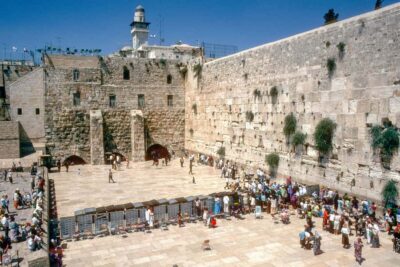
From Tel Aviv: Jerusalem Old City & Dead Sea Guided Day Tour
Read our review →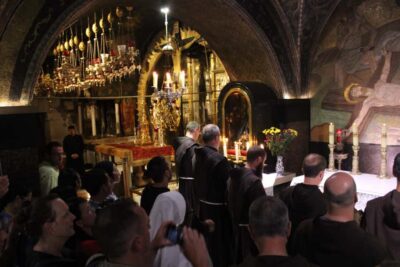

Jerusalem Half Day Tour: Holy Sepulchre and Western Wall
Read our review →
Jerusalem Half-Day Tour from Tel Aviv: Holy Sepulchre and Western Wall
Read our review →

Jaffa: Old City, Port & Shuk Hapishpishim Walking Tour
Read our review →Browse the lists this tour appears in