
Reviewed · JERUSALEM TOURS
Jerusalem Jewish Orthodox Neighborhood Walking Tour
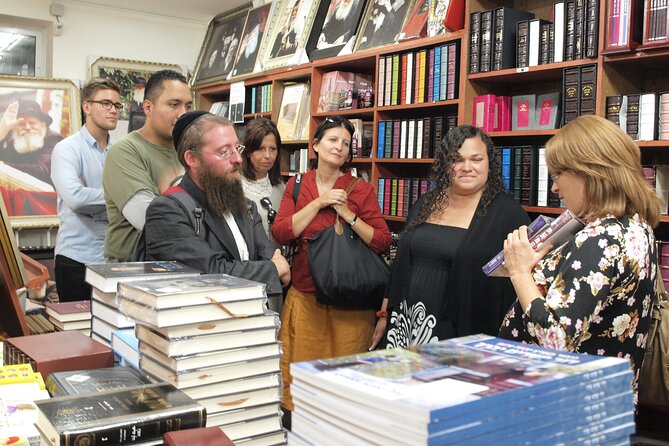
Jerusalem’s Haredi quarter can feel like a separate city within the city. On this walk through Me’a She’arim, a local guide explains the dress, customs, religious signs, and daily routines that are easy to misunderstand from the outside. The strongest part is the personal explanation. Guides such as Motti have been praised for giving clear, fair answers without turning the visit into a sales pitch.
I like the chance to see places most sightseeing routes skip, especially the working community spaces and the bakery stop, where rugelach and challah may be sampled. I also like the small group limit of 20, though that is still large enough to make a home visit or quiet synagogue stop feel less personal. The main caution is that the advertised duration and inclusions are not fully consistent, so confirm what will actually be included before you pay.
Key Points at a Glance
- Me’a She’arim from an insider’s view: Walk Jerusalem’s Haredi streets with a guide from the local ultra-Orthodox community.
- A lesson in daily religious life: Learn how customs, clothing, signs, prayer, and neighborhood institutions shape the area.
- Several planned community stops: The program describes a synagogue, community center, soup kitchen, library, bakery, and Hasidic tomb.
- Food may cost extra: Rugelach and challah are part of the planned experience, but food and drinks are not included in the price.
- Modest clothing is required: This applies to both men and women, and it is a condition of joining the walk.
- Check the timing carefully: The tour is described as both about 2 hours 30 minutes and 4 hours, so allow a flexible late afternoon.
Why Me’a She’arim Makes This Walk Different
Most Jerusalem sightseeing focuses on the Old City, its walls, churches, mosques, and archaeological sites. This tour takes a different path. It introduces you to an active Haredi neighborhood where religious practice is not a historic display but the organizing force of ordinary life.
You are not simply looking at buildings. You are learning how a community uses streets, schools, synagogues, shops, charities, homes, and libraries. That can make the experience more useful than a standard photo stop, especially if you have wondered about the meaning of Haredi clothing, religious notices, neighborhood signs, or the strict rhythms of community life.
The guide matters enormously here. A guide from the local ultra-Orthodox community can explain details that are hard to read from the street. Motti, named in one account of the tour, was praised for answering questions and offering a fair view of this part of Israeli society. That kind of explanation is the reason to book this walk. Without it, Me’a She’arim can be easy to misunderstand.
You should approach the visit with respect. This is a residential community, not an open-air museum. Dress modestly, avoid treating people as photo subjects, and follow the guide’s instructions about where to stand and what to photograph.
More Walking Tours in Jerusalem
- Jerusalem: Guided Walking Tour of the Old City
★ 4.7 · 386 reviews - All Inclusive Walking Tour Old City Jerusalem
★ 5.0 · 83 reviews - Jerusalem Walking Tour: In the Footsteps of Jesus
★ 4.5 · 67 reviews
Starting at Davidka Square at 4:30 pm
The meeting point is Abraham Jerusalem, at Ha-Nevi’im Street 67. The tour begins at 4:30 pm, and the first listed stop is Davidka Square, about a 15-minute walk or orientation period with no admission charge.
Davidka Square is a useful starting point because it connects several parts of central Jerusalem. It is named for the Davidka, a homemade mortar used by Jewish forces during the 1948 Arab-Israeli War. The square is near the Mahane Yehuda Market, the Jaffa Road pedestrian area, and a Jerusalem light rail station, so it is easy to reach by public transport.
I like this opening because it gives you a quick sense of the city beyond the Haredi quarter. The square is a transport hub and a local meeting place, not a formal attraction that requires tickets or a long visit. Your guide can use it to establish the setting before the walk turns toward Me’a She’arim.
Do not expect a major historical presentation here. The stop is short. Its value is practical: you get your bearings, meet the group, and begin the transition from central Jerusalem into a neighborhood with its own visual and social rules.
Walking Into Me’a She’arim
The main portion of the experience takes place in Me’a She’arim, a traditional Haredi neighborhood that is not usually part of the standard Jerusalem route. The area is known for its strong religious identity, and the walk focuses on customs, symbols, and community life.
Your guide may point out religious notices, clothing styles, neighborhood institutions, and other signs that reveal how the area works. The point is not simply to label what you see. It is to explain why certain streets look different, why particular spaces matter, and how the community’s religious commitments affect daily routines.
That inside explanation is the tour’s best feature. You can ask direct questions in a setting where the answers have context. The guide can also help you separate real practice from assumptions formed by news reports or brief glimpses from outside the neighborhood.
The pace should be manageable for most people. The supplied information says most people can participate, and the tour is near public transport. Still, this is a walking experience lasting at least several hours according to the longer description, so wear comfortable shoes and plan for standing.
A small group helps, but the maximum is 20 people rather than a private tour. If everyone asks questions or a stop takes longer than expected, the walk may feel less intimate. The guide’s skill in managing the group will shape the experience.
A Synagogue, Community Center, and Soup Kitchen
The planned route includes a working synagogue, a community center, and a soup kitchen. These stops give the tour more substance than a walk around residential streets.
A synagogue is important because it shows religious life in use. You are not only seeing a landmark. You are learning about a place where people pray and gather. The practical limit is that access may be restricted. One account described seeing a synagogue only through the window, so you should not assume that you will enter the main prayer area.
The community center and soup kitchen add another useful layer. They show how the neighborhood supports its own residents through shared services and charitable work. That helps explain the Haredi community as a functioning social system, not only as a group defined by clothing and strict religious observance.
Food at a soup kitchen or local shop is not included in the $45 price. The tour information specifically lists food and drinks as extra. Bring some Israeli shekels or another accepted form of payment if you want to buy something along the way, but do not assume that any meal or tasting is covered.
A different kind of day out of Jerusalem:
- From Jerusalem: Masada & Dead Sea Full Day Tour with Pick Up
★ 4.5 · 815 reviews - Masada and the Dead Sea Day Trip from Jerusalem
★ 4.5 · 757 reviews - From Jerusalem: Nazareth and Sea of Galilee Tour
★ 4.5 · 588 reviews - From Jerusalem: Half-Day Bethlehem Guided Tour
★ 4.7 · 568 reviews
Bakery Stops and the Taste of Jewish Jerusalem
The bakery visit is one of the more appealing parts of the plan. You may sample Jewish pastries such as rugelach and bread such as challah, both familiar foods with strong links to Jewish home and holiday traditions.
Rugelach gives you a quick taste of the neighborhood’s baking culture in a small, easy-to-share form. Challah connects more directly with the Sabbath table. A guide can explain the food’s place in family and religious life, making the stop more meaningful than simply buying a sweet roll.
There is an important catch. Food and drinks are not included, and one account says food at a shop had to be paid for separately. Treat the tasting as a possible part of the route, not a guaranteed meal. If you have dietary needs, ask before booking because no specific dietary arrangements are provided.
I would also avoid arriving hungry if the food stop matters to you. The tour is described in conflicting ways, and a bakery sample may be brief. Think of it as a cultural taste, not a full food tour.
Meeting a Haredi Family at Home
The plan includes a visit to a Haredi family home. This could be the most personal part of the walk because it offers a chance to hear about family life from people who live within the community.
A home visit can help you understand details that a street walk cannot show, such as how religious practice fits into household routines and how the family sees its own place in Jerusalem. It also creates a setting for respectful questions that may not be suitable on a busy sidewalk.
At the same time, you should treat this stop as uncertain. A critical account specifically said that the family visit did not happen. That means you should not book this tour solely for the promise of entering a private home. If the visit is important to you, confirm it with Abraham Tlalim Tours LTD before departure.
This is a good example of why flexibility matters. The tour takes place in an active residential area, and access to a private home or religious institution can change. A strong guide can still make the walk worthwhile, but the exact sequence may not match every description.
The Library and Its Ancient Religious Artifacts
Another planned stop is a neighborhood library that houses ancient Jewish religious artifacts. This offers a quieter change of pace after the street walking.
The library matters because it connects current community life with older religious texts and objects. You may be able to browse or view artifacts that help explain how learning, preservation, and religious tradition are valued within the neighborhood.
The available details do not specify the exact artifacts or how much time you spend inside. I would therefore treat this as an educational possibility rather than a museum visit with a fixed collection and formal galleries. Ask the guide what is available on the day.
The same practical point applies here as with the synagogue and family home: access can depend on local arrangements. The tour description presents these visits as part of the experience, but the reported execution has not always matched every promised stop.
The Hasidic Tomb and Religious Memory
The route also refers to an important Hasidic tomb. Such a stop adds a spiritual dimension to the walk and helps explain the role of revered religious figures in Hasidic life.
You may find the visit more meaningful if the guide explains who is associated with the tomb and why the site matters. No specific name is provided in the tour details, so I would not book this expecting a particular famous figure or a long visit.
As with the other religious sites, follow local directions closely. This is a place connected to prayer and remembrance, not simply a sightseeing backdrop. Modest clothing is required throughout the experience, and respectful behavior is especially important at a religious site.
What $45 Buys You
At $45 per person, the tour is reasonably priced if you want a guided introduction to Haredi Jerusalem and the guide delivers several of the planned community visits. The price includes the guided tour, but not food or drinks, admission charges, or any purchases you make at a bakery or snack shop.
The value comes from access and interpretation rather than from expensive attractions. There are no major entry tickets listed, and the opening square is free. You are paying for a local guide who can explain a community that many visitors would find difficult to understand on their own.
I think the price works best for first-time visitors who want cultural context. If you already know Me’a She’arim well or prefer to walk independently, the value is less clear. You could see the streets without paying, but you would miss much of the explanation and may not know which places are appropriate to approach.
The uncertain inclusions affect the calculation. If the family home, synagogue entry, library, and bakery sample all happen, $45 is a fair deal. If the tour becomes mainly a guided street walk, it may feel expensive to someone who booked specifically for the inside visits.
Timing, Clothing, and Group Size
The timing needs special attention. The tour is described in one place as approximately 2 hours 30 minutes, while another description calls it a 4-hour walk. The listed stops add up to about 1 hour 30 minutes, excluding travel between locations and time spent at community sites.
I would keep your evening open and plan for anything from roughly 2.5 to 4 hours. The 4:30 pm start can work well if you want a late afternoon cultural activity, but do not schedule a tight dinner reservation immediately afterward until you confirm the expected finish time.
Modest dress is required for both men and women. Choose clothing that covers shoulders and knees, and avoid anything tight or revealing. This is not a suggestion to ignore if you want to join the walk.
The group can include up to 20 people. That is manageable for a city walk, but it is not the same as a private visit. The experience is also listed as suitable for most people, with service animals allowed and public transportation nearby.
You receive a mobile ticket, and booking confirmation is provided at the time of reservation. Free cancellation is available up to 24 hours before the start time. Changes or cancellations inside that window are not accepted for a refund, and poor weather or failure to reach the minimum group size can lead to a different date or a full refund.
Who Should Book This Walk
I would recommend this experience to you if you want to understand a part of Jerusalem that is often viewed from a distance. It suits curious visitors who enjoy asking questions, listening to a local guide, and seeing ordinary institutions rather than collecting only major monuments.
It is also a good fit if you have already visited the Old City and want a different side of Jerusalem. The walk gives you a way to think about community, religious identity, charity, food, family, and public space in one afternoon.
I would be cautious if you want a tightly controlled itinerary. The uncertain duration and uneven delivery of the promised indoor visits mean you need to accept some change. It is also not ideal for anyone who dislikes dress requirements, walking, or observing residential customs.
Most important, do not treat the neighborhood as a spectacle. The value of the tour comes from respectful contact and clear explanation. If you approach it with patience, the guide’s local perspective can turn a confusing part of Jerusalem into a place you understand far better.
Should You Book the Jerusalem Haredi Neighborhood Tour?
Book it if the main thing you want is a guided introduction to Haredi life, especially with a local guide who can answer questions in a fair and direct way. The walk offers a rare look at synagogues, community services, religious learning, local food, and neighborhood traditions for a modest price.
Before booking, confirm the expected length and ask which stops will be open on your date. Do not assume that the private family visit, synagogue entry, bakery tasting, or food will all be included. With those expectations set, this can be a thoughtful and useful addition to a Jerusalem visit. If you need guaranteed access to each advertised stop, choose a tour with a more firmly defined schedule.
FAQ
Where does the tour start?
The tour starts at Abraham Jerusalem, Ha-Nevi’im Street 67, Jerusalem. The listed start time is 4:30 pm.
How long does the walking tour last?
The tour is listed as approximately 2 hours 30 minutes in the summary, while another description calls it a 4-hour tour. Allow extra time and confirm the expected ending before booking other plans.
What does the $45 price include?
The price includes the guided tour. Food and drinks are not included, and any purchases at a bakery, snack shop, or other stop must be paid for separately.
Is a modest dress code required?
Yes. Modest dress is required for both men and women because the walk takes place in a Haredi Jewish neighborhood and includes religious sites.
How many people can join the tour?
The activity can have a maximum of 20 travelers.
Can I cancel for a refund?
Yes. You can cancel at least 24 hours before the experience starts for a full refund. Cancellations or changes made less than 24 hours before the start time are not accepted for a refund.
Recently added around Jerusalem
- Holy Jerusalem Full Day Tour from Jerusalem★ 5.0 · 3 reviews
- Half day tour bethlehem prices per Van up to 6 pax★ 5.0 · 3 reviews
- jerusalem classic tour★ 5.0 · 3 reviews
- Private Walking Tour in Jerusalem’s Old City★ 5.0 · 3 reviews
- Private Tour to the Culinary World of Jerusalem Market★ 5.0 · 3 reviews
- From Jerusalem: Masada Sunrise, Ein Gedi & Dead Sea★ 5.0 · 3 reviews
- Private Tour Bethlehem and the Dead Sea★ 5.0 · 3 reviews
- Jerusalem Like a Local: Customized Private Tour★ 5.0 · 3 reviews
Jerusalem Tours, compared.

From Jerusalem: Masada & Dead Sea Full Day Tour with Pick Up
Read our review →
From Jerusalem: Nazareth and Sea of Galilee Tour
Read our review →

From Jerusalem/Tel Aviv: Bethlehem and Dead Sea Day Tour
Read our review →
Masada, Ein Gedi and The Dead Sea from Jerusalem
Read our review →Browse the lists this tour appears in