
Reviewed · JERUSALEM TOURS
Jerusalem: Dual Narrative Tour
Jerusalem’s Dual Narrative Tour does something rare: it puts a Jewish guide and a Palestinian guide side by side while you walk through the Old City’s most important religious sites. You hear not only what happened, but how different communities understand what happened, and why the same stone can carry very different meanings.
I especially like the two-guide format, which gives the history a human voice instead of flattening it into a single official story. I also like the route’s range, from the Roman Cardo and Armenian Quarter to the Church of the Holy Sepulchre, Western Wall, and Al Aqsa Mosque.
The main drawback is pace. Four and a half hours is a long, hot stretch with no meal included, and the group moves through crowded streets. Some visitors found it hard to hear or felt there was not enough time for every site, so bring water, wear practical shoes, and keep your expectations focused on interpretation rather than leisurely sightseeing.
Key points to know before you book
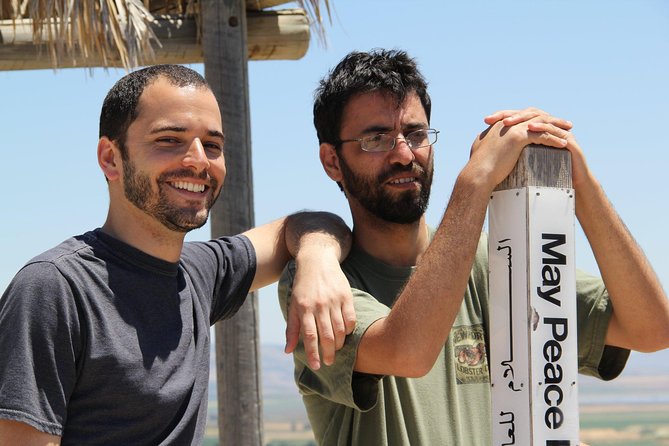
- Two guides, two lived perspectives: A Jewish guide and a Palestinian guide explain the city’s history, faith, and current political tensions together.
- Nine major stops: The route covers Jaffa Gate, four Old City quarters, the Holy Sepulchre, Via Dolorosa, the Western Wall, and Al Aqsa Mosque.
- The strongest feature is context: You learn how ruling powers have marked space, renamed places, removed historic layers, and shaped public memory.
- Expect discussion, not a quiet photo walk: Questions about Israel, Palestine, religion, borders, and competing claims are part of the experience.
- Plan for heat and crowds: The tour lasts about 4 hours and 30 minutes, starts at 9:30 a.m., and includes no food or drink break.
- The price reflects the format: At $65 per person, you are paying for two professional guides and a carefully framed conversation, not entry tickets or transport.
Why the dual-guide format matters in Jerusalem
Many Jerusalem tours give you a clear route and a clear explanation. That can be useful, but this experience is built around the places where one explanation is not enough.
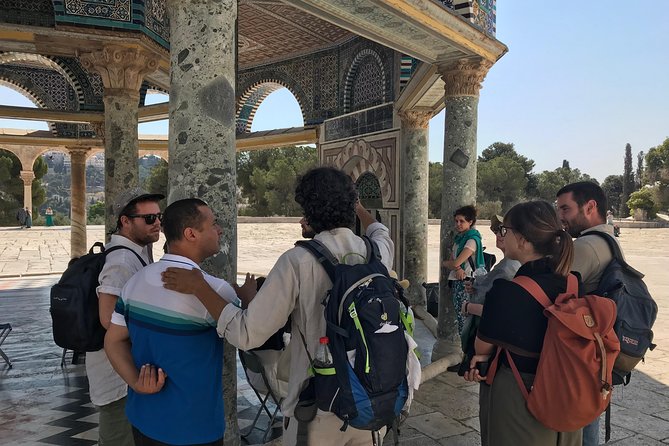
At Jaffa Gate, the Jewish and Palestinian guides set up the basic question: who gets to define a place, and how does that definition appear on a sign, a map, or a gate? From there, the tour keeps returning to the same issue. Jewish, Christian, and Muslim traditions all connect to Jerusalem, while modern political control adds another layer.
I like this approach because it does not treat the conflict as a short lecture tacked onto a sightseeing tour. The politics are tied to actual streets, walls, excavations, shrines, and neighborhoods. That makes the subject easier to grasp, even when the answers remain difficult.
The guides are expected to disagree at times, but the tone described for the tour is polite and respectful. Guide teams have included people such as Betty and Ameer, Morgi and Amir, Nour and Alex, and Beni and Yousef. The exact pair can vary, but the format remains the same: one Jewish Israeli perspective and one Palestinian perspective.
You should come ready to listen. This is not a tour designed to confirm one side’s talking points, and it is not a debate show. It works best if you can hold two accounts in your head at once and ask clear questions without expecting a simple verdict.
Other Jerusalem days travellers combine with this one:
- From Jerusalem: Masada & Dead Sea Full Day Tour with Pick Up
★ 4.5 · 815 reviews - Masada and the Dead Sea Day Trip from Jerusalem
★ 4.5 · 757 reviews - From Jerusalem: Nazareth and Sea of Galilee Tour
★ 4.5 · 588 reviews
Jaffa Gate begins with maps, power, and first impressions
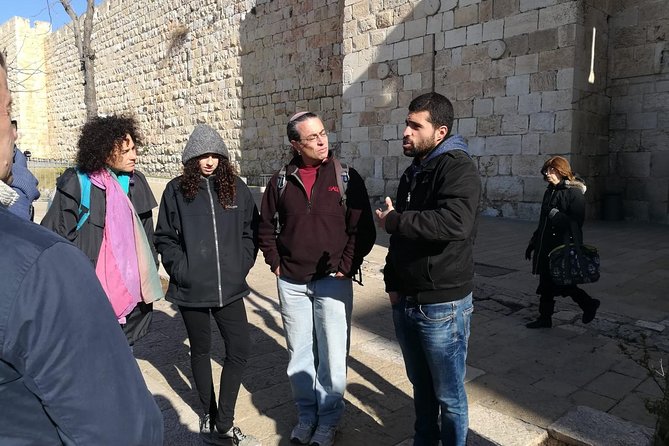
Meet your guides at 9:30 a.m. in the plaza just outside Jaffa Gate. Look for the representative holding a Jerusalem: Dual Narrative Tour sign. The meeting point is easy to identify, but the Old City can be crowded, so arriving a little early is sensible.
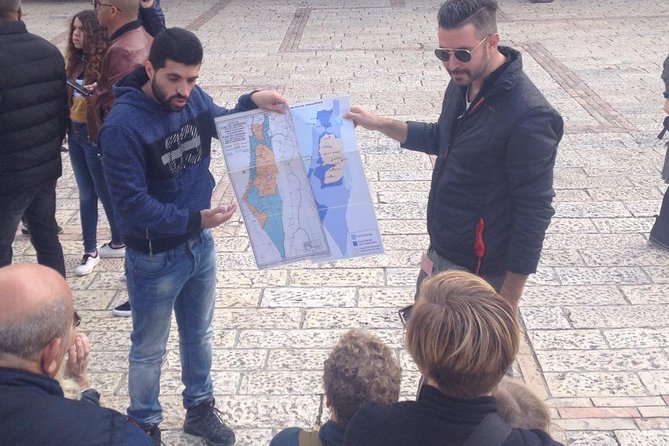
The opening 20 minutes explain Jerusalem’s geography and the relationship between Israel and Palestine. That may sound basic, but it gives the rest of the walk a needed frame. The guides use the entrance itself to ask what a sign can reveal about the authority that placed it there.
This is an excellent start because you learn to read the Old City as more than an ancient setting. Names, symbols, boundaries, and public messages all help show who claims a place and how that claim is presented.
The Armenian Quarter adds a community many tours skip
The 10-minute stop in the Armenian Quarter focuses on Armenian identity in Jerusalem and signage commemorating the Armenian genocide. This is a short visit, but it broadens the story beyond the three major faiths usually associated with the city.
You get a reminder that Jerusalem has long been home to communities with their own memories, religious practices, and political concerns. The Armenian Quarter also helps you see the Old City as a collection of distinct neighborhoods, not one uniform attraction.
Because the stop is brief, do not expect an extended history of Armenian Jerusalem. Its value is in the connection it makes between local identity, public memorials, and the question of who gets space and recognition.
The Jewish Quarter and Roman Cardo reveal history beneath the street
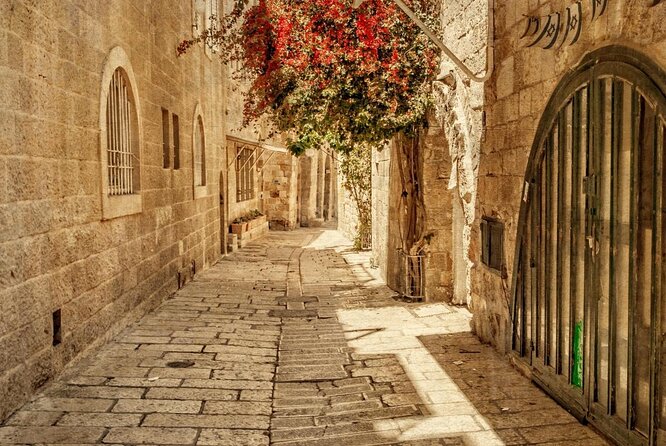
In the Jewish Quarter, the group visits the Roman Cardo, a long excavated street from the Roman period. The guides explain how present-day Jewish life is connected to earlier Jewish periods in Jerusalem, and they ask what had to be removed to expose the remains you see today.
That question is central to the whole tour. Archaeology does not simply uncover the past. Decisions about which period to display, which layers to preserve, and which structures to clear can support a particular story about the city.
The Cardo is also a good place to understand why Jerusalem can feel ancient and modern at the same time. You are looking at Roman remains within a living quarter, with current religious and political claims all around you.
A different kind of day out of Jerusalem:
- From Jerusalem: Half-Day Bethlehem Guided Tour
★ 4.7 · 568 reviews - Jerusalem/Tel Aviv: Bethlehem, Jericho and Jordan River Tour
★ 4.6 · 526 reviews - From Jerusalem/Tel Aviv: Bethlehem and Dead Sea Day Tour
★ 4.7 · 484 reviews - Nazareth and the Sea of Galilee Day Trip from Jerusalem
★ 4.5 · 446 reviews
A rooftop view puts East Jerusalem into perspective
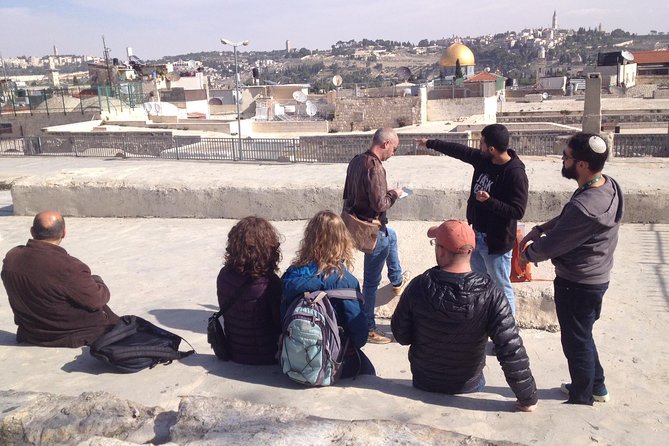
At St. Mark’s Syriac Church, the group stops at a rooftop above the church. The view toward East Jerusalem is used to review major landmarks and the city’s borders.
This is a short, 10-minute pause, but it gives your feet a break and your mind a wider view. After walking through tight lanes, seeing Jerusalem from above helps connect the Old City to the larger city around it.
The stop is less about entering the church than about orientation. If you want detailed time inside every religious building, this tour may feel too brisk. Its goal is to connect sites to one another and to the political geography beyond the walls.
The Church of the Holy Sepulchre carries several stories at once
The Church of the Holy Sepulchre receives about 30 minutes. The guides explain its importance in Christian tradition and its place in both Israeli and Palestinian accounts of Jerusalem. You also visit major sites inside the church itself.
This is one of the most important stops for Christian history, but it is also one of the places where limited time matters most. The church can be crowded, and some areas may require waiting. A half-hour gives you a useful introduction, but not a relaxed, detailed visit to every chapel or shrine.
I would treat this portion as an orientation. If your main reason for coming to Jerusalem is to pray at a particular spot or spend time at the tomb of Jesus, plan a separate visit. The tour gives meaning and context; it cannot guarantee the slow pace of a personal pilgrimage.
The Muslim Quarter connects local streets to the wider Muslim world
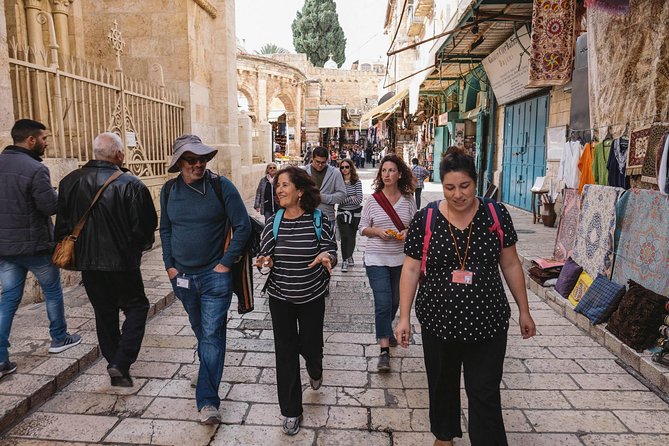
The 15-minute walk through the Muslim Quarter looks at the communities living in the Old City, their links to the wider Muslim world, and current tensions.
This part of the route helps correct a common mistake: seeing the Muslim Quarter only as a passage between famous monuments. It is also a neighborhood with its own history and daily life. The guides connect what you see in the lanes to larger religious and political questions.
Again, the short time means you are getting a guided reading of the area rather than a full neighborhood tour. Stay close to the guides, since narrow streets and crowd noise can make it difficult to hear.
The Via Dolorosa ends the walking route with room for questions
The tour concludes near the Fifth Station of the Cross and the Austrian Hospice on Via Dolorosa. The guides offer final reflections and leave about 20 minutes for questions and answers.
This is a useful ending because the route has already crossed Jewish, Christian, Muslim, Armenian, Roman, Israeli, and Palestinian narratives. The final discussion lets you return to the themes that appeared at the start: memory, authority, sacred space, and competing claims.
One practical note: although the Via Dolorosa is part of the route, the time may not allow a slow walk of every station. If you want to follow the full path carefully, set aside another visit.
The Western Wall and Al Buraq Square show why one plaza matters
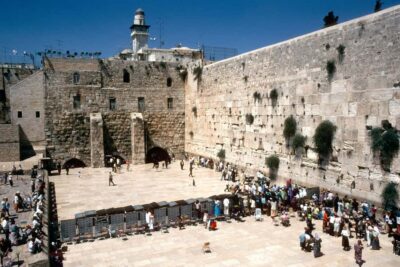
The group reaches the Western Wall after passing through Wadi Road and enters the Western Wall and Al Buraq Square area. This section takes about 25 minutes.
The Jewish story centers on the Second Temple and the long tradition of pilgrimage to stand beside its surviving remains. The guides also explain Al Buraq and the Islamic account of Muhammad’s flight to Jerusalem. Hearing both traditions in the same place makes clear why this area carries such powerful meaning for more than one faith.
The guides also address how the open complex looked before and after it came under Israeli control more than 50 years ago. This is where the tour’s historical and political strands meet most directly. You are not simply looking at a wall. You are examining access, public space, memory, and control.
The stop should help you understand the site, but it may not provide a long period for private prayer. Keep that distinction in mind when planning your day.
Al Aqsa Mosque and the Temple Mount require the most attention
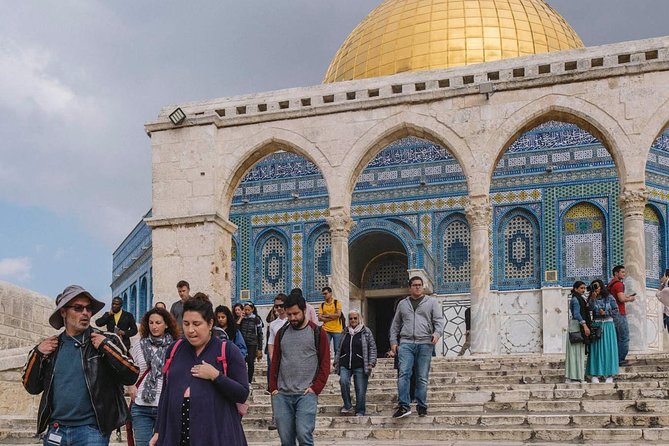
The final major stop lasts about an hour at the Temple Mount and Noble Sanctuary complex. From there, you view the Dome of the Rock and Al Aqsa Mosque while learning why the platform matters to Jews, Christians, and Muslims.
This is the tour’s longest stop for good reason. The site is central to religious tradition and to the conflict between Israelis and Palestinians. The guides explain the historic importance of the complex and the reasons it remains such a flash point.
The view of the magnificently tiled Dome of the Rock is memorable, but the real value lies in understanding the competing meanings attached to the platform. You hear how Jewish connection to the Temple Mount, Muslim attachment to the Noble Sanctuary, and modern political control overlap in one confined space.
The tour may not satisfy you if you want extended independent time at each building. Its purpose is to explain the site and its significance, not to offer a private worship schedule or a full architectural study.
What the $65 price gets you
At $65 per person, the tour sits in a reasonable range for a four-and-a-half-hour guided experience, especially since two professional guides lead it. You are paying for the unusual structure and the depth of the conversation, not for admissions, meals, or transportation.
The main value comes from time saved. On your own, you could visit many of these places, but linking them into one coherent account would be difficult. The guides help you understand why the Cardo, Holy Sepulchre, Western Wall, and Al Aqsa Mosque belong in one conversation.
The price is less attractive if you want a relaxed religious pilgrimage, long photography stops, or transport between locations. It is a strong buy if your priority is history, politics, and competing points of view.
The tour is capped at 20 people. That is still large enough for street noise to matter, but smaller than a big coach group. Choose a place close to the guides when possible, and ask questions during the final discussion if you could not hear every exchange.
How to prepare for the four-and-a-half-hour walk
Wear comfortable shoes and bring plenty of water. One past participant found the tour hot, tiring, and too fast, while still finding the information worthwhile. That is a fair warning.
There is no food or drink included, and the route does not list a dedicated meal break. Eat before you start, carry water, and bring a hat for sun protection. You should have a moderate level of physical fitness.
Dress with worship sites in mind. Knees and shoulders must be covered for both men and women, and shorts or sleeveless tops are not allowed. Do not bring large electronics. Service animals are allowed, and the starting point is near public transportation.
The tour uses a mobile ticket and confirmation is provided when you book. Cancellation is free up to 24 hours before the 9:30 a.m. start time. If the minimum number is not met and the operator cancels, you are offered another option or a full refund.
Who should book this Jerusalem tour
I would choose this tour early in a Jerusalem visit if you want a framework for the Old City before exploring alone. It suits first-time visitors, people interested in the Israel-Palestine conflict, and anyone who wants Jewish and Palestinian accounts presented in the same walk.
It is also a good fit for readers who value careful discussion over polished sightseeing. The guides are described as direct, candid, friendly, and respectful, and the strongest praise centers on their ability to answer difficult questions without turning the tour into a shouting match.
I would choose something else if you need lots of rest stops, have limited walking stamina, or want a detailed visit inside each church, mosque, or shrine. The route covers a great deal, and that breadth comes at the cost of lingering time.
Should you book the Dual Narrative Tour?
Book it if you want Jerusalem explained through more than one national and religious viewpoint. The two-guide format, the range of sacred sites, and the focus on how power shapes public space make this far more than a standard Old City orientation.
Go in prepared for heat, crowds, a quick pace, and serious subject matter. Bring water, cover your shoulders and knees, and reserve separate time for prayer or a slow visit inside the Holy Sepulchre and along the Via Dolorosa.
For $65, I think the tour offers good value to an open-minded reader who wants context and honest questions. It is not the easiest half-day walk, but it can give you a clearer way to understand one of the world’s most complicated cities.
FAQ
How long is the Jerusalem Dual Narrative Tour?
The tour lasts approximately 4 hours and 30 minutes.
What time does the tour start?
The tour starts at 9:30 a.m.
Where does the tour meet?
The meeting point is in the plaza just outside Jaffa Gate in Jerusalem’s Old City. Look for a representative holding a Jerusalem: Dual Narrative Tour sign.
Where does the tour end?
The tour ends at the Austrian Hospice at Via Dolorosa St 37, Jerusalem.
Who leads the tour?
Two professional guides lead the experience, one Jewish and one Palestinian, along with a tour escort or host.
What major sites are included?
The route includes Jaffa Gate, the Armenian Quarter, the Jewish Quarter and Roman Cardo, a rooftop near St. Mark’s Syriac Church, the Church of the Holy Sepulchre, the Muslim Quarter, Via Dolorosa, the Western Wall, and Al Aqsa Mosque.
Is food included?
No. Food and drinks are not included unless specifically stated.
What should I wear?
You must cover your knees and shoulders. Shorts and sleeveless tops are not allowed for entry into places of worship and selected museums.
Is the tour suitable for all fitness levels?
The tour requires a moderate level of physical fitness and lasts about four and a half hours.
Can I cancel for a refund?
Yes. You can cancel at least 24 hours before the experience start time for a full refund. Changes or cancellations made less than 24 hours before the start time are not accepted for a refund.
Recently added around Jerusalem
- Holy Jerusalem Full Day Tour from Jerusalem★ 5.0 · 3 reviews
- Half day tour bethlehem prices per Van up to 6 pax★ 5.0 · 3 reviews
- jerusalem classic tour★ 5.0 · 3 reviews
- Private Walking Tour in Jerusalem’s Old City★ 5.0 · 3 reviews
- Private Tour to the Culinary World of Jerusalem Market★ 5.0 · 3 reviews
- From Jerusalem: Masada Sunrise, Ein Gedi & Dead Sea★ 5.0 · 3 reviews
- Private Tour Bethlehem and the Dead Sea★ 5.0 · 3 reviews
- Jerusalem Like a Local: Customized Private Tour★ 5.0 · 3 reviews
Jerusalem Tours, compared.
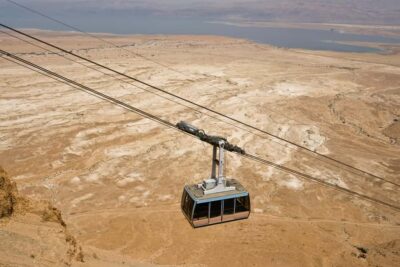
From Jerusalem: Masada & Dead Sea Full Day Tour with Pick Up
Read our review →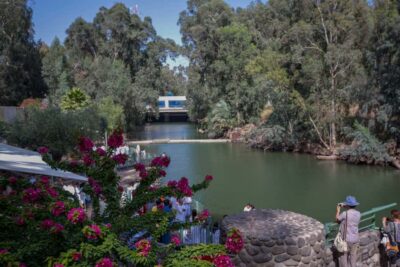
From Jerusalem: Nazareth and Sea of Galilee Tour
Read our review →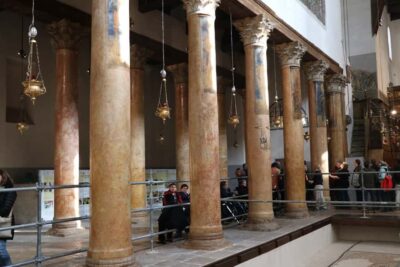

From Jerusalem/Tel Aviv: Bethlehem and Dead Sea Day Tour
Read our review →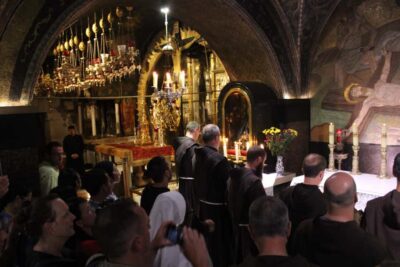
Masada, Ein Gedi and The Dead Sea from Jerusalem
Read our review →Browse the lists this tour appears in