
Reviewed · DEAD SEA TOURS
Jerusalem & Dead Sea Private Tour – Visit Holy Jerusalem & Dead Sea Relaxation
Jerusalem and the Dead Sea make an odd but effective pair: one asks for your attention, the other asks you to stop thinking and float. This private day trip gives you both, starting with hilltop views and sacred sites before heading east through the Judean hills to the salt water.
I like the private vehicle and guide, since your group can keep questions coming and adjust the pace better than on a large coach. I also like the contrast between the Old City’s stone lanes and the Dead Sea’s quiet, buoyant water. The catch is simple: this is a very full day, with long drives and plenty of walking before your two hours by the shore.
- Mount of Olives first: Begin with Jerusalem’s best broad view before entering the Old City.
- Three faith traditions in one walk: The route includes Christian, Jewish, and shared sacred places.
- Strong guide focus: Enrique, Saul, and Benjamin are named in past guest feedback for clear explanations, timing, and personal care.
- Private means personal: Only your group participates, with hotel pickup and an air-conditioned vehicle.
- Dead Sea finish: Float in mineral-heavy water and, if available at the resort, try the famous mud.
- Plan for a marathon day: The advertised timing varies between roughly 8 to 11 hours and about 12 hours, so keep your evening free.
Jerusalem and the Dead Sea in One Long Day
At $220 per person, this is not the cheapest way to see Jerusalem. It can still be fair value if you want a private guide, door-to-door transport, and two major destinations without arranging several transfers yourself.
The price matters most for a small group. Shared transport can cost less, but you give up privacy and may spend time collecting other passengers. Here, hotel pickup and drop-off, a professional licensed guide, and an air-conditioned vehicle are included.
There is one detail to confirm before booking. The highlights say entrance fees are included, while the inclusions and exclusions list says entrance fees are not included. Ask Compass Travel Israel what applies to this exact departure, especially for any Dead Sea resort access or optional mud treatment.
This is best viewed as a sampling day rather than a slow study of Jerusalem. You get the main religious and historic sights, but you will not have much spare time to wander, shop, sit in a café, or explore archaeological sites beyond the listed stops.
Mount of Olives: Jerusalem from Above
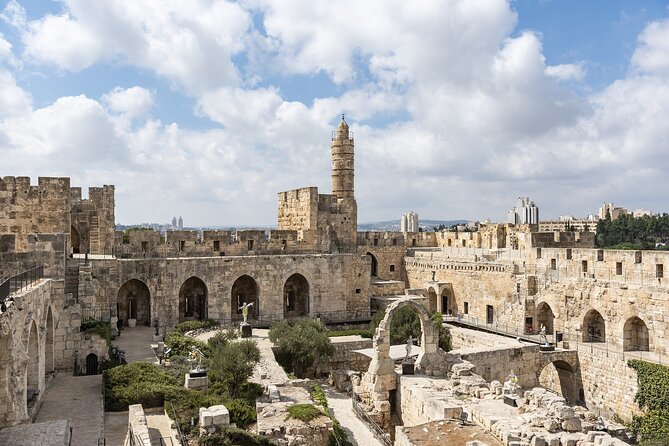
Your first proper look at Jerusalem comes from the Mount of Olives. From this high point, you can see the Old City, the Temple Mount area, and the Judean Desert stretching away to the east.
I like starting here because it gives you a useful map in your head. Jerusalem’s Old City can feel like a maze at ground level. From above, the relationship between the walls, the Temple Mount, the Kidron Valley, and the surrounding hills becomes easier to understand.
The Mount of Olives is also important in Christian tradition. It is linked with Jesus’ route between Jerusalem and Bethany, his sorrow over the city, and his ascension according to the New Testament. Your guide can place those traditions alongside the city’s Jewish and Islamic importance.
You have about 30 minutes here. That is enough for the outlook and a short explanation, but not enough for a leisurely walk across the hill. Bring a hat and sun protection, since this is an exposed stop and the Jerusalem sun can be strong.
more dead sea days from Tel Aviv
- From Tel Aviv: Masada & Dead Sea Full Day Tour with Pick Up
★ 4.5 · 1,496 reviews - Masada and the Dead Sea Day Trip from Tel Aviv
★ 4.5 · 1,014 reviews - Tel Aviv: Jerusalem, Bethlehem & Dead Sea
★ 4.0 · 881 reviews
Gethsemane and the Ancient Olive Trees
At the foot of the Mount of Olives, the Garden of Gethsemane provides a quieter pause. Christian tradition identifies this area with Jesus’ prayer and arrest before the crucifixion.
Several small olive groves on church property are associated with biblical Gethsemane. Your visit lasts about 30 minutes, giving you time to see the garden and hear the story without spending the whole morning at one location.
The stop works well after the Mount of Olives. You move from a wide city view to a small, enclosed place tied to one of the central scenes in the Christian Gospels. If religious sites matter to you, this may feel more personal than a large church filled with tour groups.
It is still worth keeping expectations in check. This is a brief visit, not a long garden walk or a private moment guaranteed in silence. The site has powerful meaning, but your time there is tightly fitted into a demanding schedule.
Mount Zion, King David’s Tomb, and the Cenacle
Mount Zion brings several traditions close together. The visit includes King David’s Tomb and the Room of the Last Supper, also known as the Cenacle.
King David’s Tomb is one of the most sacred Jewish sites in Jerusalem, though there is no firm proof that this is David’s actual burial place. Biblical references place his burial in the City of David, below the Temple Mount. That uncertainty is worth knowing, since sacred tradition and archaeological certainty are not always the same thing.
The Cenacle is on the upper floor above the tomb. Christian tradition identifies it as the place of the Last Supper. The room itself is spare, and its importance comes largely from the events associated with it rather than from elaborate decoration.
Plan on about an hour here. This is one of the better places to ask your guide how Jewish and Christian traditions overlap, and where they differ. Enrique and Saul were especially praised for explaining theology and ancient and modern Israeli history in a clear, engaging way, so a private format can be useful at a stop like this.
Walking the Via Dolorosa
The Old City portion begins in earnest as you walk through the Christian Quarter and along the Via Dolorosa. This narrow stone route represents the path Jesus is believed to have taken toward crucifixion.
You will not experience the Via Dolorosa as a quiet museum corridor. It is a working part of the Old City, with shops, residents, worshippers, and changing activity along the way. That mix is part of its character. The route is both a place of devotion and an ordinary city street.
The walk is scheduled for about two hours, including the visit to the Church of the Holy Sepulchre. Comfortable shoes are essential. The route uses uneven stone surfaces, and you will be on your feet for much of the Jerusalem section.
Modest dress is required at holy sites, and a head covering is required where appropriate. It is best to dress respectfully from the start rather than rely on a last-minute cover-up. If you have mobility concerns, ask about the walking demands before you book, since the supplied details say most people can participate but do not give a specific accessibility plan.
more Tel Aviv days to consider
- Dead Sea Relaxation Day from Tel Aviv
★ 4.0 · 40 reviews - From Tel Aviv: Full-Day Dead Sea Relaxation Tour
★ 4.6 · 9 reviews - Full-Day Bethlehem and Dead Sea Relaxation Tour -small group
★ 5.0 · 4 reviews - Dead Sea Relaxation & Bedouin hospitality – Tiny group from Tel Aviv
★ 5.0 · 3 reviews
Church of the Holy Sepulchre
The Church of the Holy Sepulchre is the main Christian stop in Jerusalem and one of the world’s most important Christian holy places. It is traditionally associated with Jesus’ crucifixion, burial, and resurrection.
The church is shared and administered by several Christian communities. That arrangement helps explain why the building can feel complex, layered, and at times crowded. You may find chapels, shrines, stairways, and devotional activity packed into a space whose importance reaches back many centuries.
Your guide’s role matters here. Without context, the church can seem like a series of dark rooms and queues. With good explanation, the major locations, traditions, and tensions become easier to follow.
The visit is listed at about one hour, within the two-hour Via Dolorosa section. That is enough for an introduction, but not for every chapel or religious service. If this church is the main reason you want to see Jerusalem, a longer dedicated tour would give it more room.
The Cardo and the Armenian and Jewish Quarters
From the Christian Quarter, you continue through the Armenian and Jewish quarters toward the Cardo. This restored Roman road offers a change of subject after the intensely religious stops.
The southern section of the Cardo was uncovered in the Jewish Quarter and dates to the Byzantine period under Emperor Justinian, from 527 to 565. It continued an earlier Roman section and linked two major churches of Byzantine Jerusalem, the Church of the Holy Sepulchre and the Nea Church.
You have about 30 minutes here. That is enough to see the excavated street and understand the old city’s Roman and Byzantine planning. It also gives you a chance to notice how Jerusalem has been rebuilt, reused, and layered over time.
I appreciate this stop because it keeps the day from becoming only a pilgrimage route. Jerusalem is also an archaeological city, and the Cardo helps connect the living streets above with the urban center that existed below and before them.
The Western Wall and the Temple Mount
The final major Jerusalem stop is the Western Wall, also called the Kotel. This ancient limestone retaining wall sits beside the Temple Mount and is the holiest place where Jews are permitted to pray under current access restrictions.
The Wall is not the entire ancient Temple complex. It is a surviving section of a much longer retaining structure, close to the Temple Mount’s sacred platform. That distinction is useful, since the site’s meaning comes from both the wall itself and its location.
Expect about 30 minutes. You can observe the prayer area and take in the setting, but follow local rules and dress with care. This is an active place of worship, not simply a photo stop.
By this stage, your morning or early afternoon will have included Christian and Jewish sacred sites, ancient roads, city views, and several stories that reach across different faiths. The private guide can help you keep those threads straight, which is one of the strongest reasons to choose this format.
The Road Through the Judean Hills
After Jerusalem, the mood changes. You leave the dense stone quarters and drive east toward the Dead Sea through the Judean hills and desert region.
The transfer is part of the day’s appeal, but it also adds to the long hours. You are not simply moving between nearby attractions. Jerusalem and the Dead Sea require a substantial road journey, so this tour works best when you accept that the vehicle time is part of the experience.
The air-conditioned car or van is important here. A private vehicle gives your group a place to rest, store day bags, and ask for a short adjustment when needed. Benjamin was praised for punctual driving, a comfortable vehicle, and helping a family fit extra activities into its plans, though the exact vehicle and guide depend on your booking.
The tour description places the Dead Sea in the Jordan Rift Valley between Jordan and the West Bank. It is the lowest place on earth, and its salt-heavy water creates the famous floating effect.
Floating at the Dead Sea
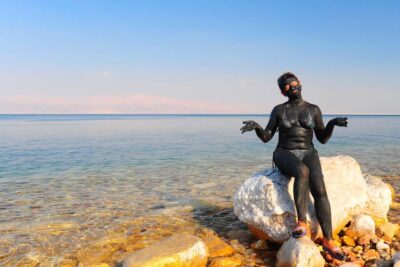
At the shore, you have about two hours to relax at a Dead Sea resort. This is not a quick roadside photograph. You are meant to change pace, enter the water, and give your body a break after the Jerusalem walking.
The high salt content makes the water unusually buoyant. You can lean back and float rather than swim in the usual way. Avoid getting the water in your eyes, and take care around any cuts or irritated skin, since highly salty water can sting sharply.
The famous Dead Sea mud is also part of the plan as an optional activity. You can cover yourself with mineral-rich mud, let it dry, then wash it off. The treatment is a pleasant ritual, but health claims should be treated with care. Enjoy it as a traditional spa experience rather than a medical cure.
Bring a towel, sunglasses, sunscreen, and suitable swim clothing. The supplied advice also calls for comfortable walking shoes, a hat, and modest clothing for Jerusalem. Pack in a way that lets you shift easily from religious sites to the resort.
The two-hour stop is a good length for floating and washing off, though it may feel short if you want a full spa visit. Food and drinks are not included, and personal expenses are extra, so budget for anything you buy at the resort.
What the Private Format Adds
A private tour is most useful here because the day contains two very different parts. In Jerusalem, you may want more explanation at the Holy Sepulchre or the Western Wall. At the Dead Sea, you may want less talk and more time to sit in the shade.
The guide can also help with timing. Saul was praised for keeping demanding schedules on track, explaining the three faith traditions, and using the available hours well. Enrique was praised for humor, strong knowledge of history and theology, and thoughtful care. Those comments point to the kind of guide this tour aims to provide, though no specific guide is guaranteed.
Only your group participates, which makes the day easier for families and friends with a shared interest. It can also be good for older relatives who need a more controlled pace, although the Old City’s stone streets still require walking.
The trade-off is cost. At $220 per person, you pay for privacy and convenience rather than the lowest possible fare. For one or two people, that may feel steep. For a small group splitting the vehicle and guide cost, it can make more sense.
Who Should Book This Tour
I would choose this tour if you have only one open day and want the two sights most likely to define a first visit to Israel. It suits families, couples, and small groups who want a guide to connect biblical traditions, Jewish history, archaeology, and present-day context.
It also suits you if hotel pickup matters. Starting from Tel Aviv or Herzliya and handling the return drive yourself would be tiring, especially after walking Jerusalem and spending time in the water.
I would not choose it if you want a slow Jerusalem visit. You will not have much free time for the markets, museums, archaeological excavations, or independent wandering. I would also think twice if you dislike early starts, long drives, or tightly packed sightseeing days.
The tour is recommended for most people, but the walking and full-day length deserve honest attention. Wear shoes with a good grip, carry water, and keep your evening free.
Practical Details Before You Go
Pickup and drop-off at your hotel are included, along with an air-conditioned vehicle and a government-licensed professional guide. Mobile ticketing and instant confirmation make the booking process straightforward.
The duration needs a little clarification. It is described as approximately 8 to 11 hours in the basic details, while the main overview calls it a 12-hour day. Treat it as a full-day outing and confirm the expected pickup and return time before paying.
Food, drinks, and personal expenses are not included. The supplied information also gives conflicting details about entrance fees, so ask the operator to confirm exactly what is covered.
Free cancellation is available if you cancel at least 24 hours before the start time. Changes or cancellations made inside that period are not accepted for a refund.
Should You Book It?
Book it if your time is short and you want Jerusalem’s main sacred sights paired with a proper Dead Sea stop. The guide quality is the key factor, and the names most strongly associated with this experience, Enrique, Saul, and Benjamin, were praised for knowledge, humor, punctuality, good timing, and personal attention.
Skip it if you would rather spend a full day in Jerusalem alone or if the $220 price feels too high for a single day. For the right small group, though, private transport, a licensed guide, hotel service, and two major destinations make this a practical way to cover a lot of ground without handling the logistics yourself.
FAQ
Where does the tour start?
Pickup is offered from hotels in the Tel Aviv and Herzliya area, with hotel drop-off included.
How long does the experience last?
The duration is listed as approximately 8 to 11 hours, while the main tour description refers to a 12-hour day. Confirm the exact schedule when booking.
Is this a private tour?
Yes. Only your group participates in the activity.
What is included in the price?
A government-licensed professional guide, hotel pickup and drop-off, and an air-conditioned vehicle are included.
Are food and drinks included?
No. Food, drinks, and personal expenses are not included.
What should I bring?
Bring comfortable walking shoes, a hat, towel, sunglasses, and sunscreen. Modest dress and a head covering are required when visiting holy sites in Jerusalem.
Recently added around Tel Aviv
- Jaffa Flea Market Tasting Tour★ 5.0 · 3 reviews
- Early Christianity in Galilee Private Tour★ 4.5 · 3 reviews
- Privet walking tour in Tel Aviv-Yafo★ 5.0 · 3 reviews
- Bar Crawl tour with local in Tel-Aviv★ 5.0 · 3 reviews
- Package VIP Skip Line Services in BGN Airport with Transfer to Tel aviv Hotels★ 5.0 · 3 reviews
- Food & Drink Private Guided Tour in Tel Aviv★ 5.0 · 3 reviews
- Tel Aviv: Carmel Market & Neighborhood Guided Walking Tour★ 4.7 · 3 reviews
- Tel Aviv Like a Local: Customized Guided Tour by Lokafy★ 5.0 · 3 reviews
Dead Sea Tours, compared.
From Tel Aviv: Masada & Dead Sea Full Day Tour with Pick Up
Read our review →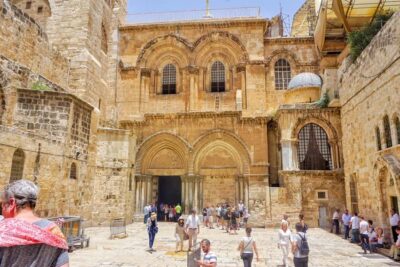
From Jerusalem: Masada & Dead Sea Full Day Tour with Pick Up
Read our review →
From Tel Aviv: Masada, Ein Gedi & Dead Sea Tour
Read our review →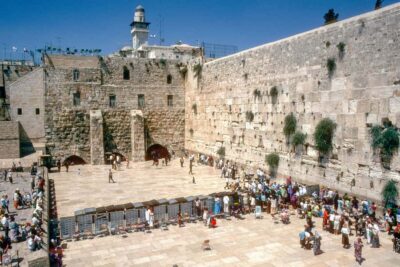
From Tel Aviv: Jerusalem Old City & Dead Sea Guided Day Tour
Read our review →
Masada, Ein Gedi and The Dead Sea from Jerusalem
Read our review →Browse the lists this tour appears in