
Reviewed · JERUSALEM OLD CITY TOURS
Jerusalem: 3–Hour Old City Tour in French
Jerusalem’s Old City packs Armenian, Jewish, Roman, Islamic, and Christian stories into a compact walk. This 3-hour tour gives you a clear route through the four quarters, from Suleiman the Magnificent’s walls to the Church of the Holy Sepulchre and the story of Jesus’s final path.
I like the private-group format and the chance to tour in French, with English and Italian also available. I also like the way the route links engineering, scripture, and living religious places instead of treating the Old City as a string of disconnected monuments. The main drawback is pace: three hours is enough for an overview, but not enough for long visits inside every site.
Key points to know before you book
- Suleiman’s 16th-century walls frame the walk: You begin with the fortifications that still define the Old City’s outline.
- The Armenian Quarter comes first: This gives the tour an unusual opening, away from the most familiar headline sights.
- The Roman Cardo connects past and present: You follow the old street associated with Publius Aelius Hadrianus.
- Hezekiah and Isaiah add an engineering story: The route explains how Jerusalem’s water supply links biblical history with practical survival.
- The Western Wall and Islamic-era Jerusalem follow: You get religious context alongside the city’s changing political story.
- The Church of the Holy Sepulchre is the finale: The tour ends with the Passion story in one of Christianity’s most important places.
Starting near Jaffa Gate and entering the Old City
The meeting point is at the entrance to the Mamilla shopping area, while the walking route begins at Jaffa Gate. Check the exact meeting instructions when you book, since these are close but not identical points.
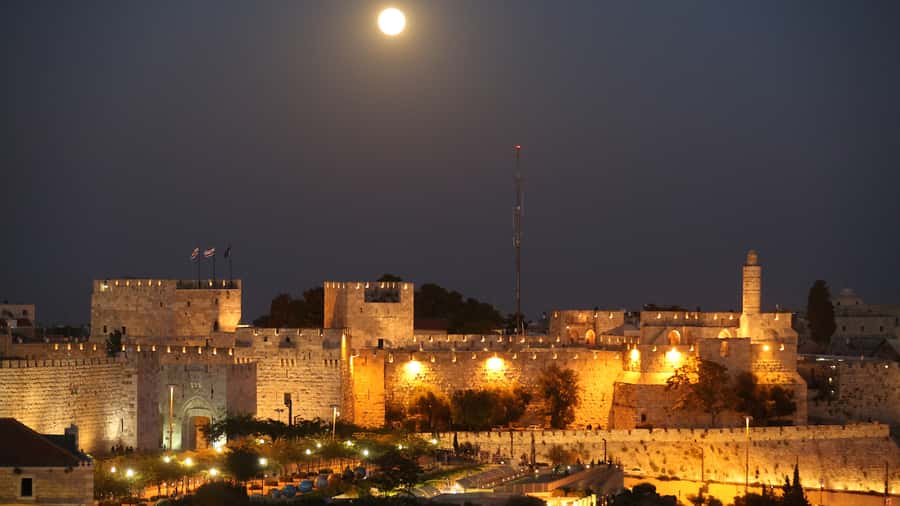
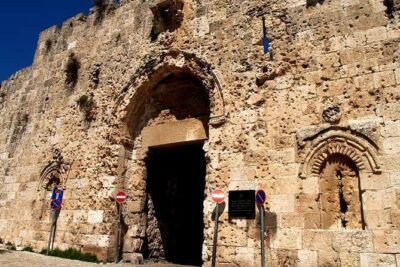
Jaffa Gate is a sensible place to start. It opens directly into the Old City and gives you an immediate sense of Jerusalem’s old defensive shell. The tour introduces the city walls built under Suleiman the Magnificent, the Ottoman ruler whose work helped give the Old City much of the shape you see today.
This opening also touches on the creation of the State of Israel and the neighborhoods of modern Jerusalem. That matters because the Old City is not an isolated museum piece. It sits at the center of a modern city and a complicated political story. A guide can help you keep those layers separate without losing sight of how closely they overlap.
Bring water, a hat, and sturdy walking shoes. The route is on foot for three hours, and Jerusalem’s stone paving can be tiring. Comfortable footwear will matter more than dressing up for photographs.
More City Tours in Jerusalem
- Jerusalem: Guided Walking Tour of the Old City
★ 4.7 · 386 reviews - Full Day City Tour of Jerusalem
★ 4.1 · 367 reviews - From Jerusalem Small group tour Old&New City ENTRY FEES INCL
★ 4.0 · 135 reviews
The Armenian Quarter, a quieter first chapter
The first section takes you into the Armenian Quarter. This is a useful choice because it begins with one of the Old City’s less familiar communities rather than rushing straight to the Western Wall or the Christian Quarter.
The Armenian presence gives the tour a broader view of Jerusalem’s religious life. The Old City is divided into four quarters, but those labels do not turn the city into four sealed boxes. Each area has its own traditions, buildings, and daily rhythms, and the Armenian Quarter helps you understand that the Christian story here is not limited to one church or one group.
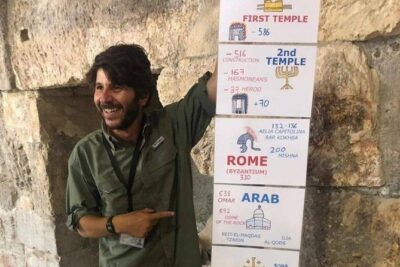
Your guide can also help you get oriented before the streets become more crowded and the religious sights more intense. Florent is the guide specifically praised in the supplied information, described as attentive, cultured, and clear in his explanations. If Florent is leading your departure, expect a guide who puts effort into making the material understandable rather than simply reciting dates.
The tour is offered in French, English, and Italian. For French speakers, that can make a real difference in a place where names, religious terms, and historical shifts come quickly. You can focus on the story instead of translating it in your head.
Walking the Roman Cardo with Hadrian
From the Armenian Quarter, the route moves into the Jewish Quarter and then back to the Roman period along the Cardo. The name refers to the main north-south street of a Roman city, and the tour connects it with Publius Aelius Hadrianus, better known as the emperor Hadrian.
This is one of the tour’s strongest transitions. You move through Jerusalem’s later religious quarters, then reach a street shaped by Roman city planning. The result is a useful reminder that Jerusalem has repeatedly been rebuilt, renamed, and reorganized by different rulers.
The Cardo is not just a single isolated ruin to tick off. It helps you picture how the city functioned under Roman rule. Your guide’s job here is to connect the visible remains with the larger urban plan, so pay attention to how the street fits into the Old City around you.
You should keep your expectations measured. A three-hour walking tour will give you the meaning and setting of the Cardo, not an extended archaeological study. If Roman remains are your main reason for coming to Jerusalem, you may want more time elsewhere. If you want a strong introduction to how the city changed over time, this stop earns its place.
Hezekiah, Isaiah, and Jerusalem’s water problem
The biblical part of the route centers on King Hezekiah and the prophet Isaiah. Hezekiah is presented as a pious king whose technical achievements still impress, especially in connection with Jerusalem’s water supply.
This story gives the tour one of its most memorable ideas: faith and engineering were not separate concerns. A city under threat needed water, and controlling that water could mean the difference between holding out and surrendering. The account of Hezekiah’s work turns a biblical passage into a practical problem involving stone, labor, planning, and survival.
The information provided for this tour does not promise entry into Hezekiah’s Tunnel, so do not book expecting a tunnel walk. Instead, expect the guide to explain the story and its place in Jerusalem’s past. That distinction is important. The tour uses the water system as a historical subject, but the advertised experience is a three-hour Old City walk, not a specialist underground excursion.
I like this part because it breaks up the sequence of religious landmarks. You get a story about how people solved a hard physical problem, not only a story about who ruled or worshiped where.
more old city quarters to walk
- Best seller! Jerusalem old city four quarters tour
★ 5.0 · 123 reviews - Private Tour Jerusalem Old City
★ 5.0 · 118 reviews - All Inclusive Walking Tour Old City Jerusalem
★ 5.0 · 83 reviews - Jerusalem Half Day Tour: Holy Sepulchre and Western Wall
★ 4.5 · 80 reviews
The Temple area, the Western Wall, and Islamic Jerusalem
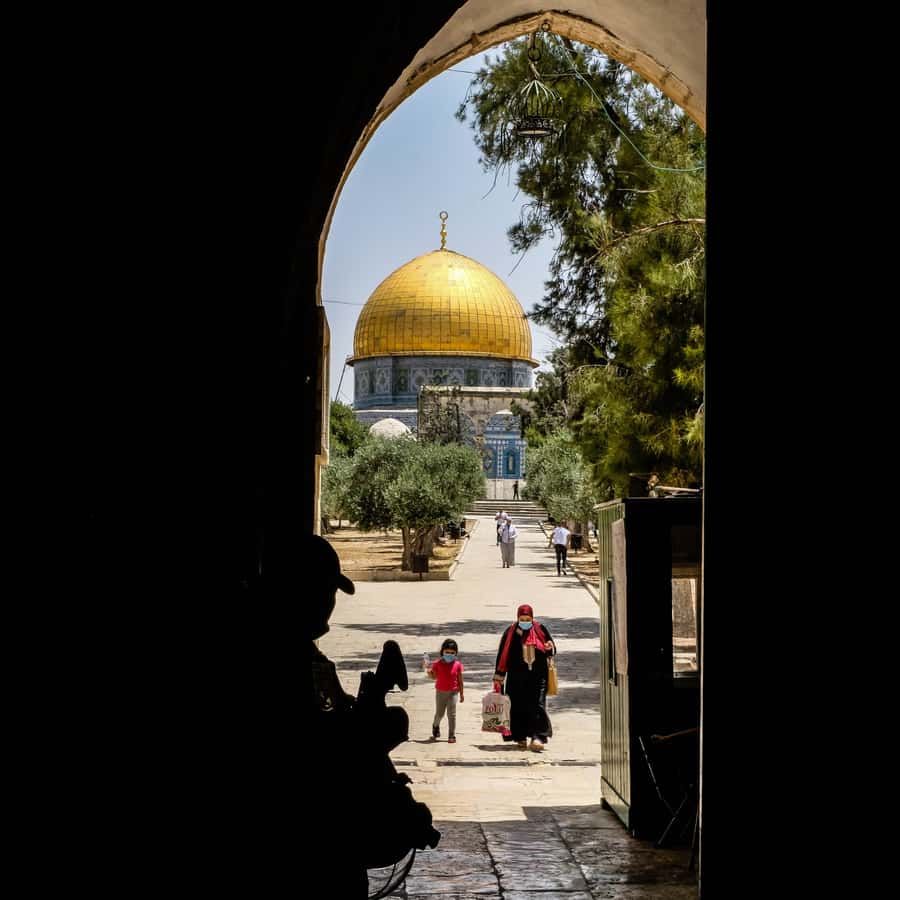
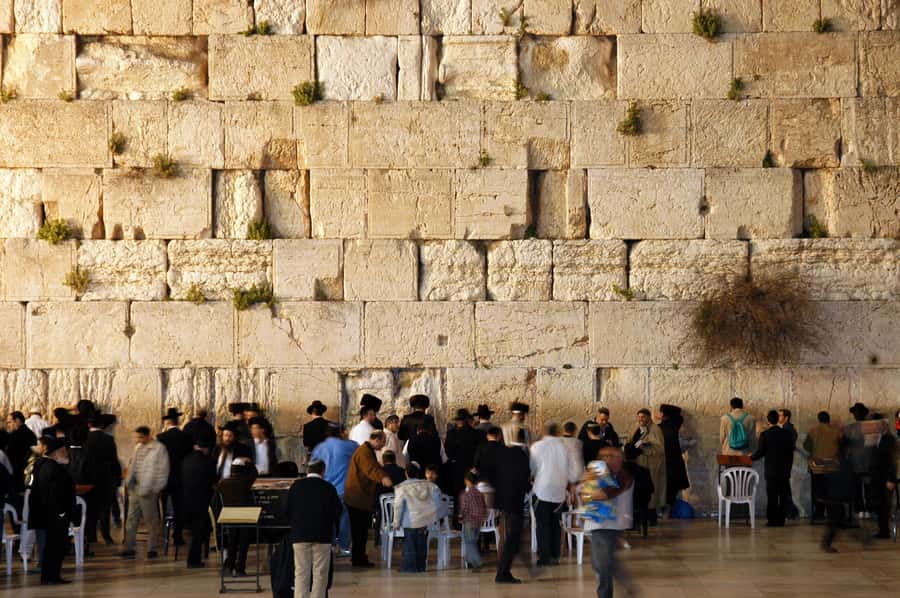
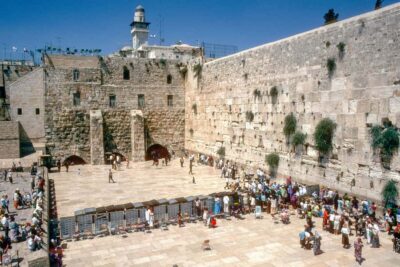
The route then returns to the major sacred sites associated with Jewish Jerusalem. You rediscover the Temple of Jerusalem and visit the Western Wall, one of the Old City’s most important places for Jewish prayer.
The Western Wall is a working religious site, not simply a historic wall viewed from a distance. Your guide can explain its connection with the Temple area and help you approach the place with appropriate respect. The experience is more useful when you understand that the wall is part of a much larger sacred space with meaning for several faiths.
The tour also covers the Islamic era of Jerusalem. This is essential context, since the Old City’s story cannot be reduced to one period or one religion. The route presents the three religions of the book together, showing how Jewish, Christian, and Muslim connections have shaped the same streets and holy places.
Because this is a private group, you have a better chance of asking questions than you would on a large public walk. Still, the guide has to cover a great deal in limited time. If you want long periods for prayer, personal reflection, or independent photography, you may need to return on your own after the tour.
Entrance fees for parks and museums are not included. The tour itself focuses on guiding and walking through the Old City, so allow extra money if you plan to add paid sites before or after the route.
Ending at the Church of the Holy Sepulchre
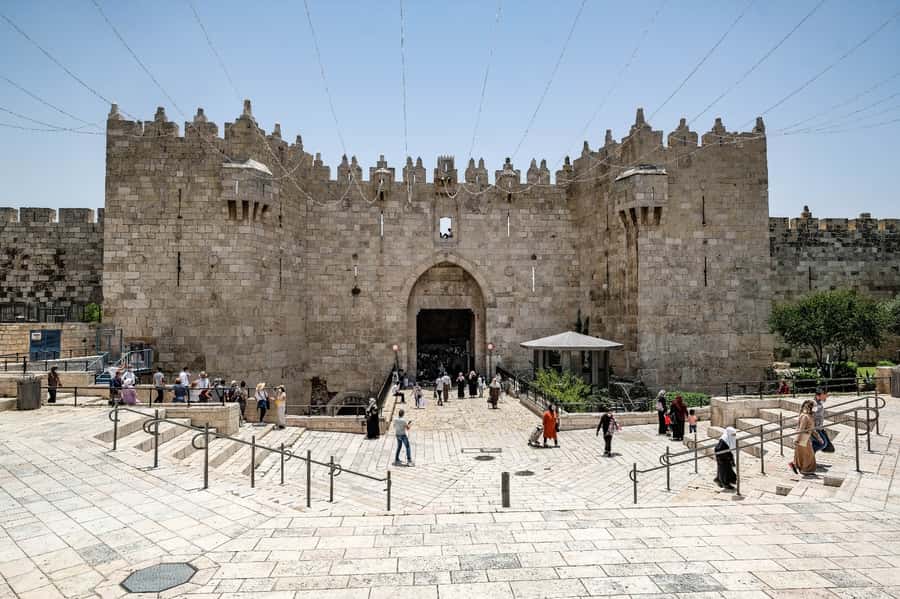
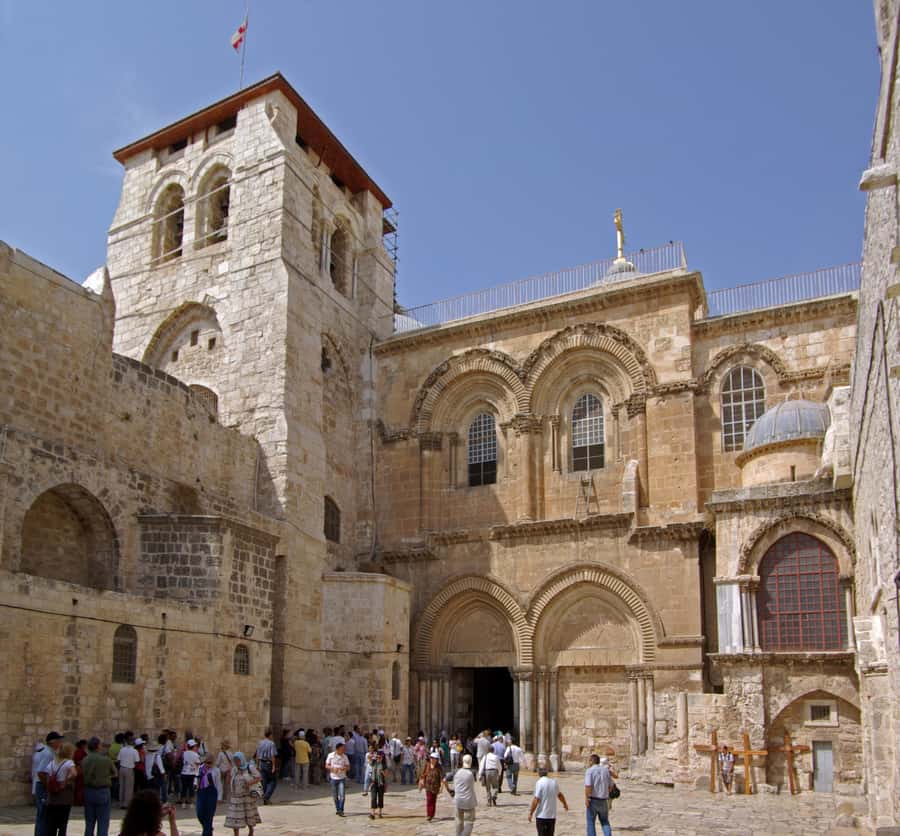
The final section follows the path of Jesus to the Church of the Holy Sepulchre. The tour closes with the Passion story at a site that carries enormous importance for Christians.
Ending here gives the walk a clear narrative shape. You begin with walls and neighborhoods, move through Armenian, Jewish, Roman, biblical, and Islamic chapters, then arrive at one of Christianity’s central places. The route does not treat the church as a detached monument. It places the building inside the streets and traditions that surround it.
The Church of the Holy Sepulchre can be an emotionally powerful stop, but it can also feel crowded and confusing. That is one reason a guide helps. You need context to understand what you are seeing, and you may need patience if the interior is busy or if movement through the church is slow.
The supplied information does not promise a long interior visit or a particular set of chapels. Think of this as the final guided stop and a chance to understand the Passion story in its Jerusalem setting. If you want quiet time inside the church, plan to return separately.
What the guide and language choice add
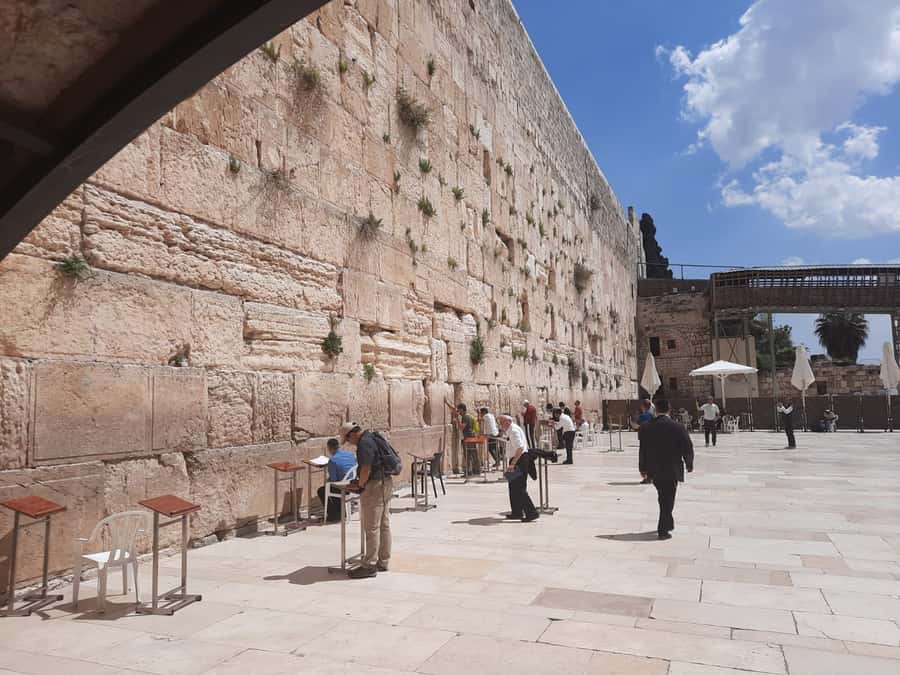
The guide is the main value of this experience. The tour includes a live guide, and the private-group setup gives the walk a more personal feel than a large shared excursion. The listed guide languages are French, English, and Italian.
For a place as layered as Jerusalem, clear explanation matters. Names change across languages, religious traditions use different terms for the same area, and the Old City’s periods sit on top of one another. A guide who can explain those shifts in your preferred language can make the walk far easier to follow.
Florent is the named guide associated with the experience. The strongest praise attached to him focuses on three practical qualities: attention to the group, clear explanations, and broad cultural knowledge. Those are exactly the traits you want here. Jerusalem rewards questions, and a patient guide can help you connect a wall, street, or shrine to the larger story.
The rating information is based on nine reviews, with a perfect score shown. One French-language booking from December 2022 describes the tour as very fine and the guide as erudite, educational, and pleasant. Another booking notes that the tour remained very good despite rain. That gives you a useful practical clue: poor weather does not erase the experience, but you should still bring suitable clothing and shoes.
Is $82 a fair price for three hours?
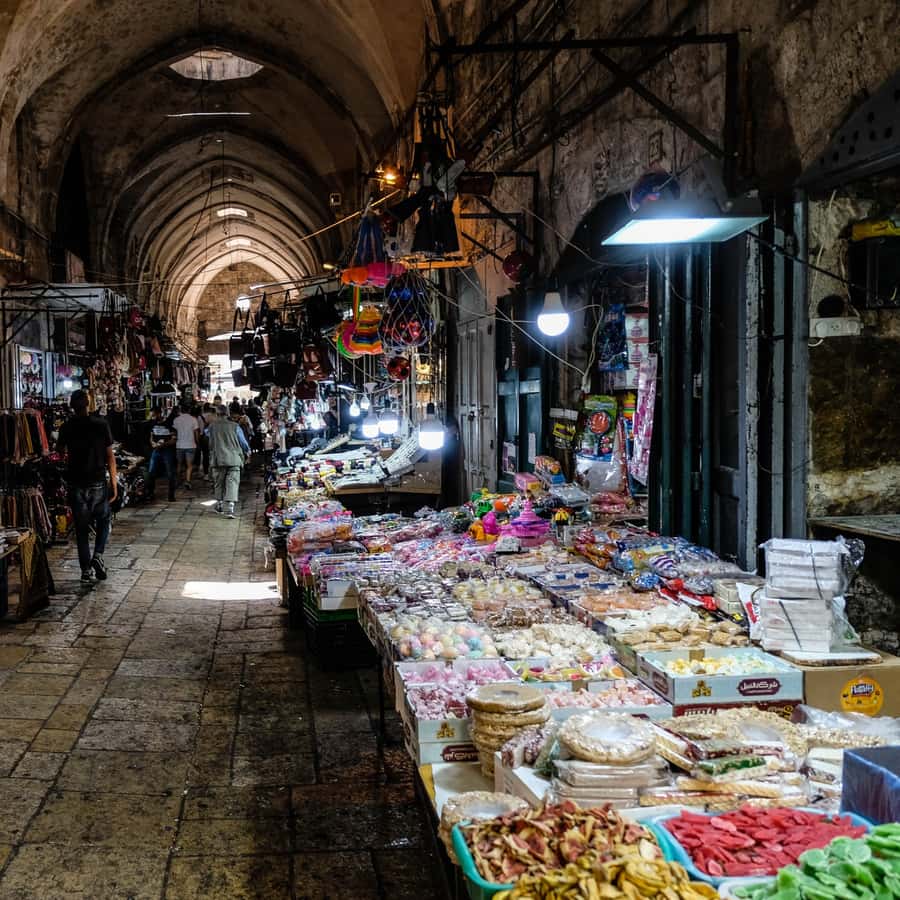
At $82 per person, this is not the cheapest way to walk through Jerusalem. It can still be good value if you want a private group, a live guide, and a structured route through several major periods of the city.
You are paying for interpretation rather than transportation or admission tickets. The price covers the guide, while park and museum entrance fees are separate. That makes the tour most worthwhile for someone who wants the Old City explained in French, English, or Italian and prefers not to build the historical route alone.
The value is weaker if you only want to wander or spend a long time at one major site. Three hours moves quickly, and the tour cannot provide a full visit to every quarter, museum, church, or archaeological feature. It works best as an orientation walk that helps you decide where to return later.
The reserve-now and pay-later option also keeps your plans flexible, and cancellation is free up to 24 hours before the tour for a full refund. Those terms are useful in Jerusalem, where weather and changing plans can affect a walking day.
Who should book this Old City walk?
I would recommend this tour to first-time visitors who want a strong historical framework in a short amount of time. It also suits French-speaking visitors who want more than a basic sightseeing loop and appreciate having a guide explain the religious and political layers in their own language.
It is a good match for people interested in how different eras connect. The Armenian Quarter, Roman Cardo, Hezekiah’s water story, Temple history, Western Wall, Islamic Jerusalem, and Church of the Holy Sepulchre form a broad sequence. You will not master the entire Old City in three hours, but you will leave with a useful mental map.
It may not suit you if you dislike walking, need a slow pace, or want guaranteed access to specific paid sites. The itinerary is built around moving through the Old City and hearing the story, not around extended museum visits or a tunnel entry.
Should you book the French Old City tour?
Book it if you want a focused, private introduction to Jerusalem’s Old City, especially in French. The route covers more than the usual headline stops and gives proper space to the Armenian Quarter, the Roman Cardo, Hezekiah’s engineering story, and the Islamic era.
I would choose it early in your stay, then use what you learn to plan longer visits to the Western Wall, museums, or the Church of the Holy Sepulchre. Bring water, a hat, and good shoes, and allow extra money for any park or museum admission.
Skip it if your priority is spending most of the day inside one religious or archaeological site. For a three-hour overview led by a guide praised for clear and thoughtful explanations, $82 is a reasonable price, provided you value context as much as sightseeing.
FAQ
How long is the Jerusalem Old City tour?
The tour lasts 3 hours. Starting times vary, so you should check availability for the date you want.
Where does the tour meet?
The meeting point is at the entrance to the Mamilla shopping area. The walking route begins from Jaffa Gate.
Which languages are available?
The live tour guide is listed as available in French, English, and Italian.
Is this a private tour?
Yes. The group type is listed as a private group.
Are entrance fees included?
No. Park and museum entrance fees are not included in the tour price.
What should I bring?
Bring a hat, water, and good walking shoes. The experience is a three-hour walking tour through Jerusalem’s Old City.
Recently added around Jerusalem
- Holy Jerusalem Full Day Tour from Jerusalem★ 5.0 · 3 reviews
- Half day tour bethlehem prices per Van up to 6 pax★ 5.0 · 3 reviews
- jerusalem classic tour★ 5.0 · 3 reviews
- Private Walking Tour in Jerusalem’s Old City★ 5.0 · 3 reviews
- Private Tour to the Culinary World of Jerusalem Market★ 5.0 · 3 reviews
- From Jerusalem: Masada Sunrise, Ein Gedi & Dead Sea★ 5.0 · 3 reviews
- Private Tour Bethlehem and the Dead Sea★ 5.0 · 3 reviews
- Jerusalem Like a Local: Customized Private Tour★ 5.0 · 3 reviews
Jerusalem Old City Tours, compared.
From Tel Aviv: Jerusalem Old City & Dead Sea Guided Day Tour
Read our review →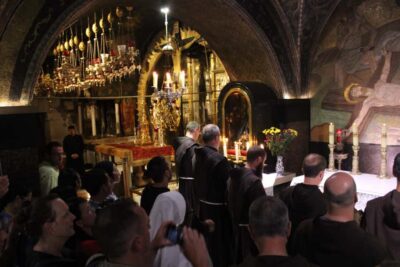
Jerusalem Half Day Tour: Holy Sepulchre and Western Wall
Read our review →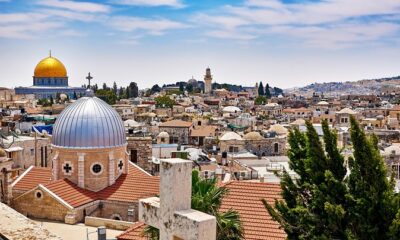
Jerusalem Half-Day Tour from Tel Aviv: Holy Sepulchre and Western Wall
Read our review →

Jaffa: Old City, Port & Shuk Hapishpishim Walking Tour
Read our review →Browse the lists this tour appears in