
Reviewed · BETHLEHEM TOURS
Full-Day Trip of Jerusalem and Bethlehem
Jerusalem and Bethlehem pack several of the world’s most important religious sites into one demanding day. You’ll look across the Old City from the Mount of Olives, walk through the Jewish and Christian quarters, and then cross into Bethlehem to see the Church of the Nativity and its underground grotto.
I like the wide range of landmarks and the way the route links Jewish, Christian, and Roman-era Jerusalem. I also like the chance to see Bethlehem without arranging separate transport. The drawback is the pace: with a group of up to 55 people, crowded lanes and busy worship sites can make it hard to hear every explanation.
Key points to know before booking
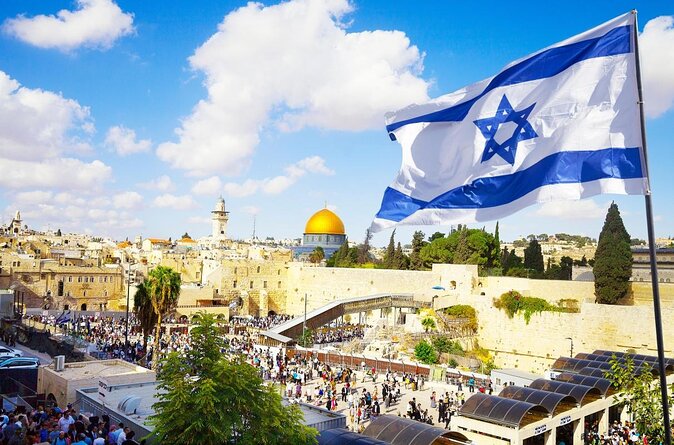
- Mount of Olives first: Begin with one of the clearest panoramic views of Jerusalem and a look toward the Old City.
- Two major holy cities in one day: Jerusalem and Bethlehem are covered together, saving you the trouble of planning separate visits.
- A strong religious focus: The route includes the Western Wall, Via Dolorosa, Church of the Holy Sepulchre, and Church of the Nativity.
- Roman Jerusalem included: Walk through the restored Cardo, once the city’s main street during the Byzantine period.
- Expect a large group: The vehicle is air-conditioned, but the group may be as large as 55 people, which affects pace and listening conditions.
- Dress carefully: Knees and shoulders must be covered for places of worship, and a passport is required.
The day begins with Jerusalem from above
This full-day trip leaves from Tel Aviv and takes you first toward Jerusalem’s eastern hills. The opening stop is the Mount of Olives, where you look across toward the Old City and its walls. It is a useful first view because Jerusalem can feel like a maze once you enter its narrow streets.
From this height, your guide can point out the main quarters and explain how the city’s religious sites fit together. The view gives you a sense of direction before the walking begins, although the stop is for looking and orientation rather than a long hike.
You then continue to Mount Zion. The scheduled sights here include King David’s Tomb, the Room of the Last Supper, and the Dormition Abbey. Each site reflects a different part of Jerusalem’s religious story, and the short sequence helps set up the Christian and Jewish themes you’ll encounter later.
The tour is not designed for long, quiet visits at every location. You’ll see several important places in quick succession, so listen closely when the guide explains why each one matters. Guides named Riki, Ron, and Elias have been praised for keeping the day moving while adding useful background, though the quality of explanation can vary.
more bethlehem day trips
- From Jerusalem: Half-Day Bethlehem Guided Tour
★ 4.7 · 568 reviews - Jerusalem/Tel Aviv: Bethlehem, Jericho and Jordan River Tour
★ 4.6 · 526 reviews - From Jerusalem/Tel Aviv: Bethlehem and Dead Sea Day Tour
★ 4.7 · 484 reviews
Walking through the Armenian and Jewish quarters
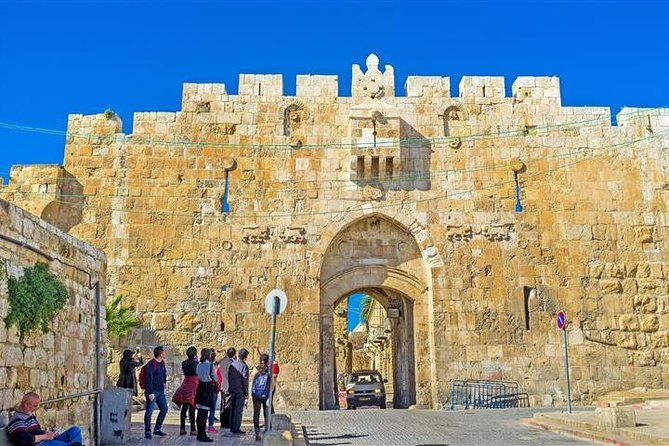
The route enters the Old City through the Zion Gate and continues on foot through the Armenian and Jewish quarters. This is where the tour changes from a sightseeing drive to a close look at Jerusalem’s dense urban fabric.
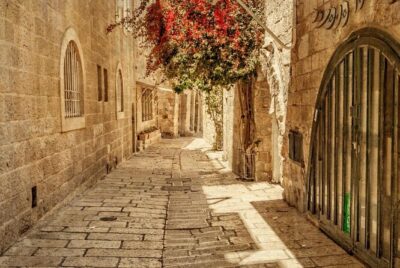
The quarters are compact, with stone lanes, courtyards, shops, religious buildings, and sudden openings toward major monuments. You’ll need comfortable shoes and a reasonable level of fitness. The tour description calls for moderate physical fitness, and that is fair advice for a day that includes several hours of walking over uneven surfaces.
One of the more unusual stops is the Cardo, a Roman road that was later used as a major Byzantine-era street. Parts of the route have been excavated and restored, allowing you to see how ancient Jerusalem was organized beneath and around the modern Old City.
I especially like this stop because it adds an archaeological layer to a day otherwise centered on sacred places. The Cardo helps you understand that Jerusalem was not only a center of worship. It was also a working city shaped by Roman and Byzantine rule.
The Western Wall and the meaning of the Kotel
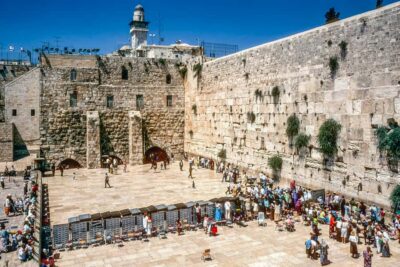
The visit to the Western Wall, also called the Kotel, is one of the central moments in Jerusalem. The wall is a surviving section associated with the ancient Jewish Temple complex, and people come here to pray, reflect, and place written prayers between the stones.
Your time at the wall may depend on crowd levels and the group’s schedule. This is not a private, slow-paced visit. The area can be busy, and it is important to follow your guide’s instructions and respect those who are praying.
The Western Wall also helps explain the layout of the Old City. From here, the group continues toward the Christian quarter, shifting the focus from Jewish sacred space to the final events in the life of Jesus.
Because the sites are close together but carry very different meanings, a good guide matters. Riki has been singled out for combining personal experience with clear, diplomatic explanations. Other feedback indicates that some guides rely too much on questions from the group instead of supplying enough facts, so your experience may depend heavily on who leads the day.
Following the Via Dolorosa to the Church of the Holy Sepulchre
The Via Dolorosa is a route through the Old City associated with Jesus’ final walk toward crucifixion. It passes through busy streets rather than a quiet museum setting, which is part of what makes the visit feel immediate.
You’ll walk through the Christian quarter and reach the Church of the Holy Sepulchre, traditionally identified as the site of Jesus’ crucifixion and burial. The church is shared by several Christian communities and contains multiple chapels and sacred points. Crowds can be heavy, and the interior may feel confusing without an explanation from the guide.
Do not expect a long, private pause at every point along the route. The day has a lot to cover, and the church can be crowded enough that you may not hear every word. Staying near the guide and asking questions during quieter moments will help.
This part of the tour is most useful if you want an introduction rather than a specialist study. You’ll gain a practical sense of how the Via Dolorosa runs through the city and why the Church of the Holy Sepulchre matters to Christian pilgrims.
more Jerusalem days to consider
- From Jerusalem: Masada & Dead Sea Full Day Tour with Pick Up
★ 4.5 · 815 reviews - Full Day City Tour of Jerusalem
★ 4.1 · 367 reviews - Old and New Jerusalem Full-Day Tour
★ 4.0 · 273 reviews - Jerusalem Full Day Tour INCLUDING ENTRANCE FEES
★ 4.0 · 73 reviews
The journey to Bethlehem and the Church of the Nativity
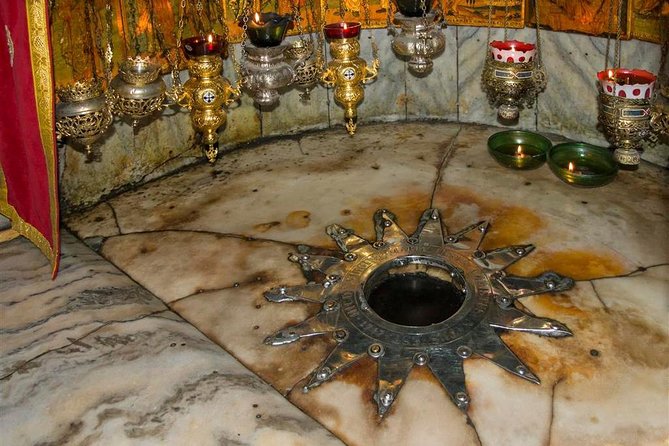
After Jerusalem, the tour continues to Bethlehem, the town traditionally known as the birthplace of Jesus. The change from Jerusalem to Bethlehem gives the day a second setting and a different emphasis, though it also adds time on the road.
A current, valid passport is required on the day of travel. Bring it with you and keep it accessible, since the tour crosses between Jerusalem and Bethlehem. The supplied information does not promise a fixed border procedure or exact crossing time, so allow for changes in timing.
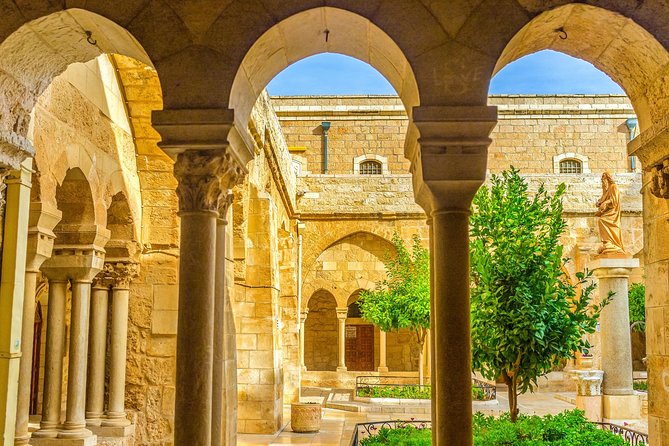
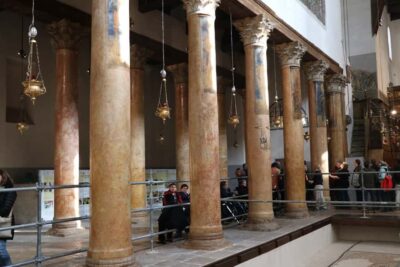
The main stop is Manger Square and the Church of the Nativity. Inside, you’ll visit the grotto beneath the church, where the exact place of Jesus’ birth is marked. This underground space is the symbolic center of the Bethlehem visit and gives the stop a more focused feel than the broad route through Jerusalem.
You’ll also view Shepherds’ Field. The itinerary allows about two hours for the Bethlehem portion, including the Church of the Nativity and Manger Square. That is enough for a substantial introduction, but not enough for extended independent exploration.
Crowds can affect access to the grotto. The schedule does not promise a specific waiting time, so keep your expectations flexible. The benefit of visiting with a guide is that you can learn the site’s religious importance while the group handles the basic route and timing.
What the air-conditioned minivan adds
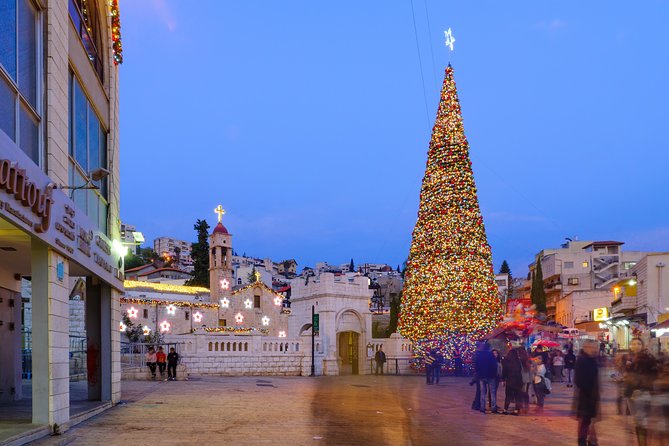
Transport is by air-conditioned minivan, which matters on a full day that combines city walking with longer road sections. You can rest between stops rather than manage public transport connections or find your way between Jerusalem and Bethlehem.
The group format also keeps the cost at $120 per person. For that price, you receive transport, guiding, and admission to the listed sights. If you tried to arrange transport between Tel Aviv, Jerusalem, and Bethlehem independently, you would still need to organize the route, identify the major sites, and manage the border requirements.
The tradeoff is personal space and flexibility. The maximum group size is listed as 55 people, and some arrangements may involve people speaking different languages. That can make it harder to hear the guide, especially in the Old City where narrow lanes, crowds, and general street noise compete with the commentary.
There have also been cases where people expecting a smaller group found the final group larger than promised. If group size is a major concern, confirm the exact arrangement before paying for a small-group option. A private tour is the safer choice if you need individual attention or want to ask many questions.
How much history can fit into eight hours?
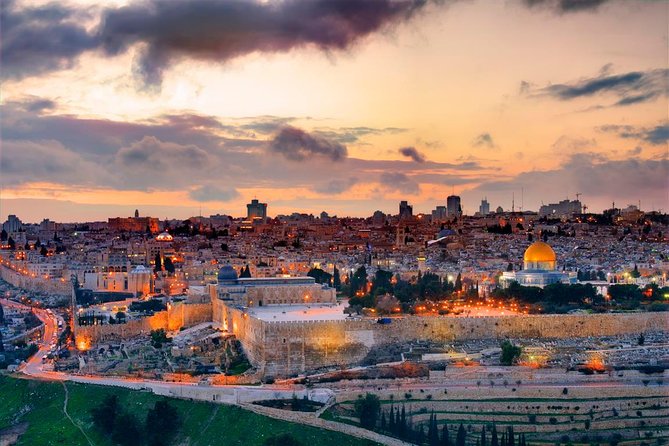
The tour is best understood as a first look, not a full study of either city. In roughly eight hours, you cover Mount of Olives, Mount Zion, the Armenian and Jewish quarters, the Cardo, the Western Wall, the Christian quarter, Via Dolorosa, the Church of the Holy Sepulchre, Bethlehem, the Church of the Nativity, Manger Square, and Shepherds’ Field.
That list is the tour’s strength and its limitation. You see the places most first-time visitors want to recognize, but you cannot give each one the time it deserves. The guide has to keep the group together and maintain the schedule, so explanations may be brief.
Some guides have been praised for being friendly, well prepared, and good at balancing information with forward movement. A guide such as Ron can make this kind of packed route feel manageable. Elias has also been described as well read and prepared. Still, the reported experience is not uniform, and one guide may be more informative than another.
If you are curious and want detailed answers about theology, archaeology, or modern politics, ask questions early and stay close to the guide. If the guide uses a question-and-answer style, you may need to prompt the fuller explanation yourself.
Clothing, walking, and practical preparation
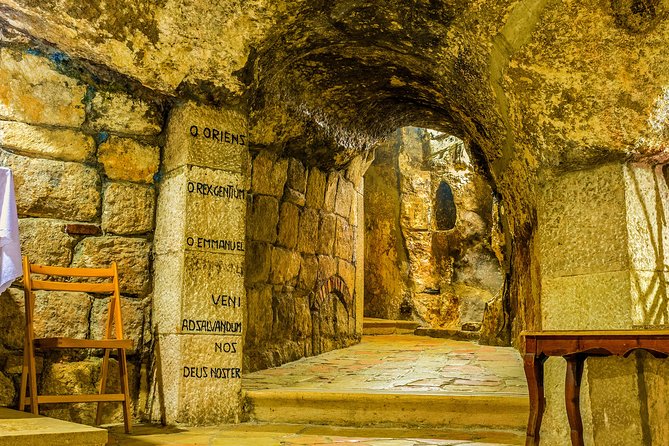
Dress for religious sites, not just the weather. Shorts and sleeveless tops are not allowed at places of worship and selected museums, and both men and women must cover their knees and shoulders. A light layer, long trousers, or a long skirt can solve the problem without adding much to your day bag.
The tour operates in all weather. Wear shoes suited to several hours on foot and bring whatever protection the day requires, such as a hat or rain layer. The information provided does not specify meal arrangements, so food and drinks are not included unless stated separately.
Plan to carry water and a simple snack, while keeping your bag manageable for crowded streets and religious interiors. You may pass vendors and markets in the Old City, but shopping time is not a main feature of the schedule. If buying souvenirs matters to you, do not assume you will have a long, relaxed shopping stop.
The day can also run differently from the ideal timetable. One report describes repeated bus changes and lost time during pickup arrangements, while another found pickup punctual. To protect the most important parts of your day, avoid booking a tight evening plan in Tel Aviv.
Who will get the most from this tour?
This is a good fit if you are visiting Israel for the first time and want a structured introduction to Jerusalem and Bethlehem. It is also useful if you have only one free day and want to cover the principal Christian and Jewish sites without arranging several transport links.
You’ll get the most from it if you accept a quick pace, listen well in crowded spaces, and see the guide as your main source of context. The experience suits people who prefer a planned route to independent navigation.
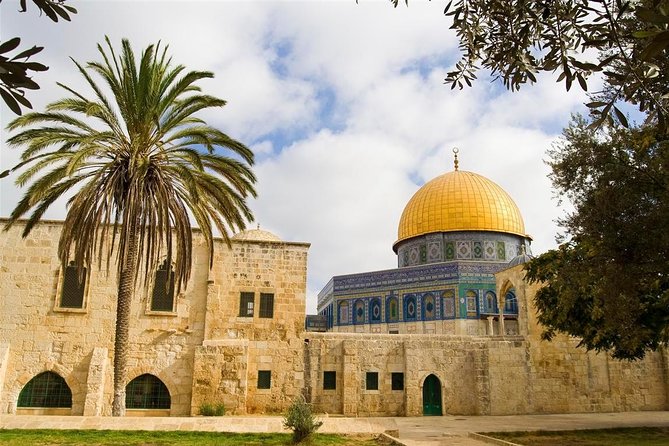
It is less suitable if you want long periods alone, detailed archaeology, a quiet pilgrimage, or guaranteed small-group service. The route does not include the Dome of the Rock or Al-Aqsa Mosque, and access to sites in the Old City can change with religious observances and local conditions.
At $120, the value is strongest when you place a high price on convenience. You are paying to connect two cities, cover a large number of major landmarks, receive commentary, and avoid planning the route yourself. The value weakens if you dislike large groups or already know Jerusalem well.
Should you book this Jerusalem and Bethlehem day trip?
Book it if you want the broadest possible first impression in one day. The Mount of Olives view, Western Wall, Via Dolorosa, Church of the Holy Sepulchre, and Church of the Nativity form a powerful introduction, and the included Bethlehem visit saves a separate day of planning.
Before booking, be realistic about the pace and group size. Wear suitable clothing, bring your passport, prepare for several hours of walking, and do not count on hearing every word if the group is large. If you need a slower schedule or more dependable personal attention, choose a private tour instead.
Free cancellation is available when you cancel at least 24 hours before the start time. Changes or cancellations inside that window are not accepted for a refund.
FAQ
How long is the tour?
The trip lasts approximately eight hours.
Where does the tour begin?
It is a full-day trip from Tel Aviv to Jerusalem and Bethlehem.
What transport is provided?
Transport is provided by air-conditioned minivan.
Is this a private tour?
No. It is a group tour, with a maximum of 55 travelers.
What sites are visited in Jerusalem?
The route includes Mount of Olives, Mount Zion, King David’s Tomb, the Room of the Last Supper, Dormition Abbey, the Armenian and Jewish quarters, the Cardo, the Western Wall, Via Dolorosa, and the Church of the Holy Sepulchre.
What is visited in Bethlehem?
You visit the Church of the Nativity, its underground grotto, Manger Square, and Shepherds’ Field.
What should I bring or wear?
Bring a current valid passport. Clothing must cover the knees and shoulders for places of worship and selected museums, and shorts or sleeveless tops are not allowed.
More 1-Day Tours in Jerusalem
- Masada and the Dead Sea Day Trip from Jerusalem
★ 4.5 · 757 reviews - Nazareth and the Sea of Galilee Day Trip from Jerusalem
★ 4.5 · 446 reviews - From Jerusalem: Dead Sea Chill Out Half-Day Trip
★ 4.7 · 165 reviews - Bethlehem, Jericho, and Qasr El Yahud Day Trip from Jerusalem
★ 4.0 · 109 reviews
Recently added around Jerusalem
- Holy Jerusalem Full Day Tour from Jerusalem★ 5.0 · 3 reviews
- Half day tour bethlehem prices per Van up to 6 pax★ 5.0 · 3 reviews
- jerusalem classic tour★ 5.0 · 3 reviews
- Private Walking Tour in Jerusalem’s Old City★ 5.0 · 3 reviews
- Private Tour to the Culinary World of Jerusalem Market★ 5.0 · 3 reviews
- From Jerusalem: Masada Sunrise, Ein Gedi & Dead Sea★ 5.0 · 3 reviews
- Private Tour Bethlehem and the Dead Sea★ 5.0 · 3 reviews
- Jerusalem Like a Local: Customized Private Tour★ 5.0 · 3 reviews
Bethlehem Tours, compared.
From Tel Aviv: Jerusalem and Bethlehem Guided Day Trip
Read our review →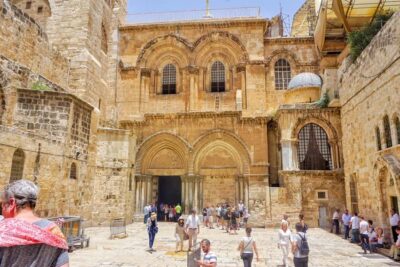
Ashdod Shore Excursion: Jerusalem and Bethlehem – for cruise ship guests only
Read our review →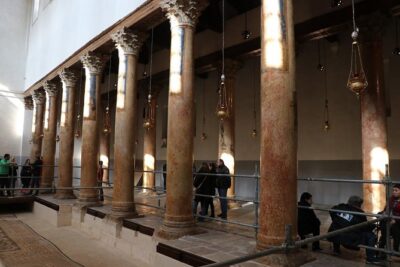
Travel From Jerusalem To Bethlehem and Dead Sea – Daily Group West Bank Tour
Read our review →
Travel To Bethlehem, Jericho & Jordan River – Group Guided Tour from Jerusalem
Read our review →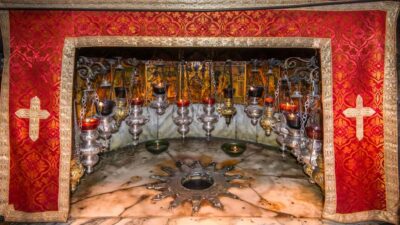
From Ashdod Port: Jerusalem and Bethlehem Day Trip
Read our review →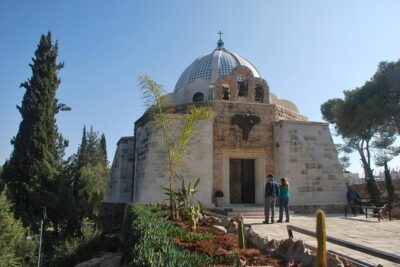
Bethlehem, Jericho, and Qasr El Yahud Day Trip from Jerusalem
Read our review →Browse the lists this tour appears in