
Reviewed · CAESAREA AND ACRE TOURS
Caesarea, Haifa, Rosh Hanikra, and Acre Tour from Jerusalem
Caesarea’s Roman theater, Rosh Hanikra’s wave-cut grottoes, and Acre’s Crusader tunnels give this tour a strong sense of place. In one very long day, you move from imperial ruins to a modern religious landmark, then north to the Lebanese border.
I like the wide range of history packed into the route, and I like that the cable car at Rosh Hanikra gives you more than another roadside viewpoint. Guides such as Aviva, Dane, Sivan, and Yaacov have been praised for adding personal stories and clear explanations. The main drawback is the early start and the sheer distance covered. Pickup delays and cramped transport have also been problems at times.
Key points to know before booking

- Caesarea combines Roman ruins with a still-used amphitheater, making the ancient site feel connected to modern Israel.
- Haifa’s Baha’i Gardens are a short viewing stop, not a long garden visit.
- Rosh Hanikra includes a cable-car ride into limestone grottoes beside the Lebanese border.
- Acre brings Crusader remains, Ottoman prison history, and British Mandate history into one Old City visit.
- The day begins around 5:40 am and lasts about 12 hours, so pace and stamina matter.
- The $108 price includes transport, a guide, and entrance fees, but not food or drinks.
Why this northern coast tour works
Israel’s northern coast is difficult to cover from Jerusalem without a car. Caesarea, Haifa, Rosh Hanikra, and Acre are spread along a long stretch of coast, and public transport would make this route slow and awkward in a single day.
This tour solves that problem with round-trip pickup, an air-conditioned vehicle, and a guide who can connect the stops. You do not need to plan separate tickets, work out transfers, or decide how to fit the cable car and archaeological sites into one route.
The tradeoff is time. The day begins at about 5:40 am and runs for roughly 12 hours. You should expect a road-heavy day with short visits at several places. I would choose this trip for a first look at northern Israel, not for a relaxed visit to any one site.
The maximum group size is 40. That can make the ride and stops less personal than a small private tour, but it also keeps the cost at a reasonable $108. Since entrance fees are included, the price is fair for the amount of ground covered.
more caesarea and acre stops
- Caesarea, Haifa & Akko Day Trip from Jerusalem
★ 4.3 · 96 reviews - Caesarea, Acre & Rosh Hanikra Day Trip from Jerusalem
★ 4.0 · 78 reviews - From Jerusalem: Caesarea, Haifa, Acre & Rosh Hanikra Tour
★ 4.2 · 25 reviews
Caesarea: Roman power beside the sea
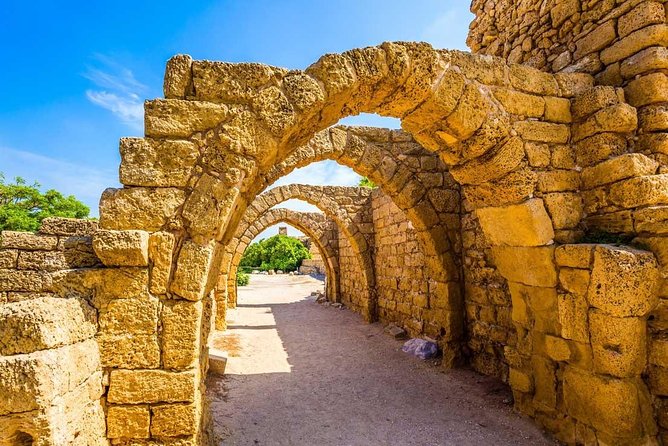
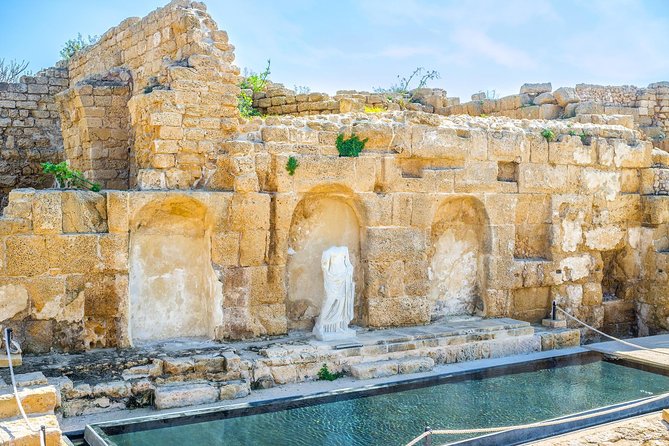
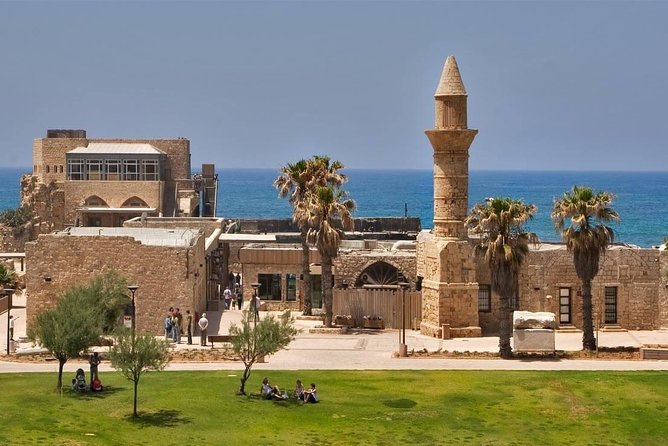
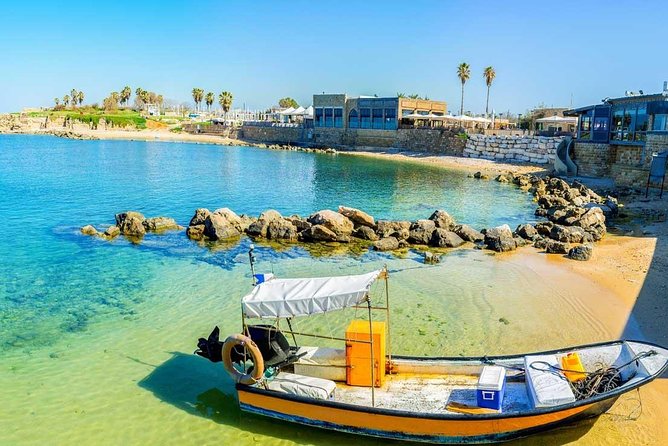
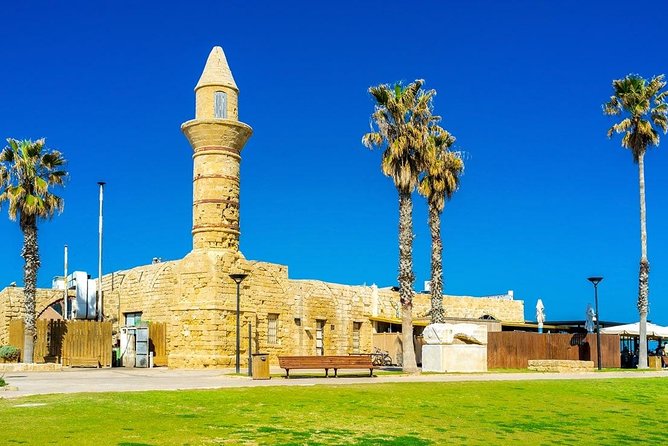
The first major stop is Caesarea National Park, where Herod built a grand city and named it for Caesar. The remains show the scale and wealth of the ancient port, even though the visit lasts only about an hour.
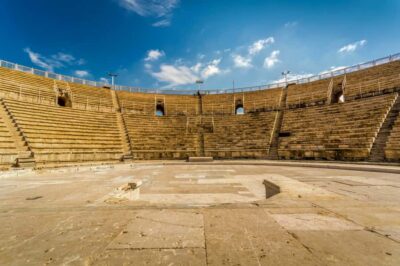
You can walk among gateways, walls, rooms, and a moat. The Roman amphitheater is the star for many people. It is unusually well preserved and still hosts performances by Israeli and international artists, so it is not simply a silent ruin. It remains part of the country’s cultural life.
Beside the amphitheater is part of the old hippodrome, where chariot races once took place. The combination helps you picture Caesarea as a major Roman city rather than a scattered collection of stones.
I like this opening stop because it gives you solid historical context before the tour moves north. You get architecture, engineering, politics, and entertainment in one compact site. The setting beside the Mediterranean also keeps the visit from feeling like a museum walk.
The limitation is the one-hour schedule. You will see the key remains, but you will not have time to examine every excavation or wander without watching the clock. Wear shoes that can handle uneven ground, and bring water and sun protection. The admission fee is included.
Haifa’s Baha’i Gardens: a quick but striking view

The route continues through Haifa, where the tour pauses at the Baha’i Shrine and Gardens. The gardens run down the mountain in 19 terraces, with flowers and carefully arranged planting leading toward the city below.
This is primarily a viewpoint stop. The planned visit lasts about 20 minutes, and admission is free. You can take in the long view, photograph the terraces, and see how the gardens are fitted into Haifa’s steep setting.
Do not book this excursion expecting a full tour of the gardens. The short stop gives you the visual highlight, but it does not allow much time for a slow walk through the terraces or a detailed visit to the shrine.
Still, the stop earns its place. After the stones and ruins of Caesarea, Haifa offers a completely different kind of sight. The gardens are orderly, bright, and modern in feel, while the city and sea open out below. The contrast makes the day more varied.
Rosh Hanikra and the cable car into the rock
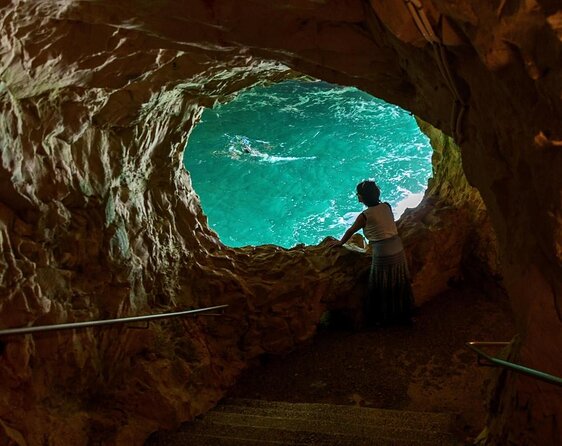
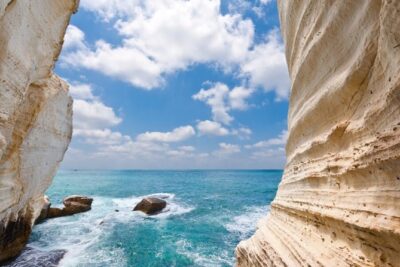
Rosh Hanikra is the most distinctive stop on the route. It is the northernmost point on Israel’s Mediterranean coast, close to the Lebanese border. Here, waves have worn passages into the limestone cliffs, creating a network of sea grottoes.
You reach the grottoes by cable car. The ride itself is part of the attraction, since it carries you down the cliff toward the rocky shoreline. Once below, you walk through the grotto area and watch the sea working against the stone.
The visit is split across roughly an hour at Rosh Hanikra and another 40 minutes connected with the border and grotto area. That gives you more time here than at Haifa, which makes sense. This is the stop where the natural setting does most of the talking.
The grottoes can be cool and dramatic, but the wider day may be hot. Bring water, a hat, and good walking shoes. One useful tip from the experience is to avoid expecting a swimming stop. You see the water and the rock formations, but this is a sightseeing visit rather than a beach outing.
The Lebanese border adds political and military context to the scenery. The tour includes a look at the defensive system connected with the area, so the stop is not only about geology. It also shows how this narrow coastal zone has mattered for movement and security.
Rosh Hanikra is likely to be the high point for anyone who prefers scenery over ruins. It is also the place where weather and timing matter most. The cable car is central to the visit, and the tour description lists its entrance as included, but conditions at any attraction can affect the exact flow of a day.
A different kind of day out of Jerusalem:
- From Jerusalem: Masada & Dead Sea Full Day Tour with Pick Up
★ 4.5 · 815 reviews - Masada and the Dead Sea Day Trip from Jerusalem
★ 4.5 · 757 reviews - From Jerusalem: Nazareth and Sea of Galilee Tour
★ 4.5 · 588 reviews - From Jerusalem: Half-Day Bethlehem Guided Tour
★ 4.7 · 568 reviews
Acre: Crusader rooms and later political history

The final major area is Acre, also called Akko. Its Old City brings together layers from the Crusader period, Turkish rule, and the British Mandate. You get about an hour in the city and another hour focused on the citadel.
The Crusader remains are the main draw. The old fortress spaces and underground rooms help you picture Acre as a strategic port and military center. The tour does not treat the city as a single-period monument, which is one of its strengths.
Inside the citadel, you can see the prison used under Turkish rule. You also see the gallows used under the British Mandate to execute Jews who broke British restrictions on Jewish immigration after World War II. This is difficult history, but it gives the site political weight beyond its medieval walls.
Acre is a good place for a guide’s explanation. Without context, the rooms can look like old stone corridors. With a clear account of the Crusader period, Ottoman rule, and the British Mandate, the citadel becomes easier to read.
The schedule gives you enough time for the main sights, but not for a long, unplanned exploration of every lane in the Old City. If you want a full day in Acre, this is not the right format. If you want to add Acre to a larger coastal route, the stop is useful and well chosen.
What the guides add to the day
A long tour like this depends heavily on the guide. The route crosses several historical periods and includes places where a short explanation can make a major difference.
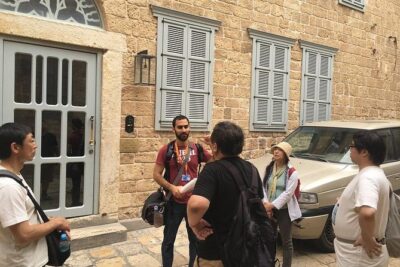
Aviva has been singled out for making Caesarea, Rosh Hanikra, and Acre more engaging through strong historical detail. Dane and driver Mohammed Abbasi received praise for keeping the day moving while still giving the group attention. Sivan was appreciated at Rosh Hanikra, and Yaacov made the tour more personal by sharing a story about his own Bar Mitzvah at the grottoes.
Those names do not mean you can request a specific guide. They do show the range of guiding styles available on this departure. The tour is offered in English, German, French, and Spanish. One Spanish-language departure also included Portuguese help for some passengers, but you should not assume that will be available every time.
The best guides on this route need to manage two things at once: give useful context and keep the group on schedule. A guide who talks too long at Caesarea can leave less time at Acre. A guide who gives no explanation turns the day into a series of photo stops. The strongest feedback points to guides who made the places personal while maintaining the pace.
Transport, timing, and comfort
Pickup is offered from Jerusalem, but the operating details deserve attention. Passengers picked up in Jerusalem join the tour from Tel Aviv, which means the day may involve group coordination and a long initial drive before the sightseeing begins.
The listed start time is 5:40 am. Confirm your pickup instructions carefully and arrive ready. Early departures can be affected by traffic or operational changes, and one reported problem involved a 45-minute pickup wait. Another difficult experience involved passengers being moved between tour groups and placed in a taxi at a meeting point.
Those incidents do not define every departure, but they are worth keeping in mind. If precise timing matters to you, build in patience. Ask about the plan if your vehicle is late, especially if you have received no explanation during the first part of the drive.
The vehicle is air-conditioned, which matters during a hot coastal day. Comfort can vary, though. A cramped van and limited legroom were complaints on one departure. With a maximum of 40 people, this is not a private car experience.
The route also includes long stretches on the road. Bring water, a hat, comfortable shoes, and something small to eat if you need food early in the morning. Food and drinks are not included. The provided information refers to a lunch stop in the experience, but you should budget separately for your meal.
Is $108 good value?
At $108, this tour offers solid value if your goal is to see several northern sites in one day. Hotel pickup and drop-off, an air-conditioned vehicle, a professional guide, and entrance fees are included. You would spend time and money arranging transport to Caesarea, Rosh Hanikra, and Acre on your own.
The price is less attractive if you prefer slow travel. You pay for coverage, not long stays. Caesarea receives about an hour, Haifa about 20 minutes, Rosh Hanikra about an hour and 40 minutes across its listed visits, and Acre about two hours across the Old City and citadel. Those limits make the tour efficient, but they also keep you moving.
The group size is another value question. Up to 40 people can mean a lower price and a shared social experience. It can also mean waiting for people at stops and less chance to shape the day around your interests.
For a first visit to Israel, I think the price makes sense. You get Roman remains, a major religious site, dramatic coastal geology, and Crusader history without booking several separate excursions. For repeat visitors or history specialists, a smaller tour with more time at Acre or Caesarea may be a better use of your money.
Who should book this day out?
I would recommend this tour if you:
- Have limited time in Israel and want a broad northern-coast overview.
- Prefer having transport and entrance tickets handled for you.
- Enjoy a mix of archaeology, architecture, politics, and scenery.
- Are comfortable with a 12-hour day and a 5:40 am start.
- Can manage walking at archaeological and historic sites.
- Want to see Rosh Hanikra without arranging a separate trip.
I would hesitate if you dislike early mornings, long drives, group departures, or fixed schedules. Families can participate from age four, but younger children may find the full day tiring. The tour is suitable for most people, yet the uneven surfaces, walking, heat, and time on the road still matter.
The experience is strongest when you treat it as a sampler. You will not master northern Israel in one day, but you will learn which places deserve a longer return visit.
Booking and cancellation details
Confirmation is normally sent at booking. If you book within 12 hours of departure, confirmation may arrive later and remains subject to availability.
You can cancel for a full refund up to 24 hours before the start time. Cancellations or changes made within 24 hours are not refunded or accepted. The cutoff uses local time.
Should you book this tour?
Book it if you want maximum coverage for one day from Jerusalem. Caesarea gives you Roman grandeur, Haifa supplies the sweeping garden view, Rosh Hanikra delivers the cable car and grottoes, and Acre brings the most layered human history.
Skip it if you want a calm, detailed visit to each place. The early start, possible pickup problems, shared vehicle, and tight schedule are real considerations.
For most first-time visitors with only a few days, I see this as a practical way to reach northern Israel. Pack water, wear proper shoes, confirm pickup details, and accept that the day will feel full. The reward is a memorable sequence of places that would otherwise be hard to connect.
FAQ
What is the start time for the tour?
The listed start time is 5:40 am.
Is pickup available from Jerusalem?
Yes. Hotel pickup and drop-off are included, and guests picked up from Jerusalem join the tour from Tel Aviv.
What attractions are included?
The tour visits Caesarea National Park, Haifa’s Baha’i Gardens, Rosh Hanikra and its limestone grottoes, the Lebanese border area, Acre’s Old City, and the Citadel of Acre.
Are entrance fees included?
Yes. The tour includes all entrance fees, including the listed admission for Caesarea, Rosh Hanikra, and the Citadel of Acre.
Is food included in the price?
No. Food and drinks are not included.
What languages are available?
Multilingual guided tours are available in English, German, French, and Spanish.
What is the cancellation policy?
You can cancel at least 24 hours before the experience for a full refund. Cancellations and changes made less than 24 hours before the start time are not accepted or refunded.
Recently added around Jerusalem
- Holy Jerusalem Full Day Tour from Jerusalem★ 5.0 · 3 reviews
- Half day tour bethlehem prices per Van up to 6 pax★ 5.0 · 3 reviews
- jerusalem classic tour★ 5.0 · 3 reviews
- Private Walking Tour in Jerusalem’s Old City★ 5.0 · 3 reviews
- Private Tour to the Culinary World of Jerusalem Market★ 5.0 · 3 reviews
- Private Tour Bethlehem and the Dead Sea★ 5.0 · 3 reviews
- From Jerusalem: Masada Sunrise, Ein Gedi & Dead Sea★ 5.0 · 3 reviews
- Jerusalem Like a Local: Customized Private Tour★ 5.0 · 3 reviews
Caesarea and Acre Tours, compared.
From Tel Aviv: Caesarea, Haifa and Akko Day Trip
Read our review →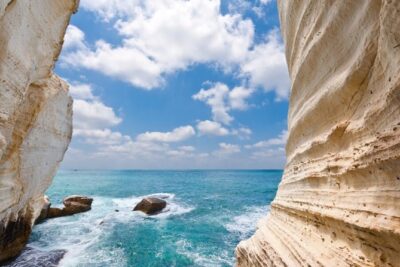
Caesarea, Rosh Hanikra and Acre Day Trip from Tel Aviv
Read our review →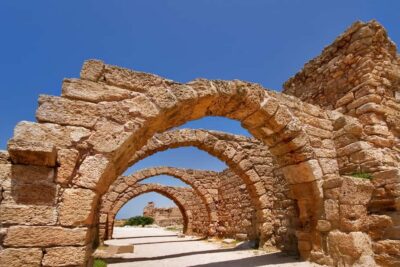
Caesarea, Acre & Rosh Hanikra Day Trip from Jerusalem
Read our review →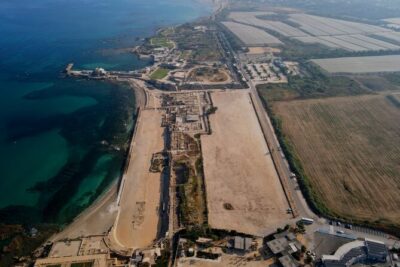
Caesarea, Haifa, Akko and Rosh Hanikra Private Tour from Tel Aviv
Read our review →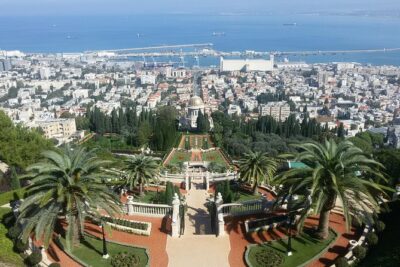
Browse the lists this tour appears in