
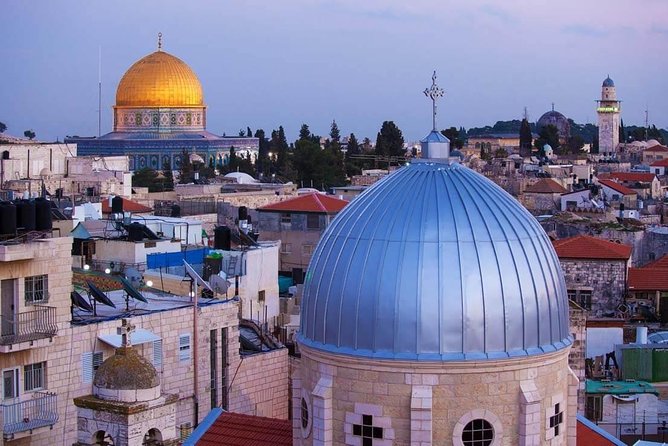
Reviewed · BETHLEHEM TOURS
Highlights of the Jerusalem and Bethlehem Biblical Trip from Tel Aviv
Jerusalem and Bethlehem in one day is a bold plan, but this trip makes the most of it. You begin above Jerusalem on Mount Scopus, then work through the Old City’s Jewish, Christian, and Muslim quarters before crossing into Bethlehem to see the Church of the Nativity.
I like the hotel pickup and air-conditioned transport, since this is a long day with several changes of place. I also like the strong mix of viewpoints and sacred sites, from the Dome of the Rock seen across the Temple Mount to the Western Wall and the cave beneath the Nativity Church.
The main drawback is time. Ten hours can introduce you to both cities, but it cannot give you a slow, open-ended visit in either one. Border procedures, a possible vehicle change, and limited access to the Nativity Cave can also affect the pace.
Key details to know before booking
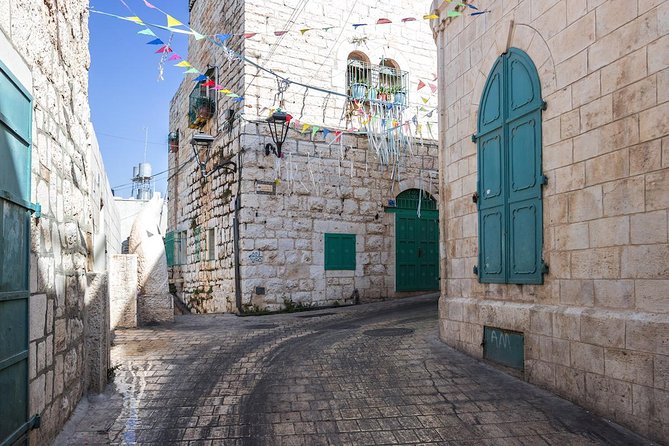
- Mount Scopus opens the day with a wide Jerusalem view, including the Dome of the Rock and the ancient cemetery below the Temple Mount.
- The Old City visit covers several quarters and major religious sites, but the schedule moves quickly.
- The Western Wall, Via Dolorosa, and Church of the Holy Sepulchre bring three major Jerusalem experiences into one walking section.
- Bethlehem adds a second country-level authority and border procedure, so you must bring your passport.
- The Church of the Nativity is the day’s main Bethlehem stop, with the Nativity Grotto below it.
- Guide Itamar Buk is specifically praised for mixing humor with useful detail, a welcome quality on a long group outing.
Why this Jerusalem and Bethlehem day trip works
At $95, this is a practical way to reach two places that can be awkward to combine on your own in a single day. The price includes hotel pickup and drop-off, an air-conditioned vehicle, a professional guide, and entrance fees. Food and drinks are extra, and insurance is not included.
The value comes less from long visits inside each monument and more from the transport, planning, and interpretation. You do not have to work out how to get from Tel Aviv to Jerusalem, then from Jerusalem to Bethlehem, then back again. You also get a guide to explain why each site matters, rather than simply arriving at a famous building and trying to make sense of it alone.
The group can reach up to 40 people, so this is not a private or intimate outing. I would expect a social, organized feel, with some waiting while the group gathers. The tradeoff is clear: a larger group keeps the price down, but it can make the Old City walk less flexible.
The tour begins at 7:30 a.m. and lasts about 10 hours. That early start matters. Jerusalem and Bethlehem both attract large numbers of visitors, and the day includes a great deal of ground to cover. You should plan for a full day rather than a relaxed city stroll.
more bethlehem day trips
- From Tel Aviv: Jerusalem and Bethlehem Guided Day Trip
★ 4.3 · 1,316 reviews - Tel Aviv: Jerusalem, Bethlehem & Dead Sea
★ 4.0 · 881 reviews - Day Tour to Jerusalem and Bethlehem from Tel Aviv
★ 4.5 · 720 reviews
Mount Scopus gives you the right opening view
The first stop is at the Mount Scopus National Botanical Garden area, where you get a panoramic view of Jerusalem. This is a smart beginning because the Old City can feel confusing once you are among its narrow lanes. From above, you can first see how the major landmarks fit together.
The view includes the Temple Mount, with the golden Dome of the Rock as the most eye-catching feature. Below it is a Jewish cemetery described as roughly 3,000 years old. Even though the stop lasts about 30 minutes, it gives you a useful visual frame for the rest of the day.
You will not enter the Dome of the Rock on this tour. The value here is the overlook and the guide’s explanation of what you are seeing. Bring your camera, but listen closely too. A photograph of the golden dome is easy to take. Understanding its place in Jerusalem’s religious story is more useful.
The route then passes the Garden of Gethsemane, the Church of All Nations, and the Kidron Valley. These are pass-by views, not extended visits, so you should treat them as a brief introduction rather than full stops.
Entering the Old City through Zion Gate

The main Jerusalem visit begins at the Old City, entered through Zion Gate. You have about two hours in this wider section of the program, followed by shorter visits to specific quarters and sites.
Jerusalem’s Old City is divided into Armenian, Jewish, Christian, and Muslim quarters. The route passes through the Armenian Quarter and the lively bazaar in the Muslim Quarter, giving you a sense of the city’s layered character without trying to turn the day into a full neighborhood tour.
I like the way this portion connects religious places with ordinary city life. You are not looking only at monuments. You also see the lanes, shops, and changing atmosphere of an old walled city. Still, a group walk through these streets can feel quick, especially if you want to stop for photographs or examine small details.
The two-hour Old City section is the backbone of the Jerusalem visit. The additional 30-minute stops then focus your attention on particular sites. You should keep your belongings organized and stay aware of the guide’s meeting instructions, since a large group can spread out easily in narrow streets.
The Byzantine Cardo and the Jewish Quarter
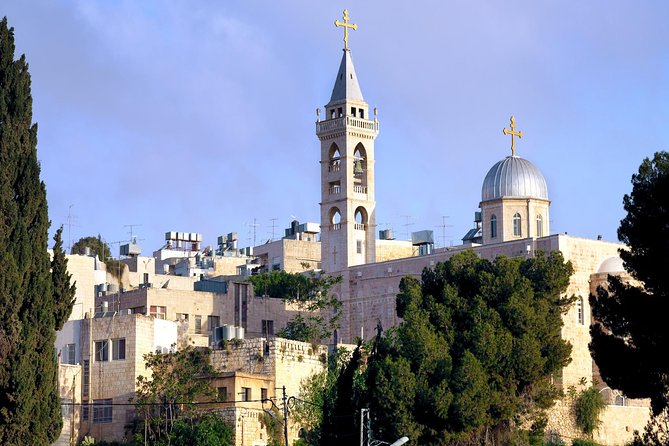
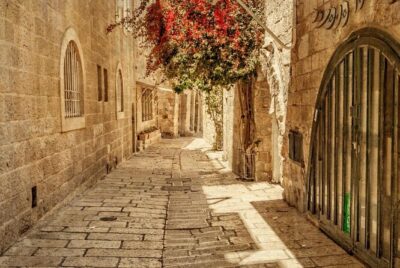
The Cardo is the old commercial street in the Jewish Quarter, dating from the Byzantine period about 1,500 years ago. The visit lasts around 30 minutes, enough to see the remains and understand that Jerusalem’s streets have been rebuilt and reused over many centuries.
This stop helps balance the day’s religious focus. The Cardo is about urban life, trade, and the physical structure of the city. I find that useful because it shows Jerusalem as more than a set of holy destinations. It was also a place where people moved, bought goods, and lived through different periods of rule.
You should not expect a long archaeological visit. Thirty minutes is a short window, but it fits the tour’s larger purpose: cover the major layers of Jerusalem and keep moving toward Bethlehem.
A different kind of day out of Tel Aviv:
- From Tel Aviv: Masada & Dead Sea Full Day Tour with Pick Up
★ 4.5 · 1,496 reviews - Masada and the Dead Sea Day Trip from Tel Aviv
★ 4.5 · 1,014 reviews - From Tel Aviv: Guided Day Trip to Nazareth & Sea of Galilee
★ 4.4 · 824 reviews - From Tel Aviv: Jerusalem Old & New City Bus Tour
★ 4.2 · 824 reviews
The Western Wall offers a personal moment
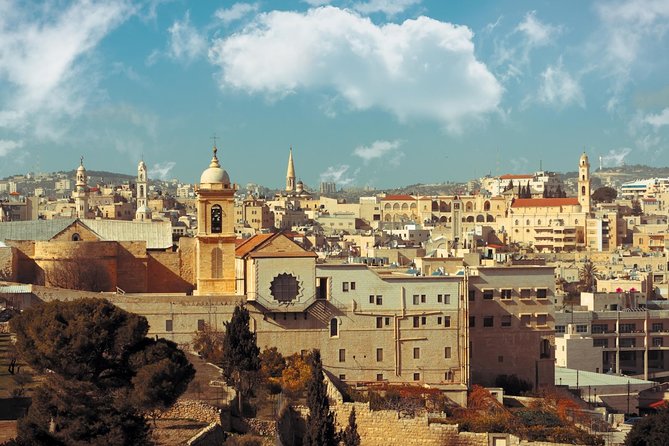
At the Western Wall, or Kotel, the group stops for about 20 minutes. The wall is a surviving supporting wall associated with the Temple Mount area and was built under King Herod. Jewish prayer has taken place here since the destruction of the Temple in 70 CE.
This is one of the day’s most meaningful stops because it allows you to pause rather than simply look. You can join people from around the world in prayer and place a written note between the stones, as long as you follow the site’s customs.
The short time limit is the chief concern. Twenty minutes can pass quickly if you want to observe the area, pray, and take in the setting. I would decide before arriving whether you want a quiet moment, a photograph, or both. The guide’s timing will not allow much wandering.
Walking the Via Dolorosa to the Holy Sepulchre
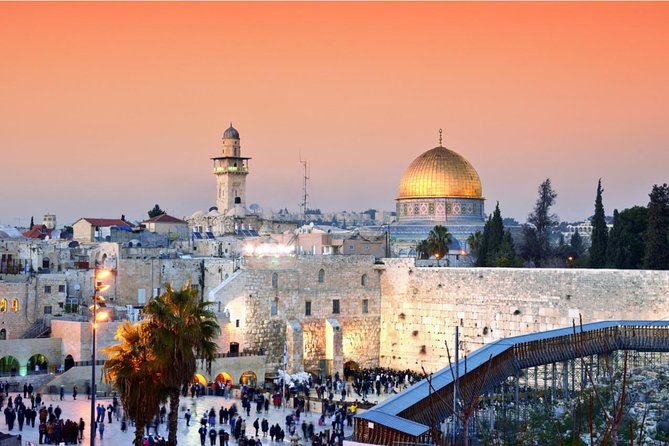
The Christian Quarter brings two important stops: the Via Dolorosa and the Church of the Holy Sepulchre. The Via Dolorosa, also called the Way of the Cross, is visited for about 30 minutes.
The route is important to Christians because it follows the traditional path connected with Jesus’ final journey toward crucifixion. In the Old City, this is not a broad ceremonial avenue. It is part of a working urban area, which makes the experience feel direct and physical. You move through streets where religious devotion and daily commerce share the same space.
The Church of the Holy Sepulchre receives another 30 minutes. It was built on the traditional site of Jesus’ crucifixion and burial tomb, making it one of the most significant Christian sites in Jerusalem.
This church can be complex to understand on your own, so the guide’s context matters. You will have a short time to take in the interior and the principal sacred places. If religious history is your main reason for booking, this part of the day will likely be a highlight. If you want quiet reflection, the group schedule and crowds may make that difficult.
The program lists two Christian Quarter visits of about 30 minutes each. In practical terms, you should expect focused visits rather than an extended church tour.
Bethlehem changes the rhythm of the day
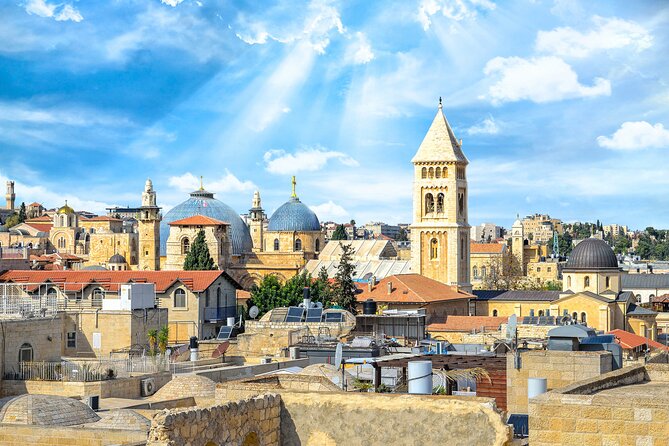
The journey continues to Bethlehem, known as the City of Bread and associated with Jesse, the father of King David, as well as the birthplace of Jesus. The Bethlehem portion is planned for about two hours, with the Church of the Nativity as its center.
This crossing is also the point where logistics matter most. The tour is subject to Palestinian authority regulations. A short unaccompanied walking section may be required at the border, and you may need to change vehicles after entering Palestinian authority territory.
You must carry your passport. Do not leave it in your hotel or assume another form of identification will be enough. The border process can alter the timing, so you should view the Bethlehem schedule as planned rather than guaranteed minute by minute.
The possible vehicle change is not a flaw in the experience, but it can feel less smooth than the Jerusalem portion. It is simply part of traveling between areas governed by different authorities. The tour operator provides the transport arrangements, but you should be ready to follow instructions and walk briefly without the group vehicle.
Inside the Church of the Nativity

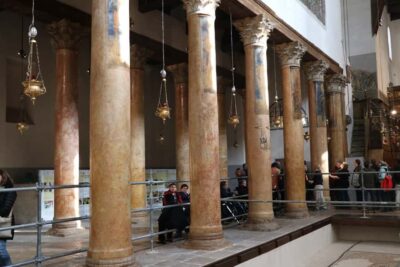
From Manger Square, you enter the fourth-century Church of the Nativity. It is described as the oldest church in Israel still in use, and its age is part of what makes the visit so striking. Beneath the church is the Grotto of the Nativity, where a star marks the traditional place of Jesus’ birth.
The church visit lasts about 40 minutes. That is enough time for a guided introduction and a look at the main sacred area, but the Nativity Cave can be difficult to enter when visitor numbers are high. Access may be limited, so you should not book this trip solely on the promise of standing at the exact spot marked by the star.
That limitation is important, but it does not erase the value of the church itself. Manger Square, the old building, and the grotto together give Bethlehem a clear focus that differs from Jerusalem’s many competing sites.
If reaching the cave is especially important to you, accept that the group may have to move on or that entrance may be restricted. The tour gives you a strong chance to see the church, not an absolute guarantee of unlimited time below it.
St. Catherine’s Church and the cave connection
If possible, the group visits the Church of St. Catherine of Alexandria. The visit lasts about 20 minutes and includes a descent into a two-room cave connected with the Grotto of the Nativity.
This is a distinctive part of the day because it adds a smaller, more intimate religious space after the larger Church of the Nativity. The plan even allows a moment for the group to sing Christmas carols there. That detail gives the stop a more personal and communal tone than a standard monument visit.
The words if possible matter. Access and timing can depend on conditions at the site, so you should consider St. Catherine’s an extra part of the Bethlehem visit rather than a fixed promise. The tour includes the entrance fee for this church, while the other listed sites are marked as free admission.
Guide style and the group experience
A guide can make or break a day with this many stops. Itamar Buk is specifically praised for combining humor with interesting details. That mix matters on a 10-hour outing, where a dry lecture could make the long drives and walking sections feel even longer.
You should expect interpretation throughout the day, not simply transport between monuments. The guide’s role is especially useful at the Temple Mount viewpoint, the Cardo, the Western Wall, the Via Dolorosa, and the two Bethlehem churches, where religious and political context can otherwise be hard to follow.
The group size can reach 40 people. That is large enough to keep the price reasonable, but it means you need to remain attentive. A late return from a photograph or prayer can hold up the group and may make it harder to hear. If you want your own pace, a private tour would suit you better, but it would not offer the same $95 value.
What the $95 price really covers
The $95 price is strongest for someone who wants an efficient first look at both cities. You receive hotel pickup and drop-off, an air-conditioned vehicle, a professional guide, and entrance fees. Those inclusions remove several costs that can add up when arranging transport and visits separately.
Food and drinks are not included, so plan for that expense. The supplied details do not specify a meal stop, so I would carry water and a simple snack rather than count on a long restaurant break. Insurance is also excluded.
The value is less convincing if you already have transport, know the sites well, or want hours inside one church. It is more convincing if you are staying in Tel Aviv, have only one free day, and want a guided overview without handling the route yourself.
Free cancellation is available if you cancel at least 24 hours before the 7:30 a.m. start. A cancellation within 24 hours is not refunded, and changes made inside that period are not accepted.
Who should book this tour?
I would choose this experience if you want the major biblical sites in a single day and prefer having the route, vehicle, and guide arranged for you. It suits first-time visitors, people with limited time in Israel, and anyone who wants to compare Jerusalem’s Jewish and Christian landmarks with Bethlehem’s central Christian site.
It also suits you if a group tour feels like a fair trade for a lower price. The presence of a guide such as Itamar Buk can add warmth and clarity to a packed schedule.
I would hesitate if you dislike early starts, group movement, border procedures, or short visits. You should also think carefully if your main goal is guaranteed entry to the Nativity Cave. That access may be limited, and the day has little spare time.
Should you book the Jerusalem and Bethlehem trip?
Book it if you want a well-priced introduction to both destinations, with the Western Wall, Via Dolorosa, Holy Sepulchre, Church of the Nativity, and Mount Scopus all included. The tour gives you a lot in 10 hours, and the transport arrangements are worth paying for when starting from Tel Aviv.
Skip it if you want a slow religious pilgrimage, long meals, private guiding, or complete control over the schedule. For most first-time visitors with one open day, though, this is a sensible way to see the essential sites, provided you arrive ready for a long, tightly planned day and bring your passport.
FAQ
How long does the tour last?
The experience lasts approximately 10 hours.
What time does the tour start?
The scheduled start time is 7:30 a.m.
Is hotel pickup and drop-off included?
Yes. Hotel pickup and drop-off are included.
Is transportation provided?
Yes. The tour uses an air-conditioned vehicle. A vehicle change may be required after entering Palestinian authority territory.
Do I need my passport?
Yes. Passports are compulsory for this experience.
Can the border crossing involve walking?
Yes. The border crossing may include a short unaccompanied walking portion.
Are entrance fees included?
Yes. The tour includes entrance fees, with the Church of St. Catherine specifically listed as included. Food, drinks, and insurance are not included.
Is entry to the Nativity Cave guaranteed?
No. Due to high visitor numbers, entrance to the Nativity Cave may be limited.
How many people can join the tour?
The group can include a maximum of 40 people.
Can I cancel for a full refund?
Yes, if you cancel at least 24 hours before the experience starts. Cancellations made within 24 hours are not refunded.
Recently added around Tel Aviv
- Jaffa Flea Market Tasting Tour★ 5.0 · 3 reviews
- Early Christianity in Galilee Private Tour★ 4.5 · 3 reviews
- Privet walking tour in Tel Aviv-Yafo★ 5.0 · 3 reviews
- Bar Crawl tour with local in Tel-Aviv★ 5.0 · 3 reviews
- Package VIP Skip Line Services in BGN Airport with Transfer to Tel aviv Hotels★ 5.0 · 3 reviews
- Food & Drink Private Guided Tour in Tel Aviv★ 5.0 · 3 reviews
- Tel Aviv: Carmel Market & Neighborhood Guided Walking Tour★ 4.7 · 3 reviews
- Tel Aviv Like a Local: Customized Guided Tour by Lokafy★ 5.0 · 3 reviews
Bethlehem Tours, compared.
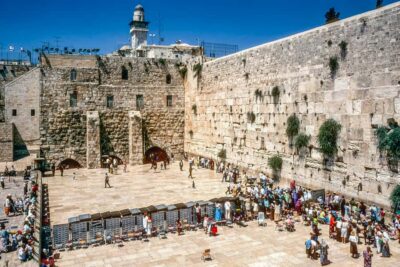
From Tel Aviv: Jerusalem and Bethlehem Guided Day Trip
Read our review →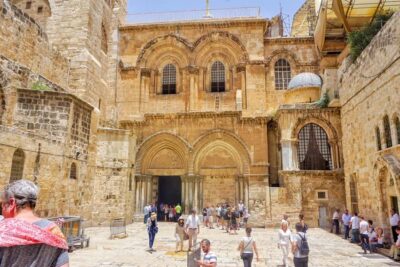
Ashdod Shore Excursion: Jerusalem and Bethlehem – for cruise ship guests only
Read our review →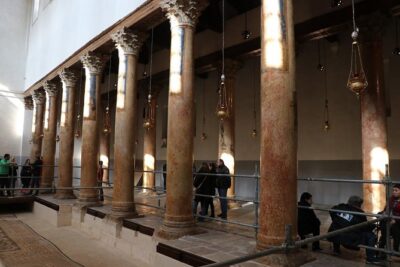
Travel From Jerusalem To Bethlehem and Dead Sea – Daily Group West Bank Tour
Read our review →
Travel To Bethlehem, Jericho & Jordan River – Group Guided Tour from Jerusalem
Read our review →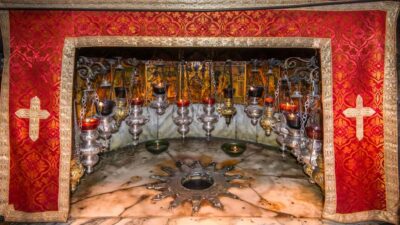
From Ashdod Port: Jerusalem and Bethlehem Day Trip
Read our review →
Bethlehem, Jericho, and Qasr El Yahud Day Trip from Jerusalem
Read our review →Browse the lists this tour appears in