
Reviewed · TEL AVIV TOURS
16-Night Israel Jordan and Egypt Tour
The remarkable thing here is the range. In just over two weeks, you move from Jerusalem’s sacred quarters and Roman ruins on the Mediterranean coast to Petra’s rose-colored cliffs, the summit of Mount Sinai, the pyramids, and a Nile cruise from Aswan to Luxor. It is a big, ambitious trip that removes much of the planning burden.
I like two things right away: the tour handles the difficult border crossings between Israel, Jordan, and Egypt, and it joins several flights, hotels, sightseeing days, and a Nile cruise into one booking. I also like the mix of famous sites and less obvious stops, including Acre, Rosh Hanikra, Qumran, Memphis, and Philae.
The main caution is the Jordan-to-Egypt transfer. After a full day at Petra, you return to the border, cross into Egypt, and continue toward Mount Sinai for an overnight climb before sunrise. One account describes only two people making this section, which can mean personal attention but also less support and a much tougher night than the polished itinerary suggests.
Key points to know before booking
- Three countries in one route: Start at Ben Gurion Airport in Israel and finish at Cairo International Airport.
- A very full schedule: Most sightseeing days begin around 7:20 a.m., with several eight to twelve-hour days.
- Petra and Mount Sinai come close together: The transition includes a border crossing, a long drive, and a night climb.
- The Nile cruise adds breathing room: You sail from Aswan through Kom Ombo and Edfu to Luxor, with meals and evening entertainment on board.
- The advertised price is not the final cost: Add the $130 departure tax, a $60 Egypt visa, and a $75 Jordan visa per person.
- A moderate fitness level is needed: Expect walking at ancient sites, cable cars, airport transfers, and a mountain climb.
What the $3,478 price really covers
The listed price is $3,478 per person. It includes 15 nights of accommodation, 15 breakfasts, six lunches, three dinners, sightseeing, ground transportation, domestic flights within the region, border assistance, and the Nile cruise.
That is a considerable amount of travel for the money. Booking Israel, Jordan, Egypt, internal flights, hotels, a cruise, guides, drivers, and cross-border transfers separately would take time and would leave you responsible for connecting every piece. Here, the route is already assembled.
Still, budget beyond the headline figure. The $130 departure tax, $60 Egypt visa, and $75 Jordan visa bring the known additional charges to $265 per person. That makes the basic outlay about $3,743 per person before optional activities, personal spending, and any other entrance charges not listed as included.
Petra by Night costs about $15 and is not included. The Egyptian Museum day also notes that entry to the mummy room is extra. The price offers good value if you want broad coverage and organized transport, but it is less attractive if you prefer a slow trip with lots of unscheduled time.
more Tel Aviv days to consider
- Guided Pub Crawl Night Tour at Tel Aviv
★ 5.0 · 85 reviews - 7-Night Israel Highlights and Bibleland Tour
★ 4.5 · 25 reviews - Explore Old Jaffa by night – Private Tour
★ 5.0 · 13 reviews
Days 1 to 3: Tel Aviv, Galilee, Caesarea, and Acre
Your arrival transfer takes you from Ben Gurion Airport to Tel Aviv, where you spend the first night. That is a sensible start after an international flight, though the next morning begins early at about 7:20 a.m.
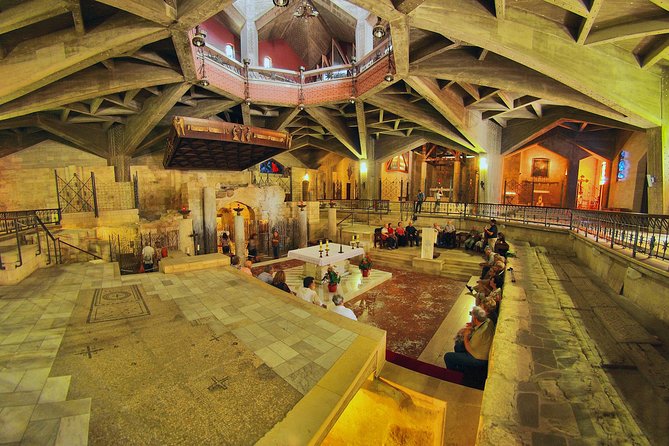
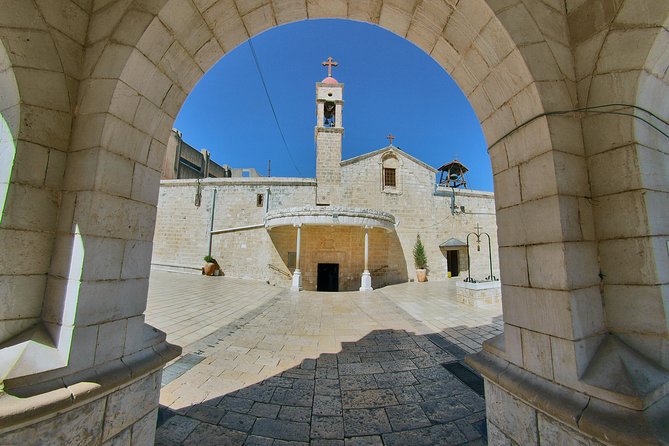
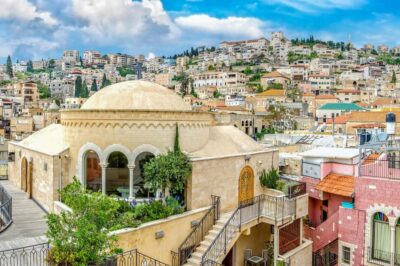
The second day heads north through the Plain of Armageddon, with a view toward Megiddo and a stop at Mount Precipitation near Nazareth. In Nazareth, the focus is on the Church of the Annunciation and the nearby Church of St. Joseph. These are important Christian pilgrimage sites, and seeing both gives you a useful first look at the religious layers of northern Israel.
The route then reaches the Sea of Galilee. You pass Cana, associated with the story of water turned into wine, and visit Capernaum near Mount Beatitude. The tour also includes the Benedictine Church commemorating the Multiplication of the Loaves and the Fish.
At Yardenit, you have the chance to be baptized in the Jordan River. That is optional, not a requirement, so you can treat the stop as a chance to see the site and rest. The return route passes Mount Tabor, linked with the Transfiguration, before returning to Tel Aviv.
This is an eight-hour day with a lot of stops. You will see far more than you could manage easily by public transport, but you should expect a quick pace rather than long visits at each place.
Day three follows the Mediterranean coast to Caesarea, once a major Roman port. The Roman Theater and hippodrome help you picture the scale of the ancient city. In Haifa, the Baha’i gardens and shrine provide a change of mood, with carefully arranged terraces above the city.
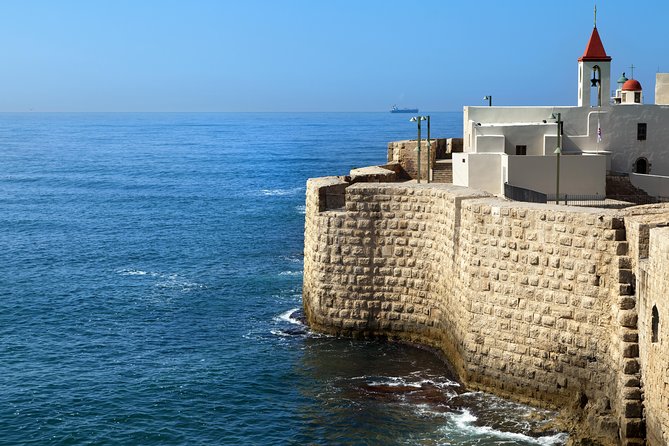
At Rosh Hanikra, a cable car carries you down to the grottoes. The final stop is Acre, the largest Crusader city in Israel on this route. The Turkish prison also recalls the British Mandate period and the executions of Jewish prisoners after World War II. This day combines Roman, religious, Ottoman, British, and modern history in a compact coastal run.
Days 4 and 5: Jerusalem, Yad Vashem, Jericho, and Bethlehem
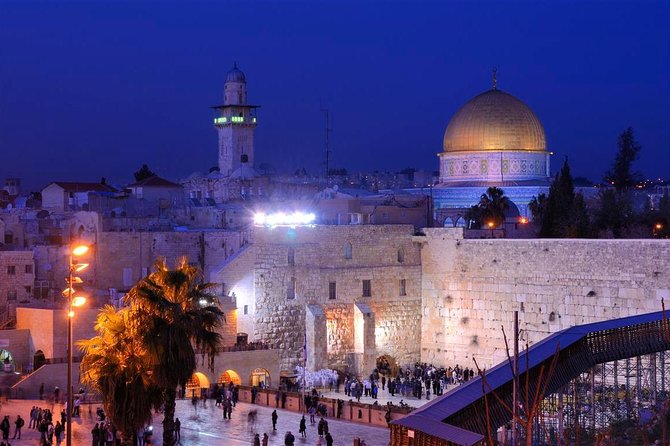
Jerusalem receives one packed day. You begin with views from the Mount of Olives, then see the Church of All Nations and the Garden of Gethsemane. Inside the Old City, the walk enters through Zion Gate and crosses the Armenian Quarter, the Byzantine Cardo, and the Jewish Quarter.
At the Western Wall, you have a moment to observe one of Jerusalem’s most important places of prayer. The route then follows the Via Dolorosa and its Stations of the Cross to the Church of the Holy Sepulcher. Markets along the way add noise, color, and ordinary daily life to an otherwise intensely sacred walk.
The day ends at Yad Vashem, the Holocaust museum and memorial. It is closed on Fridays and Saturdays, so the schedule matters. If your visit falls on those days, you should confirm how that portion is handled rather than assume the museum will be open.
Day five heads toward the Dead Sea and Jericho. A sea-level marker gives context to the descent, and from Jericho you can see Mount Temptation. The route continues to Bethlehem, where you walk across Manger Square to the Church of the Nativity.
The church includes a fourth-century mosaic floor, the grotto associated with Jesus’ birth, and a star marking the traditional location. You also visit the Crusader Church of St. Catherine and its grotto, then pass the Milk Grotto and Shepherd’s Fields.
These two days are especially valuable for first-time visitors who want the major religious sites without arranging separate permits, drivers, and local guides. The drawback is that Jerusalem alone could justify several days. Here, you get an efficient introduction, not a leisurely study of the city.
Day 6: Masada, the Dead Sea, and the flight to Eilat
Day six is one of the longest, lasting about 12 hours. You drive south through the Judean Desert to Masada, Herod’s dramatic mountaintop fortress above the Dead Sea.
A cable car takes you to the top, where you see palace remains, a well-preserved bathhouse, the synagogue, Roman barracks, and other structures. The Snake Path shows how people reached the summit before the modern cable car. It is worth looking down at the route even if you do not walk it.
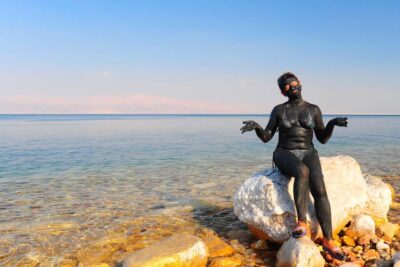
The road then passes Ein Gedi and Qumran, where the Dead Sea Scrolls were found. The final major stop is the Dead Sea itself, with time to float or swim in its mineral-rich water. Bring suitable clothing and protect any cuts, since salt water can be uncomfortable.
After the sightseeing, you are taken to Ben Gurion Airport for a flight to Ramon Airport near Eilat, followed by a transfer to your hotel. There are no domestic flights on Friday, so the plan changes to an overnight in Tel Aviv and a flight to Eilat the following day.
This is a good example of the tour’s strength and weakness. You cover Masada, Qumran, and the Dead Sea in one organized day, but the combination of desert driving, several stops, and airport movement leaves little energy for anything else.
A different kind of day out of Tel Aviv:
- From Tel Aviv: Masada & Dead Sea Full Day Tour with Pick Up
★ 4.5 · 1,496 reviews - From Tel Aviv: Jerusalem and Bethlehem Guided Day Trip
★ 4.3 · 1,316 reviews - Masada and the Dead Sea Day Trip from Tel Aviv
★ 4.5 · 1,014 reviews - Tel Aviv: Jerusalem, Bethlehem & Dead Sea
★ 4.0 · 881 reviews
Day 7: Petra and the first difficult transition
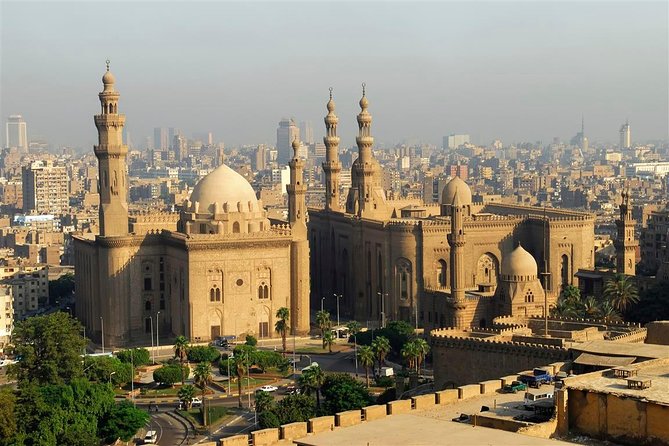
A morning pickup around 8:30 to 8:45 takes you to the Arava border. A local driver assists with the crossing, then a Jordanian driver takes you on the roughly two-hour road journey to Petra.
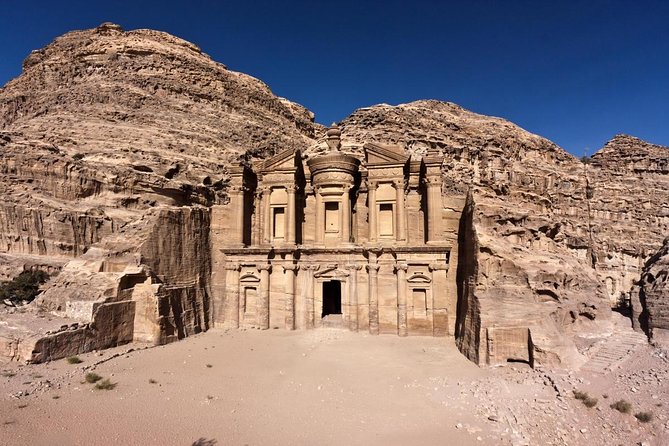
Petra is the showpiece of the Jordan section. You see the Treasury, then continue to temples, tombs, caves, the Roman Theater, and other carved remains. The Treasury is the famous first image, but do not treat it as the whole site. The surrounding ravines, tombs, and open spaces explain why Petra takes time and energy.
Petra by Night is available in the evening for about $15, but it is not included. Given the next day’s demanding schedule, you should think carefully before adding it. It may be memorable, but you may value sleep more.
The key practical point is that this is not a relaxed Petra visit. You check out of your hotel, spend the day at the site, and then prepare for another border crossing the following evening. If you want a second independent day at Petra, the tour does allow free time on day eight, but the larger route soon pulls you onward.
Days 8 and 9: Eilat, Taba, and Mount Sinai
Day eight gives you a rare choice. You may return to Petra independently, walk through the market, or rest at the hotel. At about 5:00 p.m., a driver takes you back toward the border and Eilat.
You have roughly two hours in Eilat to eat or swim before meeting the driver for the journey to Cairo. The route crosses the Taba border into Egypt, where another driver takes over. From there, you continue to Mount Sinai.
The planned mountain climb begins at night or in the very early morning so you can reach the summit for sunrise. You also visit St. Catherine’s Monastery, a sixth-century church and one of the oldest working monasteries in the world. The site includes the Burning Bush, Jethro’s Well, and what is described as the world’s oldest library.
This is the most demanding part of the entire trip. The schedule joins a full Petra day, a border crossing, a long road transfer, and a mountain climb with little proper nighttime rest. The tour’s information calls for moderate physical fitness, but I would treat this section as requiring more than ordinary sightseeing stamina.
The Jordan to Egypt handoff also deserves special attention. The experience can become very small, with only two people on one recorded departure. That may make the driving feel personal, but it also means you cannot count on a large group sharing the strain. Ask in advance exactly where you meet each driver, what luggage you keep with you, and how the mountain transfer is timed.
After Mount Sinai and the monastery, the route continues to Cairo for the night. You will probably be ready for a quiet hotel evening rather than an optional show.
Days 10 and 15: Cairo’s great monuments and city sights

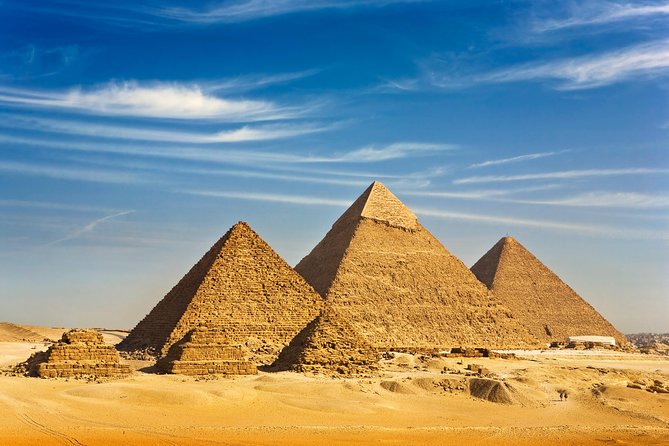
The first Cairo sightseeing day begins at the Giza Plateau. You see the pyramids of Cheops, Chephren, and Mycrenos, along with the Sphinx. A short camel ride is included, giving you a brief taste of the traditional way of crossing the sandy site.
The day continues to the Step Pyramid of Djoser at Saqqara, the pyramids of King Titi, and Memphis. At the Open Air Museum, you see the statue of Ramses II. Lunch at a local restaurant is included.
This is an excellent concentration of ancient Egyptian sites, but the order makes for another full eight-hour day. Entry to the mummy room is not included, so budget for that separately if it matters to you.
After the Nile cruise, day 14 brings you back to Cairo by air from Luxor. Day 15 visits the Egyptian Museum, Cairo’s city center, the churches, the Citadel of Salah El Dien, and the Mosque of Mohamed Ali. Optional tours, cruises, and shows may be available through the guide, but they cost extra.
The Cairo portion gives you both pharaonic monuments and later religious and political history. It does not leave much time for independent wandering until day 16, so use the leisure day for any neighborhood or museum you especially want to see.
Days 11 to 14: The Nile cruise from Aswan to Luxor
On day 11, you fly from Cairo to Aswan and board the ship. After lunch, the program visits the Aswan High Dam and the Temple of Philae, which sits on an island and is one of the highlights of the southern Nile route.
Dinner is served on board, followed by a Nubian show. The cruise offers a welcome change from repeated hotel moves and road transfers. You unpack once and let the river carry you north.
Day 12 visits the Temple of Kom Ombo, dedicated to Sobek and Haroeris, then continues by sail to Edfu and the Temple of Horus. The ship proceeds to Luxor for the night.
On day 13, the focus shifts to Luxor’s West Bank. You visit the Theban Necropolis and Valley of the Kings, with entry to three royal tombs. You return to the ship for lunch and have a free afternoon, followed by evening entertainment.
Day 14 begins with checkout, then visits Karnak and Luxor temples on the East Bank. Lunch at a local restaurant comes before the transfer to Luxor Airport and the flight back to Cairo.
The cruise is one of the tour’s strongest features because it breaks up the hard travel rhythm. You still have scheduled sightseeing, but the ship provides meals, a room, and a steady base. The included dining is useful, though only three dinners and six lunches are covered across the whole trip, so check which meals are included on each day.
Transport, group size, and the daily pace
The tour uses a climate-controlled van, drivers, airport transfers, and flights. That matters in Israel, Jordan, and Egypt, where distances between major sights are large and border procedures can consume time.
Pickup times around 7:20 a.m. are common. The listed touring days run about eight hours, with the Masada day lasting about 12 hours. Traffic can change transfer times, particularly around Cairo, so treat the schedule as a framework rather than a promise to the minute.
The maximum group size is 50 people, though the actual group can be much smaller on certain sections. A large group may mean slower loading and less personal time with a guide. A tiny group can feel more direct, but the physical demands of the route do not become easier.
Children must be accompanied by an adult. A current passport is required, and passport name, number, expiry date, and country are needed at booking. The tour operates in all weather, so clothing should suit hot days, cool early mornings, religious sites, and the Mount Sinai climb.
Who should book this trip?
I would recommend it to you if your priority is seeing the major highlights of Israel, Jordan, and Egypt in one organized sweep. It suits people who value logistics handled for them, can manage early starts, and accept that some visits will be brief.
It is especially useful for a first trip to the region when you do not want to arrange three visas, multiple drivers, domestic flights, hotels, and a Nile cruise independently. The route also works well for anyone who wants Petra, Jerusalem, the pyramids, and Luxor in one holiday.
I would hesitate if you want relaxed mornings, independent exploration, or a predictable night of sleep every night. The Petra to Sinai section is a serious concern, and the non-refundable booking terms make it important to be certain before paying.
Should you book the Israel, Jordan and Egypt tour?
Book it if breadth and convenience matter more to you than a gentle pace. For roughly $3,743 per person after the stated taxes and visas, plus optional extras, you receive a large amount of transport, sightseeing, accommodation, and cruise time.
Before committing, ask for precise details about the Jordan to Egypt handoff, the Mount Sinai climbing schedule, the hotels, the domestic flight times, and how Friday changes are handled. If you are fit, flexible, and eager to see the region’s headline sites in one trip, this is a practical route. If the idea of climbing Mount Sinai after Petra sounds exhausting rather than exciting, arrange that portion separately or choose a slower itinerary.
FAQ
Where does the tour start and end?
It starts with a transfer from Ben Gurion Airport in Israel and ends with a drop-off at Cairo International Airport in Egypt.
How long is the tour?
The tour lasts approximately 17 days and includes 15 nights of accommodation.
What countries does the tour visit?
The route travels through Israel, Jordan, and Egypt.
Are flights included?
Airport-to-airport transport is included, including flights within the route. The itinerary includes a flight from Ben Gurion Airport to Ramon Airport near Eilat, a flight from Cairo to Aswan, and a flight from Luxor to Cairo.
What extra taxes and visas must I pay?
The listed price excludes a $130 per person departure tax, a $60 Egypt visa, and a $75 Jordan visa.
Is Petra by Night included?
No. Petra by Night costs about $15 and is not included in the tour price.
Is the Mount Sinai climb part of the tour?
Yes. The schedule includes a nighttime or early-morning climb to see sunrise, followed by a visit to St. Catherine’s Monastery and nearby religious sites.
Recently added around Tel Aviv
- Jaffa Flea Market Tasting Tour★ 5.0 · 3 reviews
- Early Christianity in Galilee Private Tour★ 4.5 · 3 reviews
- Privet walking tour in Tel Aviv-Yafo★ 5.0 · 3 reviews
- Package VIP Skip Line Services in BGN Airport with Transfer to Tel aviv Hotels★ 5.0 · 3 reviews
- Bar Crawl tour with local in Tel-Aviv★ 5.0 · 3 reviews
- Food & Drink Private Guided Tour in Tel Aviv★ 5.0 · 3 reviews
- Tel Aviv: Carmel Market & Neighborhood Guided Walking Tour★ 4.7 · 3 reviews
- Tel Aviv Like a Local: Customized Guided Tour by Lokafy★ 5.0 · 3 reviews
Tel Aviv Tours, compared.
From Tel Aviv: Masada & Dead Sea Full Day Tour with Pick Up
Read our review →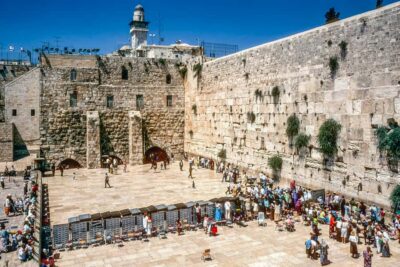
From Tel Aviv: Jerusalem and Bethlehem Guided Day Trip
Read our review →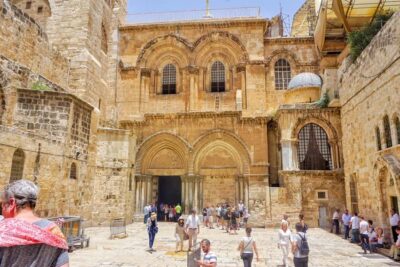
From Tel Aviv: Guided Day Trip to Nazareth & Sea of Galilee
Read our review →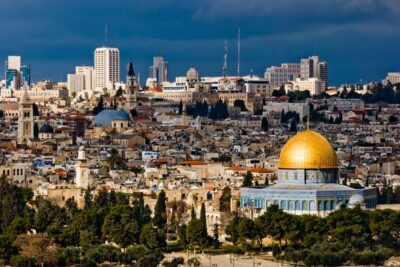
From Tel Aviv: Jerusalem Old & New City Bus Tour
Read our review →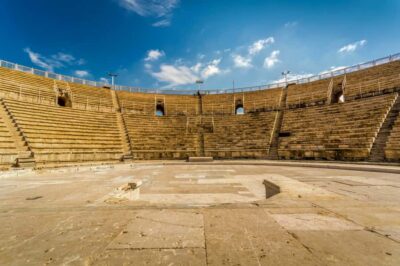
From Tel Aviv: Caesarea, Haifa and Akko Day Trip
Read our review →
From Tel Aviv: Masada, Ein Gedi & Dead Sea Tour
Read our review →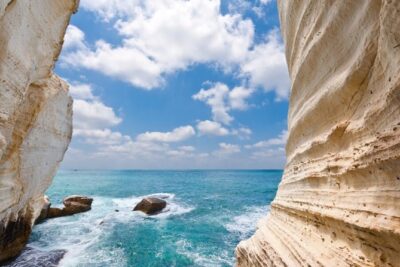
Caesarea, Rosh Hanikra and Acre Day Trip from Tel Aviv
Read our review →Browse the lists this tour appears in