
Reviewed · MASADA TOURS
Tour of Masada-Dead Sea and Qumran from Jerusalem
Masada gives this day its dramatic center: you ride a cable car above the Judean Desert to a fortress where Roman baths, King Herod’s palace, and the final stand of Jewish rebels come together in one stark, unforgettable setting. Add Qumran and the Dead Sea, and you get three of the region’s most famous sights in one long outing.
I like the hotel pickup and drop-off from Jerusalem, which removes a fair bit of transport juggling. I also like that the cable-car ride and entrance fees are included, since those costs can quickly add up on an independent day. Guides such as Ariel bring humor and strong knowledge of Israeli and Jewish history to the ride.
The main concern is the group size, which can reach 45 people. Weather can also cancel the day, and one account describes a long shopping stop that left less time at Masada. If the fortress is your priority, pay close attention to the day’s timing.
Key points to know before booking
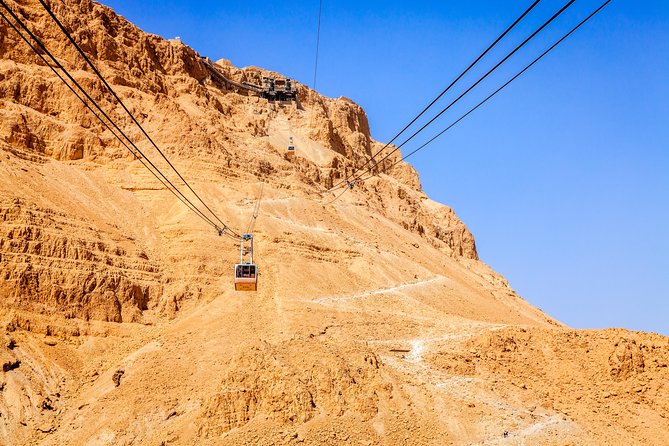
- Masada by cable car: Reach King Herod’s fortress without making the steep ascent on foot, then explore Roman baths, palace remains, and desert views.
- Qumran and the Dead Sea Scrolls: Spend about an hour at the site linked to the discovery of the famous scrolls.
- Two hours at the Dead Sea: Enjoy the thick, salty water and mineral-rich mud, with time set aside for the classic floating experience.
- An 8-hour day from Jerusalem: Hotel pickup, an air-conditioned vehicle, guiding, and admission fees are included.
- Ariel may be your guide: His humor, patriotism, and command of Israeli and Jewish history received especially warm praise.
- Check the age rule carefully: Children under five, including infants, are not permitted, despite one family account describing younger children on a similar outing.
Why this Judean Desert day works
This is a day of sharp contrasts. You leave Jerusalem for the dry Judean Desert, follow the Dead Sea shore, examine a site tied to one of the world’s most important archaeological discoveries, climb by cable car to an isolated fortress, and finish with a float in water so salty that normal swimming feels almost beside the point.
I like the range. Qumran gives you a cultural and religious story. Masada supplies grand ruins and a serious historical episode. The Dead Sea is the hands-on finish, where you stop looking at the past and take part in a strange natural experience yourself.
The $110 price is reasonable if you value convenience. You receive transportation from your Jerusalem hotel, a professional guide, an air-conditioned vehicle, and admission to Qumran and Masada. Food and drinks are not included, so you should budget for those separately. An independent visit might offer more control, but arranging all three stops and the cable car takes more work.
The tradeoff is structure. This is not a flexible private excursion. With up to 45 people, you may have to follow a fixed pace, wait for others, and listen from a distance rather than having a long personal conversation with the guide.
more dead sea days from Jerusalem
- From Jerusalem: Masada & Dead Sea Full Day Tour with Pick Up
★ 4.5 · 815 reviews - Masada and the Dead Sea Day Trip from Jerusalem
★ 4.5 · 757 reviews - From Jerusalem/Tel Aviv: Bethlehem and Dead Sea Day Tour
★ 4.7 · 484 reviews
Leaving Jerusalem for Qumran
The drive takes you down toward the Dead Sea and into the Judean Desert. The change in scenery is part of the day’s appeal, even before you reach the first stop. The route places you in the setting that shaped both the ancient desert community at Qumran and the fortress society at Masada.
At Qumran National Park, you spend about an hour learning about the caves where the Dead Sea Scrolls were found. The value here is not simply seeing an archaeological site. Qumran connects physical ruins, desert isolation, and texts that transformed modern understanding of ancient Jewish life and scripture.
An hour is enough for an introduction, but not for a slow archaeological study. You should expect a guided overview rather than a long, unhurried visit to every corner. If the scrolls are your main interest, listen closely to the explanation and use the time to connect the caves with the wider story of the site.
The views from Qumran also help explain why the area mattered. The desert setting is not a decorative backdrop. It shows how remote and demanding life here could be, and why a place connected with manuscripts and religious study feels so different from ordinary historical sites in Jerusalem.
Two hours beside the Dead Sea
The Dead Sea stop gives you time to try the area’s most famous activity: coating yourself in mineral-rich mud and floating in the hyper-saline water. You are not swimming in the usual sense. The water supports your body with unusual force, creating the famous sensation of lying back almost effortlessly.
I would treat this as a playful, sensory stop rather than a medical treatment. The tour describes the mud and water as therapeutic, but the practical appeal is the oddness of the experience. You get wet, muddy, salty, and slightly amused by how difficult ordinary movement becomes.
The scheduled two hours should make this the least rushed part of the day. That matters because changing clothes, washing off the mud, and getting comfortable again all take time. Bring a swimsuit and plan around the fact that you will want a proper rinse before returning to the vehicle, although the supplied details do not specify the exact facilities.
The stop is also a useful break from ruins and lectures. After Qumran and before or after Masada, depending on the day’s running order, the Dead Sea lets you simply enjoy the setting. The exact sequence may vary, since the supplied schedule places the Dead Sea before Masada while the tour overview describes Masada first.
Do not expect food or drinks to be included. Pack accordingly, or be ready to buy refreshments during the day. You should also remember that the desert heat can make this stop tiring, even when the activity itself feels easy.
Riding the cable car to Masada
Masada is the day’s major historical stop. King Herod built the mountaintop complex as a desert fortress and palace, and the ruins still feel remarkably exposed above the surrounding desert. The cable car makes the visit accessible to most people who can participate in a normal sightseeing day.
The ride itself is part of the experience. You rise toward the plateau and gain wide views over the Dead Sea region. Once at the top, the guide leads you through the remains, including Roman baths and Herod’s palace. These details make Masada more than a viewpoint. You see how power, comfort, defense, and royal display were arranged in an extreme place.
The guide also explains the final stand of Jewish rebels against the Romans in 73 AD. The story is emotionally charged and central to the meaning of Masada, but it should not be reduced to a quick heroic slogan. A good guide can help you consider the fortress both as a physical site and as a symbol shaped by later memory.
Ariel is the guide name that appears in the strongest praise. His humor and command of Israeli and Jewish history made the day more memorable for one visitor. That combination matters here. Masada has a complicated story, and a guide who can add context without turning the visit into a dry recital improves the whole stop.
Plan on about three hours at Masada, including the cable-car process and the guided visit. That sounds generous, but time can disappear quickly when a large group is moving between viewpoints and ruins. One poor account describes a 45-minute shopping stop followed by a rushed Masada visit, along with an attempted sale of an evening add-on. I would confirm the schedule at the start and make it clear that Masada is a priority for you.
more masada sunrise climbs
- From Jerusalem: Masada&Dead Sea Tour INCLUDING ENTRANCE FEES
★ 4.3 · 392 reviews - Masada, Ein Gedi and The Dead Sea from Jerusalem
★ 4.0 · 267 reviews - From Jerusalem: Masada at Sunrise, Ein Gedi & Dead Sea Tour
★ 4.6 · 245 reviews - Dead Sea, Masada and Ein Gedi Day Tour from Jerusalem
★ 4.5 · 126 reviews
How the transport and group size shape the day
Hotel pickup and drop-off are strong practical features, especially in Jerusalem, where reaching an early meeting point can add stress. The air-conditioned vehicle also matters in the desert. You will spend much of the day outside, so a cool ride between stops gives you a chance to recover.
The outing lasts about eight hours. That is long enough to cover the major sights but short enough to fit into a compact Jerusalem visit. You should still expect a full day, not a relaxed half-day jaunt. The road time, pickups, cable car, guided walks, and Dead Sea stop all add up.
A maximum of 45 people means the experience may feel more like a shared coach excursion than a small-group tour. That can keep the price down and create a lively atmosphere, but it can also make instructions harder to hear and transitions slower. The guide’s personality becomes especially important in a group this size.
One Swedish-language account describes a well-planned day with enough time at each stop, a comfortable minibus, and a very pleasant guide. The same account notes a long initial pickup period because the vehicle collected people in Jerusalem and then continued to Tel Aviv before heading south. If your pickup route includes more than one city, the day may feel longer than the advertised eight hours.
The strongest transport reports describe punctual pickup and drop-off. Still, one account describes confusion when the guide was at the wrong meeting place and the original trip was changed without enough warning. I would keep your phone available on the morning of departure and confirm the pickup details in advance.
Weather, timing, and the small print that matters
This activity requires good weather. If poor conditions cancel it, you should receive the choice of another date or a full refund. That policy is sensible for a day built around desert roads, a cable car, and open-air ruins, but it can be frustrating if this is your only chance to see Masada.
The tour also requires a minimum number of people. If that minimum is not reached, you may be offered another date or experience, or receive a full refund. Keep this possibility in mind if your schedule in Israel is tight.
Normal cancellation is flexible if you act early. You can cancel for a full refund up to 24 hours before the start time. Cancellations or changes made less than 24 hours before departure are not accepted for a refund.
The tour is not open to children under five, including infants. Children who are allowed to join must be accompanied by an adult. Most people can take part, but the day includes walking at archaeological sites, time in strong desert conditions, and getting in and out of the Dead Sea.
One family account describes children aged two, four, and eight joining a similar outing, with a pregnant parent also enjoying the day. That conflicts with the stated minimum age, so I would follow the official rule rather than rely on that individual experience. Families should confirm eligibility before paying.
Who will get the most from this tour
I would choose this excursion if you want the Judean Desert highlights without renting a car or coordinating several separate tickets. It suits a first visit to Israel, especially if your Jerusalem plans leave only one open day for Masada and the Dead Sea.
It is also a good match if you prefer historical context to simple transportation. The guide links Qumran, Masada, and the Dead Sea into one regional story, rather than leaving you to work out why these places belong together.
The day is less suited to you if you need a quiet pace, private guiding, or complete control over stops. A group of up to 45 can feel impersonal. It is also a poor fit if you dislike changing schedules or if you have only a narrow window before an evening flight.
For older visitors, the cable car removes the need to climb Masada on foot, which is a real advantage. You still need to manage the walking around the plateau and the heat. Anyone concerned about stamina should ask how much walking is expected at each stop.
Families need to pay close attention to the age restriction. The experience can appeal to older children, but the stated rule excludes anyone under five. Since the tour includes water, ruins, heat, and a long day in a vehicle, adults should decide based on the child’s endurance as well as age.
Is $110 a fair price?
At $110 per person, the tour offers a fair package for someone who values ease. Transport, a guide, hotel pickup and drop-off, the cable car, and entrance fees are included. Those inclusions make the price easier to justify than a bare transport service.
The value drops if you want long independent time at Masada or dislike group touring. A shopping stop would be especially poor value if it cuts into the fortress visit, since Masada is likely the main reason many people book the day.
I would compare the price with the cost of arranging a car, fuel, admissions, and parking, while also placing a value on not navigating the desert roads yourself. If you are traveling alone or as a couple, the organized option may be practical. If you are a larger group, calculate the costs carefully, since a private vehicle could offer more control, though the supplied information does not provide private-tour pricing.
Should you book this Masada and Dead Sea tour?
I would book it if you want the essential Judean Desert trio in one organized day and you are comfortable with a potentially large group. The combination of Qumran, cable-car access to Masada, and two hours at the Dead Sea gives you a broad first look at the region.
Book with care if Masada matters most to you. Confirm the pickup point, ask how much time is planned at the fortress, and make sure shopping will not replace the historical visit. Also check the age rule, weather outlook, and whether your date has enough flexibility for a possible cancellation.
The strongest reason to choose this tour is the guide. With someone such as Ariel leading the day, the long drive and complicated history can become much more engaging. The weakest point is the uneven organization described in some accounts, so clear communication before departure is worth the effort.
FAQ
How long is the tour from Jerusalem?
The tour lasts approximately eight hours, including the visits to Qumran, the Dead Sea region, and Masada.
What places does the tour visit?
It visits Qumran National Park, the Dead Sea region, and Masada National Park.
Is the Masada cable car included?
Yes. Admission to Masada and the cable-car ascent and descent are included in the tour.
Are entrance fees included?
Yes. Entrance fees for the included sightseeing stops are covered. Food and drinks are not included.
Is hotel pickup and drop-off provided?
Yes. Hotel pickup and drop-off from Jerusalem are included, along with transport in an air-conditioned vehicle.
Can children under five join?
No. Children under five, including infants, are not permitted to join this tour. Children who meet the age requirement must be accompanied by an adult.
What happens if bad weather cancels the tour?
If poor weather causes cancellation, you will be offered another date or a full refund. The tour may also be canceled if its minimum number of participants is not reached, with a different date or experience, or a full refund, offered in that case.
Recently added around Jerusalem
- Holy Jerusalem Full Day Tour from Jerusalem★ 5.0 · 3 reviews
- Half day tour bethlehem prices per Van up to 6 pax★ 5.0 · 3 reviews
- jerusalem classic tour★ 5.0 · 3 reviews
- Private Walking Tour in Jerusalem’s Old City★ 5.0 · 3 reviews
- Private Tour to the Culinary World of Jerusalem Market★ 5.0 · 3 reviews
- From Jerusalem: Masada Sunrise, Ein Gedi & Dead Sea★ 5.0 · 3 reviews
- Private Tour Bethlehem and the Dead Sea★ 5.0 · 3 reviews
- Jerusalem Like a Local: Customized Private Tour★ 5.0 · 3 reviews
Masada Tours, compared.

From Tel Aviv: Masada & Dead Sea Full Day Tour with Pick Up
Read our review →
From Jerusalem: Masada & Dead Sea Full Day Tour with Pick Up
Read our review →
From Tel Aviv: Masada, Ein Gedi & Dead Sea Tour
Read our review →
Masada, Ein Gedi and The Dead Sea from Jerusalem
Read our review →Browse the lists this tour appears in