
Reviewed · JERUSALEM TOURS
7-Hour Jerusalem Political Guided Tour from Jerusalem
Jerusalem’s famous stones tell only part of the story. This seven-hour tour uses the Old City, East Jerusalem neighborhoods, settlement roads, and the West Bank Wall to explain how history and present-day politics meet on the ground. The Palestinian nationalist perspective is central, so you should come ready to hear an alternative to the usual tourist narrative.
I like the way the tour connects sacred places with modern borders, housing, and security policy. I also like the small group size, with no more than 16 people, and the chance to see places such as Anata, Ma’ale Adumim, and the E1 planning zone. The main drawback is that the day is politically focused and can feel heavy, especially if you hoped for a relaxed sightseeing outing.
Key points to know before booking
- The Old City sets the political context: You receive a briefing covering roughly a century, from the late Ottoman period to the present.
- The Western Wall visit includes contested geography: You discuss the former Mugrabe neighborhood, the Temple Mount, and Al Aqsa Mosque.
- The tour compares East and West Jerusalem: Lookout points and a drive along the seam line show sharp differences in roads, buildings, and neighborhoods.
- The West Bank Wall is examined up close: The guide explains its construction, security purpose, and effects on Palestinian communities.
- Ma’ale Adumim brings settlement policy into view: You may see Anata, Jahalin Bedouin displacement sites, the Judean Desert, and the E1 planning zone.
- This is a serious, not casual, day out: Lunch is not included, a passport is required, and moderate physical fitness is needed.
A political tour that changes how you read Jerusalem
Many Jerusalem tours move from one ancient monument to another. This one asks you to look at the streets between those monuments and consider who controls them, who lives there, and how the city became divided.
Green Olive Tours presents the day from a Palestinian nationalist viewpoint. That does not make the experience useless to someone who wants a wider picture. It simply means you should understand the point of view before booking. You are not signing up for a neutral overview in the dry museum-label sense. You are signing up for a guided argument based on history, geography, occupation, settlement growth, security, and daily life.
That focus is the tour’s greatest strength and its main limitation. If you want to understand why Jerusalem remains so difficult to explain in a single paragraph, the approach can be valuable. If you prefer a tour that gives equal time to competing political narratives, you may want to add another experience from a different perspective.
The day lasts about seven hours, from 9:00 a.m. until the group returns to the starting point. It combines walking in the Old City with short briefings, vehicle travel, and lookout stops. The air-conditioned vehicle matters because the route covers more than the compact center of Jerusalem.
more Jerusalem days to consider
- From Jerusalem: Half-Day Bethlehem Guided Tour
★ 4.7 · 568 reviews - Jerusalem: Guided Walking Tour of the Old City
★ 4.7 · 386 reviews - Travel to Bethlehem Half Day Guided Tour from Jerusalem & TelAviv
★ 5.0 · 239 reviews
The Old City, where faith and power overlap
The morning begins at the Old City with a detailed historical briefing. The period covered runs from the late Ottoman era through the current conflict, giving you a basic timeline before the walking begins.
That preparation is useful. Without it, the Old City can seem like a maze of holy buildings and narrow lanes. With it, you can connect the stones to the political changes that followed the end of Ottoman rule, the creation of Israel, the 1967 war, and later settlement activity.
The guide introduces the Old City’s importance to Judaism, Christianity, and Islam. You also hear about Israeli occupation and settlement efforts in the Old City and the nearby Holy Basin. The focus is not only on grand landmarks. You look at visible signs of control and at Jewish settlements located in the Christian Quarter and Muslim Quarter.
This is where the tour begins to move beyond the usual three religions share one sacred city explanation. You are encouraged to think about how a neighborhood changes when a new settlement is placed inside it, how residents move through controlled spaces, and why the Old City has such importance in competing national stories.
The first segment lasts about an hour. Expect history, orientation, and discussion rather than a long list of interior visits. Admission tickets are not an added cost at this stop, and the emphasis is on understanding the setting around you.
Damascus Gate, the markets, and the Western Wall Plaza
The walking portion enters through Damascus Gate and continues through the Old City markets. This gives you a practical sense of the city’s movement and division. The route is not simply about looking at shopfronts. It uses the streets to explain how East and West Jerusalem developed differently and how the Old City functions as both a religious center and a contested political space.
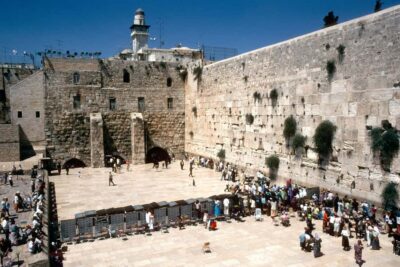
The Western Wall Plaza is a particularly important stop. The broad plaza many people know today was created over the former Mugrabe neighborhood after the 1967 war. That detail changes the way the open space appears. What may look like a timeless religious square is also part of a recent and disputed urban transformation.
You also discuss the Temple Mount and Al Aqsa Mosque, both of which are holy in Islam and Judaism. Their importance is not symbolic only. Control, access, prayer, and public claims connected to this compound sit close to the center of the Israeli-Palestinian conflict.
Allow about two hours for this part of the day. You will be walking on old streets and through market areas, so comfortable shoes are a sensible choice. The tour requires a moderate level of fitness, and this section is likely to be the most physically active part of the morning.
The guide’s role here is important. A good explanation can help you separate what you are seeing from the assumptions you may have brought with you. At the same time, remember that the tour’s presentation is openly shaped by Palestinian nationalism. Listen closely, ask respectful questions, and treat the experience as one strong lens rather than the only lens.
East Jerusalem and the seam line
After lunch, the group receives another short briefing before driving through East Jerusalem. Lunch is not included, so you need to plan for that expense and for the time required to eat during the day.
The vehicle route passes Palestinian neighborhoods and East Jerusalem settlements. Several lookout points provide wide views back toward the Old City. From above, the city’s divisions can be easier to read than they are from a crowded lane.
The tour draws attention to the differences between East and West Jerusalem. In the description of the route, modern office towers and highways in the western part of the city are set against unsealed roads and donkeys being ridden in the east. This comparison is deliberately stark. It is intended to show how uneven development and infrastructure appear across the city.
You should treat this portion as an interpretation of visible conditions, not as a complete survey of every neighborhood. Jerusalem is more complicated than a simple west-good, east-bad picture, and a short tour cannot explain every cause behind the differences. Still, the lookout stops can make questions about planning, investment, land, and access feel much more concrete.
The drive continues along the seam line road, the zone that divided East and West Jerusalem during earlier periods of conflict. You pass areas conquered in 1967 and learn how the boundary changed afterward. This is one of the useful features of the tour: instead of discussing a line only on a map, you follow roads where that division shaped the city.
This section takes about an hour and a half. It offers less walking than the Old City but plenty to watch from the vehicle. Keep your attention on the guide’s explanations and on the changing streets outside the window.
A different kind of day out of Jerusalem:
- From Jerusalem: Masada & Dead Sea Full Day Tour with Pick Up
★ 4.5 · 815 reviews - Masada and the Dead Sea Day Trip from Jerusalem
★ 4.5 · 757 reviews - From Jerusalem: Nazareth and Sea of Galilee Tour
★ 4.5 · 588 reviews - Jerusalem/Tel Aviv: Bethlehem, Jericho and Jordan River Tour
★ 4.6 · 526 reviews
Seeing the West Bank Wall up close
The next stop brings you to the West Bank Wall, also called the Separation Barrier. Seeing it in person is different from seeing a photograph. Its scale, route, and relationship to nearby communities become easier to grasp when you stand beside it.
The guide explains why the wall was built and discusses how effective it was in preventing terrorism. You also learn about surveillance of Palestinian residents and the way the barrier separates not only Arab and Jewish communities but, in some places, Palestinian communities from one another.
This is an emotionally difficult part of the day. The wall is a security measure for many Israelis and a restriction on movement and community life for many Palestinians. The tour gives more weight to the Palestinian experience, so you should expect the discussion to focus on separation, surveillance, and the cost to local residents.
That emphasis is not a reason to skip the stop. It is a reason to pay attention to the language used and to ask questions. The best outcome is not leaving with a slogan. It is leaving with a clearer sense of how one structure can be understood in sharply different ways depending on where you live and what you fear.
The wall segment lasts about an hour and a half. You may spend time standing outside, so practical clothing and shoes are more useful than anything formal. Because the tour moves between urban roads, lookout areas, and exposed sites, comfort matters throughout the day.
Anata, Ma’ale Adumim, and the Judean Desert views
The final part of the route focuses on Ma’ale Adumim, one of the largest Israeli settlements in the West Bank. You may also visit outlying settlement posts and learn about the displacement of the Jahalin Bedouin.
The Palestinian village of Anata is another key sight. It is described as being surrounded by the Wall, which gives you a direct example of how the barrier can affect a community’s relationship with nearby land and roads. This is not an abstract border discussion. You are looking at a village, a settlement, and a wall in the same area.
Lookout points offer views toward the Judean Desert and the E1 planning zone. E1 is presented as an area planned for additional settlement neighborhoods and tourist hotels. From a viewpoint, the proposed development can be discussed in relation to settlement expansion, access between Palestinian communities, and the future shape of the area.
This stop also brings together several themes from the day: land use, displacement, settlement growth, roads, security, and competing claims to the same region. The scenery may be striking, but the guide keeps the focus on what the views mean politically.
The final stop lasts about an hour. It is a fitting end because it moves the discussion beyond the Old City’s sacred sites and into the wider regional question of how Jerusalem connects to the West Bank.
What the $199 price gets you
At $199 per person, this is not a bargain sightseeing bus. The value comes from the subject matter, the seven-hour route, the small group limit, and the vehicle time required to connect locations that would be difficult to understand in one self-guided day.
You receive an air-conditioned vehicle and a guided route through the Old City, East Jerusalem, the seam line, the West Bank Wall, Anata, and Ma’ale Adumim. Admission tickets are listed as free at the stops, so you are mainly paying for the guide’s time, transport, route planning, and political interpretation.
The maximum group size is 16 people. That is large enough to share questions and small enough for the guide to speak with the group rather than address a crowd. Since the tour depends heavily on explanation, this matters more here than it would on a simple city transfer.
Lunch is extra. You should also remember that this is a full day with walking, standing, driving, and serious discussion. The price makes the most sense for someone who has already seen Jerusalem’s famous sights or who wants to make the city’s present-day conflict a central part of the visit.
Practical details that affect your day
The meeting point is Jerusalem Hotel, at Antar Ben Shaddad 15, Jerusalem. The tour starts at 9:00 a.m. and ends back at the meeting point.
A mobile ticket is provided, and confirmation is received when you book. The meeting point is near public transportation, which makes it easier to reach without arranging a separate transfer.
You need a current valid passport on the day of the tour. That is an important requirement, so do not leave it at your accommodation.
Wear comfortable shoes and plan for a moderate level of physical activity. The Old City portion involves walking through gates, markets, and narrow streets, while later stops include lookout areas and time outside the vehicle.
Free cancellation is available if you cancel at least 24 hours before the start time. Changes or cancellations inside that window are not accepted for a refund. The tour also requires a minimum number of participants, so a cancellation by the operator can result in another date, another experience, or a full refund.
Who should book this Jerusalem tour?
I would recommend it to you if you want more than ancient monuments and panoramic photographs. It suits people interested in the Israeli-Palestinian conflict, urban divisions, settlement policy, religious claims, and the daily effects of borders and barriers.
It is also a good choice if you prefer learning through places. The tour does not discuss the Wall, settlements, or the Old City only in a classroom. It takes you to them, then explains what you are seeing.
You should think twice if you want a politically neutral introduction, a gentle family sightseeing day, or a tour built around entering major religious sites. The itinerary is serious, and the Palestinian nationalist perspective is not a minor detail. It shapes the questions asked and the conclusions encouraged.
For the best use of the day, arrive with curiosity rather than a need to have your existing view confirmed. Listen carefully, compare the presentation with other sources, and notice how the physical city supports competing stories.
Should you book it?
Book this tour if you want to understand Jerusalem as a living political city, not only as a collection of holy places. The strongest parts are the Old City context, the Western Wall Plaza discussion, the drive through East Jerusalem, and the close look at the Wall and Ma’ale Adumim.
At $199, it is worthwhile for a focused learner who values access and explanation more than a low-cost day out. It is less suitable if you want a balanced political debate in a formal sense or a relaxed tour with little walking and no difficult subjects.
Green Olive Tours gives you a clear Palestinian nationalist lens and takes you to places that many standard Jerusalem excursions leave out. Book it when that direct, place-based approach is what you are looking for.
FAQ
How long does the tour last?
The tour lasts approximately seven hours, beginning at 9:00 a.m. and returning to the meeting point in Jerusalem.
Where does the tour start and finish?
It starts and finishes at Jerusalem Hotel, Antar Ben Shaddad 15, Jerusalem.
Is lunch included?
No. Lunch is not included in the tour price.
Is a passport required?
Yes. You must bring a current valid passport on the day of the tour.
How many people can join the tour?
The group is limited to a maximum of 16 participants.
What level of fitness is needed?
A moderate level of physical fitness is required. The day includes walking in the Old City, standing at several stops, and moving between sites.
What happens if I need to cancel?
You can receive a full refund if you cancel at least 24 hours before the tour’s start time. Cancellations or changes made less than 24 hours in advance are not accepted for a refund.
Recently added around Jerusalem
- Holy Jerusalem Full Day Tour from Jerusalem★ 5.0 · 3 reviews
- Half day tour bethlehem prices per Van up to 6 pax★ 5.0 · 3 reviews
- jerusalem classic tour★ 5.0 · 3 reviews
- Private Walking Tour in Jerusalem’s Old City★ 5.0 · 3 reviews
- Private Tour to the Culinary World of Jerusalem Market★ 5.0 · 3 reviews
- From Jerusalem: Masada Sunrise, Ein Gedi & Dead Sea★ 5.0 · 3 reviews
- Private Tour Bethlehem and the Dead Sea★ 5.0 · 3 reviews
- Jerusalem Like a Local: Customized Private Tour★ 5.0 · 3 reviews
Jerusalem Tours, compared.
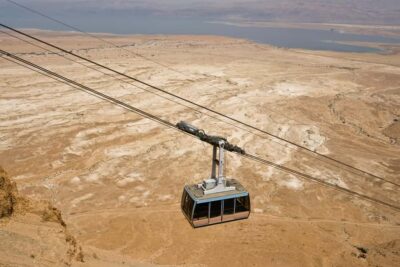
From Jerusalem: Masada & Dead Sea Full Day Tour with Pick Up
Read our review →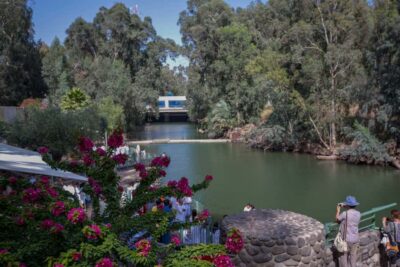
From Jerusalem: Nazareth and Sea of Galilee Tour
Read our review →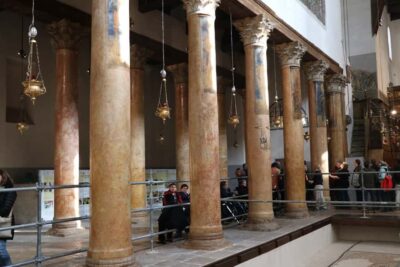

From Jerusalem/Tel Aviv: Bethlehem and Dead Sea Day Tour
Read our review →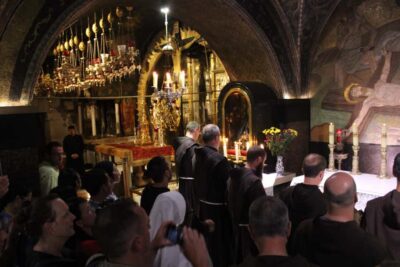
Masada, Ein Gedi and The Dead Sea from Jerusalem
Read our review →Browse the lists this tour appears in