
Reviewed · MASADA TOURS
5-Day Best of Israel Tour from Tel Aviv: Jerusalem, Dead Sea, Nazareth, and Masada
Israel packs an astonishing range into a small country, and this five-day trip takes you from the Golan Heights and Sea of Galilee to Masada, the Dead Sea, and Jerusalem’s holy quarters. You’ll see Roman ruins, biblical sites, Crusader tunnels, a mountain fortress, and two very different sides of Jerusalem.
I like the strong mix of places, especially the cable-car ride up Masada and the chance to float in the Dead Sea on the same day. I also like that the route includes less expected stops such as Katzrin, Rosh Hanikra, Caesarea, and Acre, not just the usual headline sights.
The main caution is organization. This is sold as one five-day experience, but the days can operate more like separate day tours, with different guides, drivers, and groups. Pickup changes, bus transfers, repeated explanations, and occasional shopping stops can eat into your sightseeing time.
Key points to know before booking
- Masada and the Dead Sea share one memorable day: Ride a cable car to Herod’s desert fortress, then float and apply mineral mud at the lowest point on Earth.
- Jerusalem receives two visits: You see panoramic viewpoints and the Old City, then return for the Western Wall, Via Dolorosa, Church of the Holy Sepulchre, and Yad Vashem.
- The route reaches northern Israel: Caesarea, Haifa, Rosh Hanikra, and Acre add Roman, Bahá’i, coastal, and Crusader history.
- The Galilee days are packed: Nazareth, Capernaum, the Mount of Beatitudes, the Jordan River, Katzrin, and Mount Bental all appear in the schedule.
- Accommodation is part of the experience: Four nights are included, with three planned in a three-star Jerusalem hotel and one in a traditional kibbutz.
- Guides make a big difference: Amir, Eyal, and Rami are specifically noted for strong explanations, but guide quality and coordination can vary from day to day.
What the $1,080 price really buys you
At $1,080 per person, this is not a cheap hop-on sightseeing package. The price covers five days of guided touring, transport in an air-conditioned vehicle, hotel pickup and drop-off, four nights of accommodation, breakfast, and several admission fees.
That can be good value if you want to cover much of Israel without arranging intercity transport, hotels, entrance tickets, and local guides yourself. The route reaches places that are awkward to combine by public transport in only five days, especially Masada, Rosh Hanikra, Katzrin, and the Jordan Valley.
The tradeoff is control. You are paying for convenience, but you give up the freedom to linger at the Western Wall, take a quiet walk around Acre, or spend extra time at the Dead Sea. The schedule is tightly timed, and some stops last only 20 to 40 minutes.
Lunch and drinks are not included. You should budget for those separately, and the meal stops can vary in quality and price. Some days also include time at commercial shops, including jewelry or souvenir stops. If you dislike organized shopping breaks, ask the guide how much time is planned before you commit to a purchase.
more dead sea days from Tel Aviv
- From Tel Aviv: Masada & Dead Sea Full Day Tour with Pick Up
★ 4.5 · 1,496 reviews - Masada and the Dead Sea Day Trip from Tel Aviv
★ 4.5 · 1,014 reviews - Tel Aviv: Jerusalem, Bethlehem & Dead Sea
★ 4.0 · 881 reviews
Day 1: Katzrin, Golan bunkers, and the Sea of Galilee
The first day heads north through the Galilee, the Jordan Valley, and along the Sea of Galilee. The scenery changes quickly, from open agricultural country to the high Golan region. It is a useful introduction to the geography that has shaped Israel’s politics and settlement patterns.
In Katzrin, you visit an ancient village and synagogue. The stop lasts about 40 minutes and includes admission. The remains give you a feel for an older Jewish community in the Golan, though the short visit means you will get an overview rather than a slow archaeological study.
The Golan Antiquities Museum follows, with another 40-minute visit. This is a practical stop for putting the ruins into context. If you enjoy ancient objects and excavation sites, you will appreciate the added background. If you prefer active sightseeing, the museum may feel brief and secondary beside the outdoor sites.
Mount Bental is the day’s most distinctive stop. You have about 50 minutes to explore former Syrian bunkers and take in the high viewpoint. The military remains make the modern political story visible rather than abstract. Bring a hat and water, as exposed high ground can feel hot even when the air is cooler.
The day also includes views of the Sea of Galilee and a journey through the Jordan Valley. Expect a lot of coach time. That is unavoidable on a route this broad, but it makes the guide’s commentary important. Amir has received particular praise for explaining names, origins, and current issues in a clear way.
Day 2: Nazareth and the sacred sites of Galilee
Day two moves through places linked to the life of Jesus. At the Mount of Precipice lookout, you have around 30 minutes for views before continuing to Nazareth.
Nazareth receives about 90 minutes, followed by the Church of the Annunciation and St. Joseph’s Church. The Church of the Annunciation is allotted 40 minutes, while St. Joseph’s gets 20. Modest clothing is required at holy sites, so cover your shoulders and knees. This is not the day for beachwear, even in warm weather.
You also pass Kfar Cana and see Mount Tabor, associated with the Transfiguration. These drive-by views help connect the religious sites to the wider Galilee, though you should not expect long visits at every location named in the schedule.
Capernaum receives about 40 minutes. The ancient fishing village sits beside the Sea of Galilee and is linked to Jesus in the Christian tradition. The Church of the Multiplication adds another short stop of about 20 minutes. You then pass Tiberias and continue toward Yardenit on the Jordan River.
Yardenit allows about 50 minutes. It is presented as a baptism site, but a priest-led baptism is not automatically part of the tour. If you want that service, the operator can coordinate with Yardenit in advance. The estimated visit time is 3:30 to 4:15 p.m., which matters if you have a specific religious purpose rather than simply wanting to see the river.
This day is especially useful for first-time visitors interested in biblical geography. The drawback is pace. Nazareth, multiple churches, Capernaum, and Yardenit can feel like a checklist when the schedule is full. Guides such as Eyal and Rami have been singled out for clear historical explanations, but the amount of detail you receive can depend heavily on who leads your group.
Day 3: Roman Caesarea to the Crusader tunnels of Acre
The third day follows Israel’s Mediterranean coast. Caesarea National Park is the first major stop, with about an hour at the ancient port and another 25 minutes at its Roman theater.
Caesarea works well because you can see several layers of the past in one place. The port and theater make Roman engineering easy to picture, while the coastal setting gives the visit a strong sense of place. Admission is included, and the total time is enough for a useful introduction, though not for every corner of the park.
In Haifa, you view the city from the top of the Bahá’i Gardens. The gardens are UNESCO-listed, and the 30-minute stop is mainly about the sweeping view. It is a photo stop rather than a full garden tour, so keep your expectations in line with the schedule.
Rosh Hanikra brings a change of mood. You ride a cable car to the summit, then spend about 30 minutes exploring the sea grottos. You can also view the Lebanese border from the site. The cable car and caves are among the more unusual parts of the trip, and they break up the long historical sequence with something physical and dramatic.
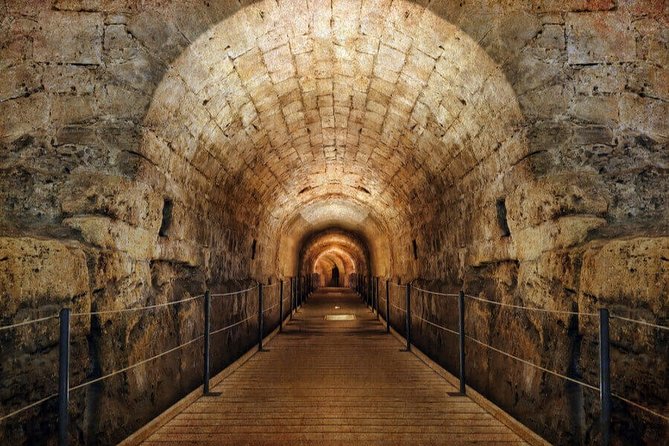
The final major stop is Acre, where you have about an hour in the city and another hour at the underground Crusader city and citadel. The old fortifications and tunnels help you picture Acre as a medieval port and stronghold. The timing gives you a decent introduction, but you will need to move with purpose if you want both the streets and the underground remains.
This is one of the strongest days for variety. It also shows the cost of covering so much ground. You may spend considerable time getting from one site to the next, and some groups are moved between vehicles or merged with other groups. Pay attention to pickup instructions and keep your phone available in case the meeting point changes.
more masada sunrise climbs
- From Tel Aviv: Masada, Ein Gedi & Dead Sea Tour
★ 4.2 · 705 reviews - From Tel Aviv: Masada Sunrise, Ein Gedi, and Dead Sea Tour
★ 4.3 · 387 reviews - Masada, Ein Gedi, and The Dead Sea from Tel Aviv
★ 4.0 · 285 reviews - From Tel Aviv: Masada Sunrise, Ein Gedi and Dead Sea Tour
★ 4.3 · 192 reviews
Day 4: Masada, Herod’s palace, and the Dead Sea
Day four is the desert classic. You travel through the Judean Hills, pass the Good Samaritan Inn, and head toward Masada.
At Masada National Park, the cable car takes you to the top of the ancient cliff fortress. The visit lasts about 90 minutes and includes admission. You will see the remains of Herod’s palace and the wider desert setting, along with the stark story of the Jewish revolt against Rome.
The cable car is a major practical advantage. The schedule does not require a long climb, making Masada possible for most people who can manage ordinary walking. Still, expect sun, uneven surfaces, and limited shade. Wear sturdy shoes, carry water, and bring a hat.
The plan also includes 30 minutes at Herodium, the remains of Herod’s palace. The schedule refers to this as Herod’s Palace, and it adds another look at the ruler’s ambitious building projects. You pass Ein Gedi Nature Reserve and Qumran, the site associated with the discovery of the Dead Sea Scrolls, but these are drive-by views rather than full visits.
The final stop is the Dead Sea, with about 90 minutes to float and use the mineral mud. Bring a swimsuit, towel, water, and sun protection. Cover cuts before entering the water, and avoid splashing near your eyes. The salt-rich water makes floating easy, but you should follow the bathing instructions at the site.
I like the contrast here: Masada is about endurance, power, and conflict, while the Dead Sea is slow and almost weightless. The downside is that the Dead Sea stop can feel short once you change, bathe, rinse off, and get ready to leave. Still, it is enough time to experience the main attraction.
Day 5: Jerusalem’s viewpoints, quarters, and memorial museum
The final day begins at Mount Scopus, where you view the Old City. The stop is about 30 minutes and may include a visit near the Garden of Gethsemane, the Church of All Nations, and the Kidron Valley.
The main event is the Old City, where you have about two hours of walking. You then spend time in the Jewish Quarter and the Byzantine Cardo, visit the Western Wall, and continue through the Christian and Muslim quarters.
The Western Wall stop lasts about 25 minutes. You will need to follow the site’s dress expectations and local customs. The Christian Quarter includes the Via Dolorosa and several stations of the cross, followed by the Church of the Holy Sepulchre. The church is allotted about 30 minutes, which is enough to enter and see key areas but not enough for a patient visit if crowds are heavy.
The Muslim Quarter and its bazaar receive another 30 minutes. This is a good chance to see the Old City as a living neighborhood rather than only a religious monument. Stay close to the guide, as the lanes are easy to confuse, and keep your belongings secure in crowded areas.
The day ends at Yad Vashem, the World Holocaust Remembrance Center. The scheduled visit is only 30 minutes, with admission included. That is a very short window for a major museum and memorial complex. Treat it as an introduction, not a full museum visit. If Yad Vashem is a priority, you may want to return independently for more time.
Jerusalem is visited twice on the overall program, but do not assume this means two long, continuous Jerusalem tours. The first visit focuses on viewpoints and the Old City’s major religious quarters. A separate City of David tour is part of the advertised concept, but the supplied daily schedule does not clearly show a dedicated City of David stop. Confirm the exact order and inclusions before departure.
Accommodation, guides, and the five-day structure
Four nights of accommodation are included. The plan calls for three nights in a three-star Jerusalem hotel and one night in a traditional kibbutz near the Sea of Galilee. Breakfast is included, though the booking information labels it as optional, so confirm that point when paying.
The hotel arrangement needs special attention. Some bookings have involved changes between properties or locations, including stays in Tel Aviv instead of the expected Jerusalem accommodation. One useful detail is that Prima Park was praised for its location near the light rail and central bus station, while Seven Arches was considered less satisfactory by one person who requested a change.
The most important thing to understand is the operating style. Although you buy a five-day program, the experience may function as five separate day tours. You may have a different guide, driver, and group each day. That creates variety, but it also means less continuity and more chance of repeated information or confusion over pickup arrangements.
Several guides, including Amir, Eyal, and Rami, have been praised for good explanations and courteous treatment. Amir in particular is noted for connecting language, history, and current affairs. That human element can make a long bus day worthwhile.
The overall rating of 3.6 from 32 reviews reflects this split experience: the sights are excellent, while administration is less dependable. Confirm your hotel, pickup time, next-day meeting point, and daily route whenever you finish a tour day.
Who will get the most from this tour
This suits you if you have limited time in Israel and want to see the major regions without renting a car. It is also a good fit if you value a guide’s context and do not mind early starts, long drives, timed stops, and a group of up to 40 people.
You should be comfortable walking on ancient surfaces, standing in the sun, entering religious sites, and changing plans when road conditions or group logistics require it. Children under four cannot join, and the schedule is not designed for a relaxed family holiday.
I would be more cautious if you want deep time at museums, quiet meals, flexible photography, or independent exploration. A five-day route covering this much ground will always involve compromises. The schedule gives you a broad first look, not a slow study of each region.
Wear modest clothing, comfortable walking shoes, and sun protection. Keep a swimsuit and towel ready for day four, and carry water every day. Pickup begins around 7:15 a.m., so this is not a lie-in holiday.
Should you book it?
Book this tour if your priority is range. You will see Jerusalem, Masada, the Dead Sea, Nazareth, the Galilee, Caesarea, Haifa, Rosh Hanikra, and Acre in one organized package, with transport and accommodation handled for you.
Skip it if dependable coordination and unhurried visits matter more than coverage. Before paying, ask for the exact hotel names, the confirmed kibbutz night, the pickup plan for each day, and whether the City of David visit is included in your departure. At $1,080, the tour can offer solid value for a first visit, but only if you accept its busy pace and verify the arrangements in advance.
FAQ
How long is the tour?
The experience lasts approximately five days and begins in Tel Aviv.
What time does the tour start?
The stated start time is 7:15 a.m.
Is hotel pickup included?
Yes. Hotel pickup and drop-off are included.
Where will I stay?
The planned accommodation is four nights, with three nights in a three-star Jerusalem hotel and one night in a traditional kibbutz.
Is breakfast included?
Breakfast is listed as included, although the booking information also marks it as optional. Confirm this detail when booking.
Is the cable car to Masada included?
Yes. The Masada visit includes admission, and the schedule specifies ascending by cable car.
What should I bring to the Dead Sea?
Bring a bathing suit, towel, hat, water, and sun protection. Modest clothing is also required at holy sites.
Can I arrange a baptism at the Jordan River?
The tour does not automatically organize a priest-led baptism. If you want one, the operator can coordinate it with Yardenit in advance.
More 5-Day Experiences in Tel Aviv
- GoKedem 5-Day Private All-Inclusive Cross-Israel Adventure
★ 5.0 · 4 reviews - PADI Open Water Diver Course – 5 Days Scuba Diving
★ 5.0 · 17 reviews
More Nazareth Visits
- From Tel Aviv: Guided Day Trip to Nazareth & Sea of Galilee
★ 4.4 · 824 reviews - Nazareth and the Sea of Galilee Day Trip from Tel Aviv
★ 4.5 · 541 reviews - From Tel Aviv: Jordan River, Nazareth, & Sea of Galilee Tour
★ 4.2 · 103 reviews - From Tel Aviv/Jerusalem: Galilee, Nazareth, Jordan River
★ 4.6 · 93 reviews
Recently added around Tel Aviv
- Jaffa Flea Market Tasting Tour★ 5.0 · 3 reviews
- Early Christianity in Galilee Private Tour★ 4.5 · 3 reviews
- Privet walking tour in Tel Aviv-Yafo★ 5.0 · 3 reviews
- Bar Crawl tour with local in Tel-Aviv★ 5.0 · 3 reviews
- Package VIP Skip Line Services in BGN Airport with Transfer to Tel aviv Hotels★ 5.0 · 3 reviews
- Food & Drink Private Guided Tour in Tel Aviv★ 5.0 · 3 reviews
- Tel Aviv: Carmel Market & Neighborhood Guided Walking Tour★ 4.7 · 3 reviews
- Tel Aviv Like a Local: Customized Guided Tour by Lokafy★ 5.0 · 3 reviews
Masada Tours, compared.
From Tel Aviv: Masada & Dead Sea Full Day Tour with Pick Up
Read our review →
From Jerusalem: Masada & Dead Sea Full Day Tour with Pick Up
Read our review →
From Tel Aviv: Masada, Ein Gedi & Dead Sea Tour
Read our review →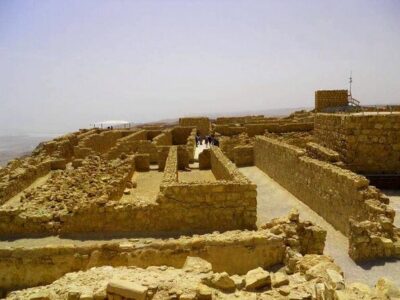
Masada, Ein Gedi and The Dead Sea from Jerusalem
Read our review →Browse the lists this tour appears in