
Reviewed · BETHLEHEM TOURS
2024 Jerusalem & Bethlehem from Ashdod Port Small Groups
Jerusalem and Bethlehem in one day is a tall order, but this Ashdod shore excursion makes a serious effort. You’ll start with the Mount of Olives, walk Jerusalem’s Old City, visit the Western Wall and Church of the Holy Sepulchre, then continue to Bethlehem and the Church of the Nativity.
I like the ship-timed pickup and return, which removes a major worry on a port day. I also like the small-group format, capped at 18 people, and the chance to see both cities with an English-speaking licensed guide. The main drawback is pace: this is a long day with plenty of walking, limited free time, and no lunch included.
Key points to know before booking
- Mount of Olives first: Begin with a broad view across Jerusalem before entering the Old City.
- Two major holy cities in one day: Visit Jerusalem’s Western Wall and Holy Sepulchre, then Bethlehem’s Church of the Nativity.
- Small group, up to 18 people: The group size should allow more personal contact than a large coach tour.
- Guides add historical and religious context: Guides associated with this experience include Yaniv, Avi, and Abraham, with a second guide used in Bethlehem on some departures.
- Cruise-friendly planning: Pickup and drop-off are coordinated with your ship’s docking and re-boarding schedule.
- Dress carefully: Knees and shoulders must be covered for places of worship and selected museums.
Why this Ashdod shore tour works
The appeal is simple: you can cover the region’s most important biblical and historical sites without arranging separate transport from Ashdod. The tour lasts about eight to ten hours, depending on your ship’s schedule, and uses air-conditioned vehicles for the transfers.
That time frame is useful for cruise passengers. You get a planned route, a guide, and a return transfer rather than trying to piece together taxis, local transport, and admission arrangements on your own. The tradeoff is that Jerusalem and Bethlehem each deserve much more than a few hours. You are buying reach, not leisurely exploration.
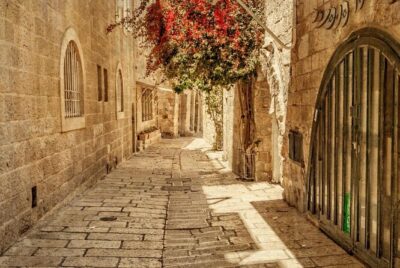
The small-group limit of 18 matters here. Jerusalem’s Old City has narrow lanes, crowded courtyards, and places where a large group can easily become scattered. A smaller party should make it easier to hear the guide and stay together, though the experience may still feel busy at the most popular religious sites.
The tour has earned a 4.9 rating from 30 ratings, with 97 percent recommending it. That points to a strong overall experience, but you should still pay attention to the practical complaints: meeting the group at the port can be stressful if the sign or guide is hard to spot, and lunch quality and price may not suit everyone.
more bethlehem day trips
- From Tel Aviv: Jerusalem and Bethlehem Guided Day Trip
★ 4.3 · 1,316 reviews - Tel Aviv: Jerusalem, Bethlehem & Dead Sea
★ 4.0 · 881 reviews - Day Tour to Jerusalem and Bethlehem from Tel Aviv
★ 4.5 · 720 reviews
Meeting your guide at Ashdod Port
Your guide is scheduled to meet you at the exit of the arrival terminal with a COMPASS sign. The operator asks for your ship name, docking time, disembarkation time, and re-boarding time when you book.
That information is not busywork. It allows the pickup and return to be planned around your ship rather than around a fixed public departure. Still, port pickups deserve care. Keep the meeting instructions easy to reach, allow time to leave the ship, and look closely for the COMPASS sign at the terminal exit.
One past account described a difficult search for the group at the port, even though the guide and driver later performed well. I would treat that as a warning to confirm the meeting point before sailing. If your ship uses a particular arrival area, make sure the operator has the correct ship details.
The return transfer goes back to Ashdod Port after Bethlehem. The stated tour duration is up to eight to ten hours, tied to the ship’s anchoring schedule. Because this is a port excursion, the return timing is one of the tour’s most valuable features.
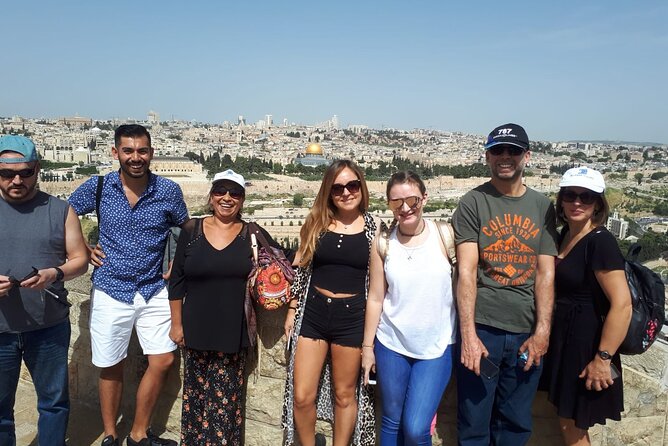
Mount of Olives: Jerusalem from above
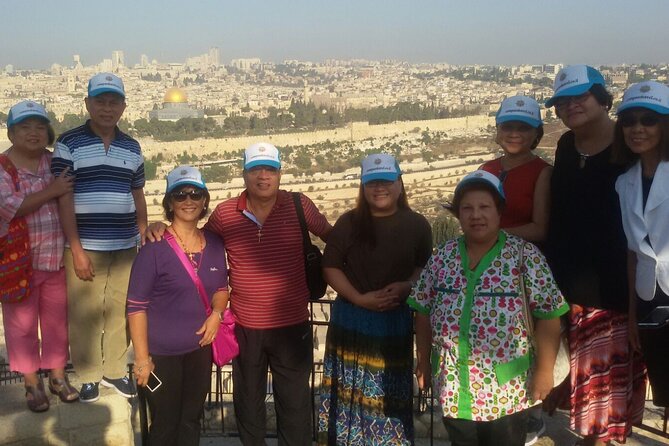
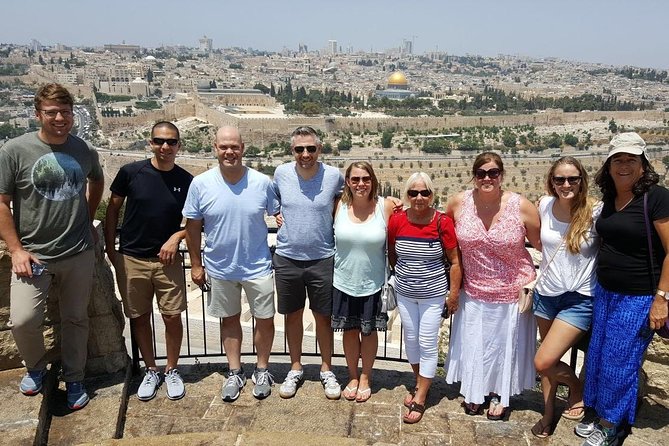
The first Jerusalem stop is the Mount of Olives, where you get a panoramic view of the city. This is a smart opening stop because it gives you a sense of place before you enter the dense streets of the Old City.
From this high point, you can understand the relationship between Jerusalem’s Old City, the Temple Mount, and the Judean Desert to the east. The Mount of Olives also carries major importance in Christian tradition. The New Testament connects it with Jesus’ route to Bethany, his sorrow over Jerusalem, and his ascension.
You have about 30 minutes here. That is enough for the viewpoint and a short explanation, but not enough for a slow walk through the area. Bring a camera, but listen closely to the guide’s orientation. A good explanation at this point can make the rest of the day easier to follow.
Gethsemane and the meaning of the olive groves
At the foot of the Mount of Olives, the tour stops at the Garden of Gethsemane. According to the four Gospels, this is where Jesus prayed before his arrest.
The site has powerful meaning for Christians, and the old olive trees give the visit a quiet contrast to the busy streets elsewhere in Jerusalem. Several small olive groves sit on adjacent church properties, each connected with the traditional location of biblical Gethsemane.
The stop lasts about 30 minutes and is mainly about reflection, explanation, and seeing the garden area. You should not expect a long visit or a broad walk through the Mount of Olives. The value comes from the setting and the religious context provided by the guide.
A different kind of day out of Israel:
- From Tel Aviv: Masada & Dead Sea Full Day Tour with Pick Up
★ 4.5 · 1,496 reviews - Masada and the Dead Sea Day Trip from Tel Aviv
★ 4.5 · 1,014 reviews - From Tel Aviv: Jerusalem Old & New City Bus Tour
★ 4.2 · 824 reviews - From Tel Aviv: Guided Day Trip to Nazareth & Sea of Galilee
★ 4.4 · 824 reviews
Mount Zion and the Last Supper Room
Next comes Mount Zion, with visits to the traditional Tomb of King David and the Room of the Last Supper. These sites bring together Jewish and Christian traditions in a compact area.
The Tomb of King David is among Judaism’s sacred places, but its identification is not certain. Biblical references place David’s burial in the City of David, below the Temple Mount, so the guide’s explanation is useful here. You can appreciate the site without treating every traditional identification as settled fact.
The Room of the Last Supper is on an upper floor above King David’s Tomb. It is associated with the meal before Jesus’ crucifixion, though the exact historical identification is also part of a long tradition rather than a proven address.
This stop is scheduled for about 30 minutes. Expect a short, focused visit rather than a detailed study of Mount Zion. Modest clothing is important, and the day’s dress code applies here.
Walking the Old City and the Cardo
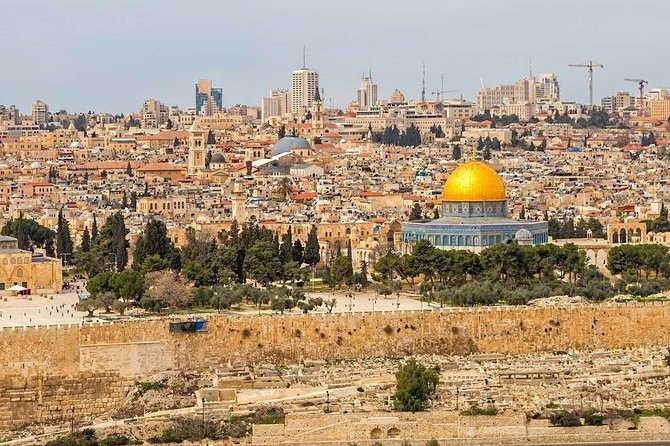
The tour then enters Jerusalem’s Old City, walking through the Armenian and Jewish quarters toward the Cardo. This is where the excursion becomes more physical. You’ll be on stone lanes and moving through several areas with religious and historical importance.
The Cardo is a Roman-era road whose southern section was uncovered in the Jewish Quarter. Much of the visible section dates to the reign of Byzantine Emperor Justinian, from 527 to 565. It once helped connect major churches, including the Church of the Holy Sepulchre and the Nea Church.
The Cardo helps you see Jerusalem as more than a biblical setting. Roman and Byzantine layers sit beneath the modern city, and the excavated street gives you a glimpse of how the urban center was organized centuries ago.
The Old City portion is allotted about two hours, although the exact flow will depend on crowds, access, and the guide’s pacing. This is one of the most valuable parts of the tour, but it is also where a microphone or small earphones would help. One account specifically noted that hearing the guide was difficult at times without such equipment.
The Western Wall and Jewish Quarter
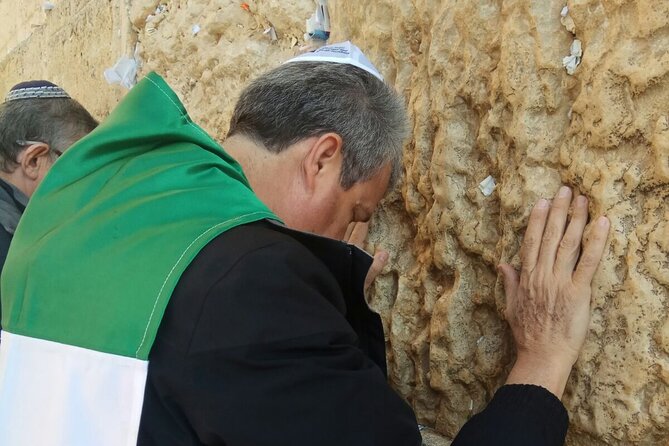
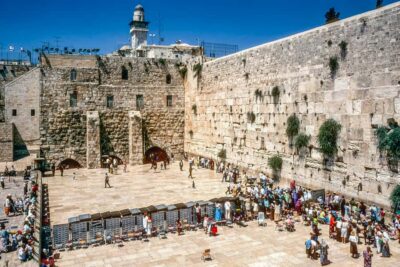
The Western Wall, also called the Kotel, is one of the day’s central stops. It is an ancient limestone section of a much longer retaining wall connected with the Temple Mount.
Its importance in Judaism comes from its closeness to the Temple Mount. Because access to the Temple Mount is restricted at times, the Western Wall is the holiest place where Jewish prayer is generally permitted, while the Foundation Stone behind the wall remains the faith’s most sacred point.
You are scheduled to see the wall during the Old City visit and again in a separate one-hour stop. That may feel repetitive on paper, but the wall is not simply a monument to glance at. The guide can explain its religious setting, and you can take in the different ways people approach the prayer area.
Wear clothing that covers your shoulders and knees. This requirement applies to both men and women, and failure to follow it can lead to refused entry at religious sites or selected museums.
Via Dolorosa and the Church of the Holy Sepulchre
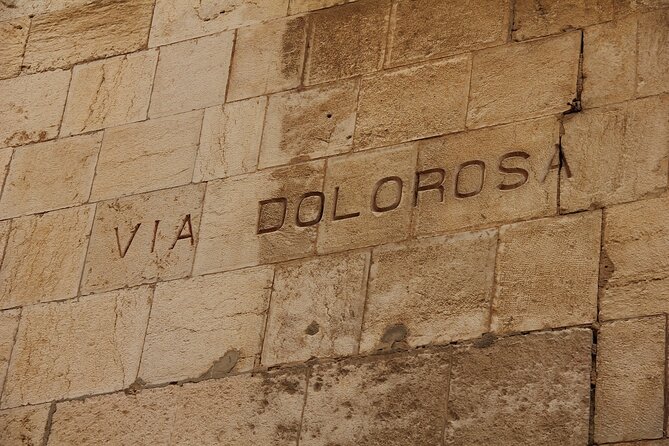
The Christian Quarter brings you to the Via Dolorosa, the processional route traditionally linked with Jesus’ path to crucifixion. The route runs through narrow stone streets, with shops and religious sites along the way.
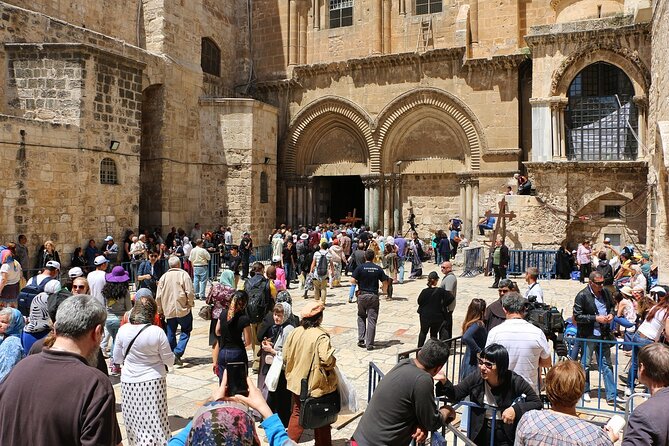
You’ll then visit the Church of the Holy Sepulchre, the most important Christian site on the tour. Christian tradition identifies this area with Jesus’ crucifixion, burial, and resurrection. The site includes Calvary, or Golgotha, the place associated with the crucifixion.
The church can be emotionally powerful, but it is not a quiet, simple chapel visit. Its importance draws worshippers and pilgrims from around the world, and the interior can feel complicated, crowded, and full of competing traditions. Your guide’s context helps you understand why different Christian communities share responsibility for the church.
The scheduled time for the Via Dolorosa is about one hour, followed by another hour at the Church of the Holy Sepulchre. That gives you more time here than at several earlier stops, though you should still expect a structured visit rather than free exploration.
Bethlehem and the Church of the Nativity
After Jerusalem, the route continues to Bethlehem. The plan includes an overview of Shepherds’ Field, a visit to Manger’s Square, and the Church of the Nativity.
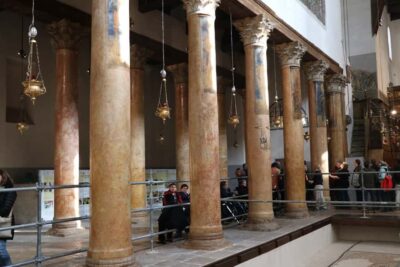
The Church of the Nativity contains a grotto traditionally identified as the birthplace of Jesus. It is also described as the oldest continually used site of Christian worship. For anyone interested in Christian history, this is the second major religious high point of the day after the Holy Sepulchre.
The Gospels of Matthew and Luke place Jesus’ birth in Bethlehem. Luke describes Mary placing the baby in a manger because there was no room at the inn. The setting today is not the tidy Christmas-card scene many people picture, which is part of the point. The site is an old, active place of worship with layers of tradition and centuries of use.
You have about one hour for the Church of the Nativity. The tour also includes an overview of Shepherds’ Field rather than a long independent visit. On some departures, a second Bethlehem guide helps explain the local sites. That can be useful because Bethlehem has its own religious and civic setting, distinct from Jerusalem.
Lunch, walking, and the day’s pace
Food is not included, so you should plan to pay separately for lunch and drinks. The tour information does not specify a fixed restaurant, and food quality can vary depending on the choice made that day.
One guide, Abraham, was praised for selecting a restaurant with a breeze and a view of the Old City, while another account found lunch good but somewhat expensive. That tells you to judge lunch as a convenience, not as a core reason to book. You may prefer the restaurant chosen by the guide, but ask about the price before ordering if you are watching your budget.
The day involves walking through the Old City and visiting religious buildings. Even though the vehicles handle the longer transfers, you should be comfortable on uneven stone streets and standing during site visits. The itinerary is full, so this is not the right choice if you want long café stops, shopping time, or a relaxed museum schedule.
The lack of included meals does make the $225 price easier to assess. You are paying for transportation from Ashdod, a licensed English-speaking guide, a small group, and ship-coordinated return service. You are not paying for lunch, drinks, or a slow, private tour.
Guides, commentary, and group size
The quality of the guide will shape this experience. The strongest accounts describe guides who connect biblical stories with Jerusalem’s past and present, rather than simply naming each site. Yaniv, Avi, and Abraham are names associated with especially strong guiding on this experience, and a second guide may assist in Bethlehem.
The commentary is intended to be in-depth, covering the religious meaning, historical layers, and cultural background of the places you see. That matters because several stops are traditional sites whose exact historical identification is debated. A good guide can explain both the belief and the evidence without flattening the subject.
The group maximum is 18. Actual groups may be smaller, with one reported group of 10. A group that size is a good middle ground: more affordable than a private tour, but less unwieldy than a large bus party.
Is $225 a fair price?
For a cruise passenger, $225 can be reasonable if you value convenience and coverage. Ashdod is not next door to Jerusalem, and adding Bethlehem creates a long transport day. The included vehicle, driver, licensed guide, and return to the port cover the main costs and reduce the risk of missing your ship because of poor planning.
The price is less attractive if you want a deep visit to either city. You will see the major religious highlights, but each stop has a firm time limit. A private tour could give you more control, while a cheaper large-group option might reduce the cost at the expense of group size and flexibility.
I would also budget for lunch and drinks. Since those are excluded, the final cost will be higher than the advertised per-person rate.
Practical details before you book
Confirmation is provided when you book. Cruise passengers must provide the ship name, docking time, disembarkation time, and re-boarding time.
Wear smart-casual clothing with shoulders and knees covered. This applies to men and women, and it is one of the few details that can directly affect your ability to enter a religious site.
Most people can participate, but the full day includes walking and standing in the Old City. The tour requires good weather and a minimum number of participants. If poor weather or low enrollment cancels the experience, you are offered another date or experience, or a full refund. You can cancel for a full refund up to 24 hours before the start time, but changes or cancellations inside that window are not accepted.
Should you book this Jerusalem and Bethlehem tour?
Book it if you have one port day and want to see the defining religious sites of Jerusalem and Bethlehem with transport arranged around your ship. The combination of the Mount of Olives, Western Wall, Via Dolorosa, Holy Sepulchre, and Church of the Nativity gives you a strong first look at the region.
Skip it if you dislike packed schedules, need substantial free time, or want to study one city at a slower pace. Also think twice if you are not prepared for walking, modest dress, and a separate lunch bill.
For most cruise passengers, the best reason to choose this tour is not simply the number of sights. It is the practical pairing of a small group, a licensed guide, and a planned return to Ashdod. Just confirm the port meeting details, dress properly, and accept that this will be an intense day rather than a leisurely one.
FAQ
How long does the tour last?
The tour lasts approximately eight to ten hours, with the exact duration coordinated with the cruise ship’s anchoring schedule.
Where does pickup take place?
Pickup takes place at Ashdod Port. The guide is scheduled to wait at the exit of the arrival terminal with a COMPASS sign.
Is transportation included?
Yes. Transfers are provided in air-conditioned vehicles according to the tour route, including the return transfer to Ashdod Port.
Is lunch included?
No. Food and drinks, including lunch, are not included in the price.
What sites are visited in Jerusalem?
The route includes the Mount of Olives, Garden of Gethsemane, Mount Zion, King David’s Tomb, the Room of the Last Supper, the Old City, the Cardo, the Western Wall, the Via Dolorosa, and the Church of the Holy Sepulchre.
What is visited in Bethlehem?
The tour includes an overview of Shepherds’ Field, Manger’s Square, and the Church of the Nativity.
What should I wear?
You need smart-casual clothing that covers your shoulders and knees. This dress code applies to both men and women at places of worship and selected museums.
Recently added around Israel
- Holy Jerusalem Full Day Tour from Jerusalem★ 5.0 · 3 reviews
- Jaffa Flea Market Tasting Tour★ 5.0 · 3 reviews
- Half day tour bethlehem prices per Van up to 6 pax★ 5.0 · 3 reviews
- Early Christianity in Galilee Private Tour★ 4.5 · 3 reviews
- Petra and Wadi Rum 2 day Tour from Eilat★ 5.0 · 3 reviews
- Petra & Wadi Rum 3 Days 2 Tour Nights from Eilat border★ 5.0 · 3 reviews
- Privet walking tour in Tel Aviv-Yafo★ 5.0 · 3 reviews
- Bar Crawl tour with local in Tel-Aviv★ 5.0 · 3 reviews
Bethlehem Tours, compared.
From Tel Aviv: Jerusalem and Bethlehem Guided Day Trip
Read our review →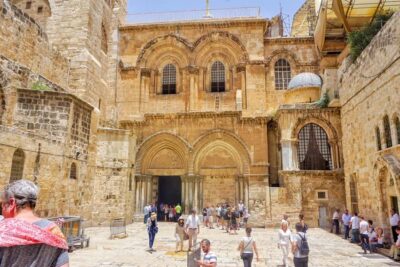
Ashdod Shore Excursion: Jerusalem and Bethlehem – for cruise ship guests only
Read our review →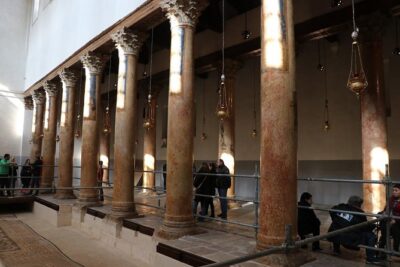
Travel From Jerusalem To Bethlehem and Dead Sea – Daily Group West Bank Tour
Read our review →
Travel To Bethlehem, Jericho & Jordan River – Group Guided Tour from Jerusalem
Read our review →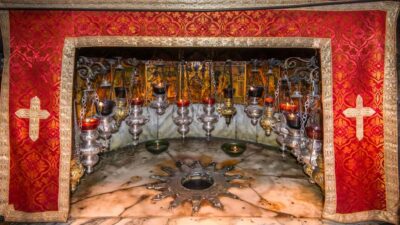
From Ashdod Port: Jerusalem and Bethlehem Day Trip
Read our review →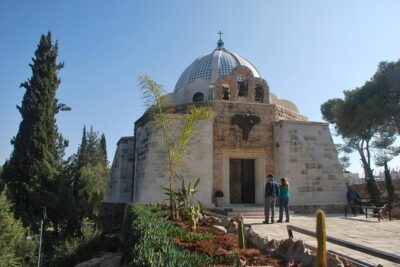
Bethlehem, Jericho, and Qasr El Yahud Day Trip from Jerusalem
Read our review →Browse the lists this tour appears in