
Reviewed · PETRA AND WADI RUM TOURS
2-Day Petra Tour from Tel Aviv
Petra is the star, but the Bedouin camp overnight gives this two-day trip its character. You cross from Israel into Jordan, pass Roman ruins and Crusader walls, then reach Wadi Musa before spending several hours inside Petra’s rose-colored stone city. Dinner by the campfire adds a real sense of place rather than making this just a quick monument run.
I like the way the tour bundles transport, accommodation, meals, guiding, and entrance fees into one price. I also like the range of stops, especially Mount Nebo, Madaba, and Shobak Castle, which help explain Jordan beyond Petra. The main drawback is the pace: border formalities can be slow, and only about six hours are set aside for Petra itself.
Key points to know before you book
- Petra gets about six hours: Enough for the Siq, Treasury, major tombs, and several main paths, but not enough for every corner of the site.
- The border is part of the trip: Allow roughly one hour going into Jordan and up to two hours on the return, with separate taxes to pay.
- Mahdi and Abdullah are praised by name: Guide quality can shape this tour, and these two guides are specifically associated with warm, helpful service.
- You sleep in a Bedouin-style camp: Dinner, breakfast, and the desert setting are included, but bring warm clothing for the night.
- The $430 price covers a lot: Transport, two lunches, dinner, breakfast, accommodation, guiding, and entrance fees are included.
- This is an active two-day schedule: Comfortable shoes, sun protection, water, and a moderate fitness level are needed.
Petra in two days from Tel Aviv
This is a long-distance trip with a big payoff. From the Abraham hostel on HaRakevet Street in Tel Aviv, pickup is set for 6:30 a.m. You then travel south and east toward the King Hussein Bridge, cross into Jordan, and continue through a day packed with historic sites.
The tour works well for you if Petra is a top priority but you do not want to arrange separate vehicles, border transfers, lodging, guides, and entrance tickets. It is less suitable if you prefer slow mornings, long meals, or several days at one archaeological site.
The van is air-conditioned, an important detail in Jordan’s heat. The maximum group size is 47 people, so this is not a private or small-group expedition. The trade-off is simple: you get a lower, more manageable price for a lot of ground covered, but the group and schedule can limit flexibility.
more petra and wadi rum crossings
- 2 Day Tour to Petra and Wadi Rum from Tel Aviv
★ 4.0 · 154 reviews - Day Tour to Petra by Bus from Tel Aviv
★ 3.5 · 149 reviews - From Tel Aviv: Petra 1-Day Guided Tour with Transfers
★ 4.2 · 141 reviews
Crossing the King Hussein Bridge
The first major hurdle is the border. The crossing itself is not a sightseeing stop in the usual sense. It is a practical process with checkpoints, documents, fees, and waiting, and it can feel tedious compared with the ancient places that follow.
The listed timing allows about one hour when entering Jordan and as much as two hours on the way back to Israel. Those estimates matter because border delays can reduce the time available elsewhere. Keep your original passport handy. A copy is not accepted.
Israeli border taxes cost 196 ILS and may be paid in Israeli shekels, euros, or US dollars, by cash or card. Jordanian border taxes cost 50 JOD and must be paid in cash, in Jordanian currency only. Currency exchange is available on the Israeli side, but do not assume the rate will be favorable. One useful tip is to avoid changing more money than you need at the crossing.
Visa rules depend on your nationality. Some people receive a visa at the border, while others must apply ahead of time. You are also responsible for checking that you can re-enter Israel, either with visa eligibility on arrival or with a valid multiple-entry visa. Israeli passport holders cannot take this tour, even if they also hold another passport.
The tour operator handles the travel structure, but you still need to handle your own passport and visa requirements. Religious clothing or objects can cause questions at the border, so check in advance if you plan to bring them.
Mount Nebo and the view toward the Holy Land
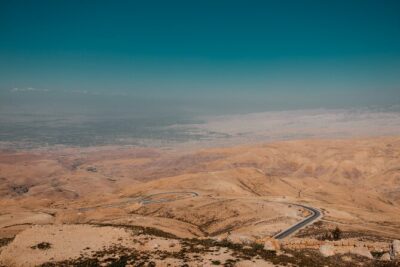
Once in Jordan, Mount Nebo offers a quieter change of pace. The stop lasts about an hour, and the appeal is the broad view across the Jordan Valley, the Dead Sea, and toward the distant hills of Jerusalem.
Mount Nebo also carries religious meaning. It is traditionally identified as the place where Moses saw the Promised Land before his death. Even if you are not visiting for religious reasons, the hilltop setting gives you a useful geographic introduction to the area.
This is a short stop, not a long walk or a full morning visit. You will want a hat and sunscreen, and the open viewpoint can feel exposed. The value here comes from the view and the setting, especially when paired with the later stops in Madaba and Petra.
Madaba’s sixth-century mosaic map
Madaba is known for its mosaic work, including the famous sixth-century map of the Holy Land. The visit lasts about an hour, giving you time to see the artwork and understand why this Jordanian city matters to religious and cultural history.
The map is not a modern paper map. It is a mosaic made from small colored pieces, and it offers a glimpse into how people represented the region many centuries ago. Madaba gives the first day an artistic stop between the hilltop views of Mount Nebo and the fortress at Shobak.
Because the schedule is tight, treat this as an introduction rather than a detailed museum visit. The guide can add context, but you will not have unlimited time to examine every mosaic at length.
more Tel Aviv days to consider
- From Tel Aviv: Petra 2-Day Tour
★ 4.7 · 128 reviews - 2-Day Best of Israel Tour from Tel Aviv: Jerusalem, Bethlehem and Masada Tour
★ 4.5 · 38 reviews - From Tel Aviv: Petra & Wadi Rum 2-Day Tour with Bedouin Tent
★ 4.4 · 29 reviews - Petra 2 Day Tour from Tel Aviv
★ 4.0 · 14 reviews
Shobak Castle on the desert road
Shobak Castle sits on a rugged hill and was built during the era of Crusader fortresses. The one-hour stop includes admission and lets you explore the walls, towers, corridors, and views across the valleys.
This is one of the more unusual parts of the route. Many visitors know Petra, but fewer expect a medieval fortress in the same two-day journey. The castle helps show how the region’s story includes far more than Nabatean archaeology.
The uneven ground and uphill setting are worth taking seriously. You should wear shoes with a firm sole, especially if you want to explore beyond the easiest paths. The stop may feel brief, but the views and rough stonework make it a worthwhile break from the van.
The road to Wadi Musa and the desert camp
The road to Wadi Musa takes about four hours on the first day. You pass rugged mountains, deep valleys, villages, rock formations, and Bedouin camps. The drive is not just dead time, but it is still a long stretch in a vehicle, so plan for a tiring afternoon.
The first sight of Petra’s sandstone cliffs builds anticipation, though you will not get the full experience until the following day. The overnight stay at a Bedouin-style campsite gives the trip a stronger local feel than a standard hotel night.
Dinner around a campfire is included, along with breakfast the next morning. The camp has received especially warm praise for its setting, food, and views of the rock formations. Bring warm clothing, though. Desert nights can be cold even after a hot day.
Solo visitors may need to share a room with someone of the same gender, depending on group size. That arrangement is worth knowing before you book. The accommodation is part of the value, but it is not the same as choosing your own private hotel room.
Six hours inside Petra
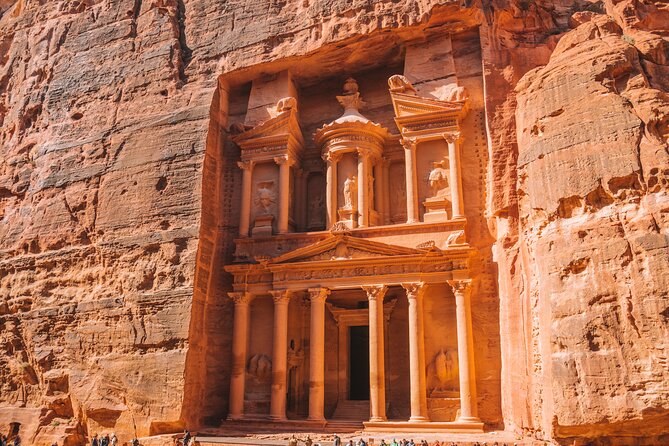
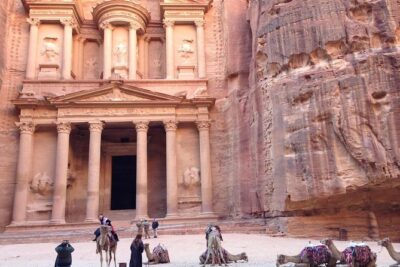
Day two focuses on Petra, with about six hours at the site. You enter through the narrow Siq, the natural rock passage that leads toward the Treasury. The route gradually builds suspense as the walls close in and the carved facade appears ahead.
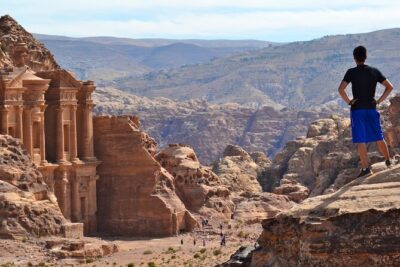
The Treasury is only the beginning. Petra includes the Royal Tombs, the Great Temple, the Monastery, and the High Place of Sacrifice, along with other paths and carved structures spread through the valley. The site is large, and six hours gives you a useful visit without giving you time for every trail.
Your walking choices will matter. If you spend a long time at the Treasury and Royal Tombs, you may have less time for the Monastery. If you want the High Place of Sacrifice, save energy for a steep climb. The tour calls for moderate physical fitness, comfortable shoes, water, a hat, and sunscreen for good reason.
Petra’s stone changes color with the light, and the narrow Siq makes the first approach feel very different from the wide open spaces later in the visit. The experience is not simply a stop at one famous facade. It is a long walk through a former city with tombs, temples, pathways, and dramatic cliffs.
A guide is particularly useful here because the site is spread out and the meaning of the structures is not always obvious. Mahdi is praised for both his information and his personal attention, while Abdullah is noted for going out of his way to help. Guide assignments can vary, so you should not assume you will receive one particular person, but those names give you an idea of the service level this operator can provide.
Six hours is a fair compromise for a two-day trip from Tel Aviv, but do not expect an unhurried Petra visit. If you want to hike every major route, take long photographs, and explore at your own speed, stay in Jordan for several days instead.
What the $430 price really includes
At $430 per person, the tour is not a budget bus ride, but the package includes many costs that are easy to underestimate. You receive an air-conditioned vehicle, a guide, entrance fees, a Bedouin-style campsite, breakfast, dinner, and two lunches.
The included entrance fees are important at major sites such as Petra and Shobak Castle. Accommodation and meals also reduce the need to organize separate bookings in Jordan. The custom travel app for smartphones and tablets is another practical extra, particularly if you want information available during the route.
The price does not include Israeli border taxes, Jordanian border taxes, personal travel insurance, extra food and drinks, or gratuities. Add 196 ILS and 50 JOD to your planning, and carry the Jordanian fee in cash only.
The strongest value comes from convenience. You are paying to have a complicated cross-border route, long transfers, site admissions, meals, and one night arranged together. You are not paying for a relaxed pace or a private experience.
Meals, comfort, and what to pack
The tour includes two lunches, dinner, and breakfast. Food is one of the highly praised parts of the experience, especially the camp dinner. Other food and drinks are not included, so bring money for anything beyond the scheduled meals.
The air-conditioned van is a welcome feature during the long drives. Still, air conditioning does not remove the strain of a 6:30 a.m. start, border waiting, and several hours of walking in Petra.
Pack the following:
- Original passport
- Comfortable walking shoes
- Hat and sunscreen
- Drinking water
- A scarf or shawl
- Warm clothes for the desert night
- Cash for the Jordanian border fee
Drones are forbidden in Jordan, as are telescopes and telephoto cameras with zoom lenses higher than 1000mm. Some sites may close or reduce visiting hours during Muslim holidays, particularly Ramadan, so check dates before committing.
Who will get the most from this tour?
I would recommend this trip to you if you have limited time in Israel, Petra is high on your list, and you want someone else to manage the route. It also suits people who enjoy adding several different sites to one journey rather than focusing on Petra alone.
The trip can work well for families with older children who can handle long drives and substantial walking. One child’s birthday was made special by the guide during the trip, showing how a good guide can add a personal touch. Still, the early start and border delays may be tiring for young children.
You should think twice if you dislike group travel, need a private room, have difficulty walking for several hours, or want extensive time at each monument. The group can reach 47 people, and the schedule leaves little room for delays or spontaneous changes.
The cancellation policy allows a full refund if you cancel at least three full days before the start time. Weather or insufficient bookings can also lead to a different date or a full refund. Keep in mind that cut-off times use local time.
Should you book the Petra tour from Tel Aviv?
Book it if you want the most efficient way to see Petra from Tel Aviv and you accept that border crossings and long road hours are part of the bargain. The combination of Petra, Mount Nebo, Madaba, Shobak Castle, and a desert camp gives you much more than a single-site excursion.
I especially like the balance between major sights and smaller stops, plus the included meals and lodging. The camp, strong guides such as Mahdi and Abdullah, and well-organized border process can make a complicated journey feel manageable.
Do not book it expecting a leisurely Petra holiday. You get roughly six hours in Petra, and the whole trip moves quickly. For a first visit with limited time, the $430 package offers solid value. For deeper exploration, choose a longer Jordan itinerary.
FAQ
Where does the tour start?
The tour starts at Abraham Tel Aviv, HaRakevet Street 8, Tel Aviv-Yafo. Pickup is scheduled for 6:30 a.m.
Where does the tour end?
The activity ends back at the starting meeting point in Tel Aviv.
How long is the tour?
The tour lasts approximately two days.
Are entrance fees included?
Yes. Entrance fees are included, including the listed admission for Shobak Castle.
Are meals included?
Yes. The package includes breakfast, dinner, and two lunches. Other food and drinks are not included.
Are border taxes included?
No. Israeli border taxes cost 196 ILS, and Jordanian border taxes cost 50 JOD. The Jordanian fee must be paid in cash and in JOD.
Do I need a visa for Jordan?
Visa requirements depend on your nationality. Some nationalities receive a visa at the border, while others must apply in advance.
Can Israeli passport holders take this tour?
No. The tour is not available to Israeli citizens, even if they hold an additional passport.
What should I bring?
Bring your original passport, comfortable shoes, a hat, sunscreen, water, a scarf or shawl, and warm clothing for the night at the camp. Drones are forbidden in Jordan.
Recently added around Tel Aviv
- Jaffa Flea Market Tasting Tour★ 5.0 · 3 reviews
- Early Christianity in Galilee Private Tour★ 4.5 · 3 reviews
- Privet walking tour in Tel Aviv-Yafo★ 5.0 · 3 reviews
- Bar Crawl tour with local in Tel-Aviv★ 5.0 · 3 reviews
- Package VIP Skip Line Services in BGN Airport with Transfer to Tel aviv Hotels★ 5.0 · 3 reviews
- Food & Drink Private Guided Tour in Tel Aviv★ 5.0 · 3 reviews
- Tel Aviv: Carmel Market & Neighborhood Guided Walking Tour★ 4.7 · 3 reviews
- Tel Aviv Like a Local: Customized Guided Tour by Lokafy★ 5.0 · 3 reviews
Petra and Wadi Rum Tours, compared.
2 Day Tour to Petra and Wadi Rum from Tel Aviv
Read our review →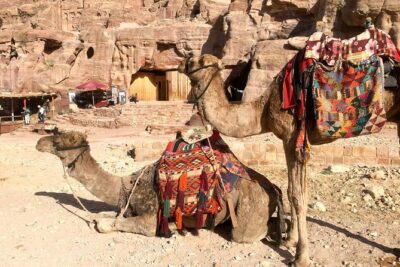
From Eilat, Jerusalem, Tel Aviv: Petra & Wadi Rum 3-Day Tour
Read our review →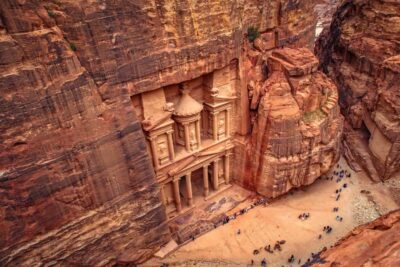
From Tel Aviv: Full-Day Trip to Petra with Roundtrip Flights
Read our review →Browse the lists this tour appears in